


Share This Article
“To succeed — and achieve real, lasting changes in the city — Mayor Mamdani will need to doggedly pursue and challenge its wealthy stakeholders and the institutions they lead.”
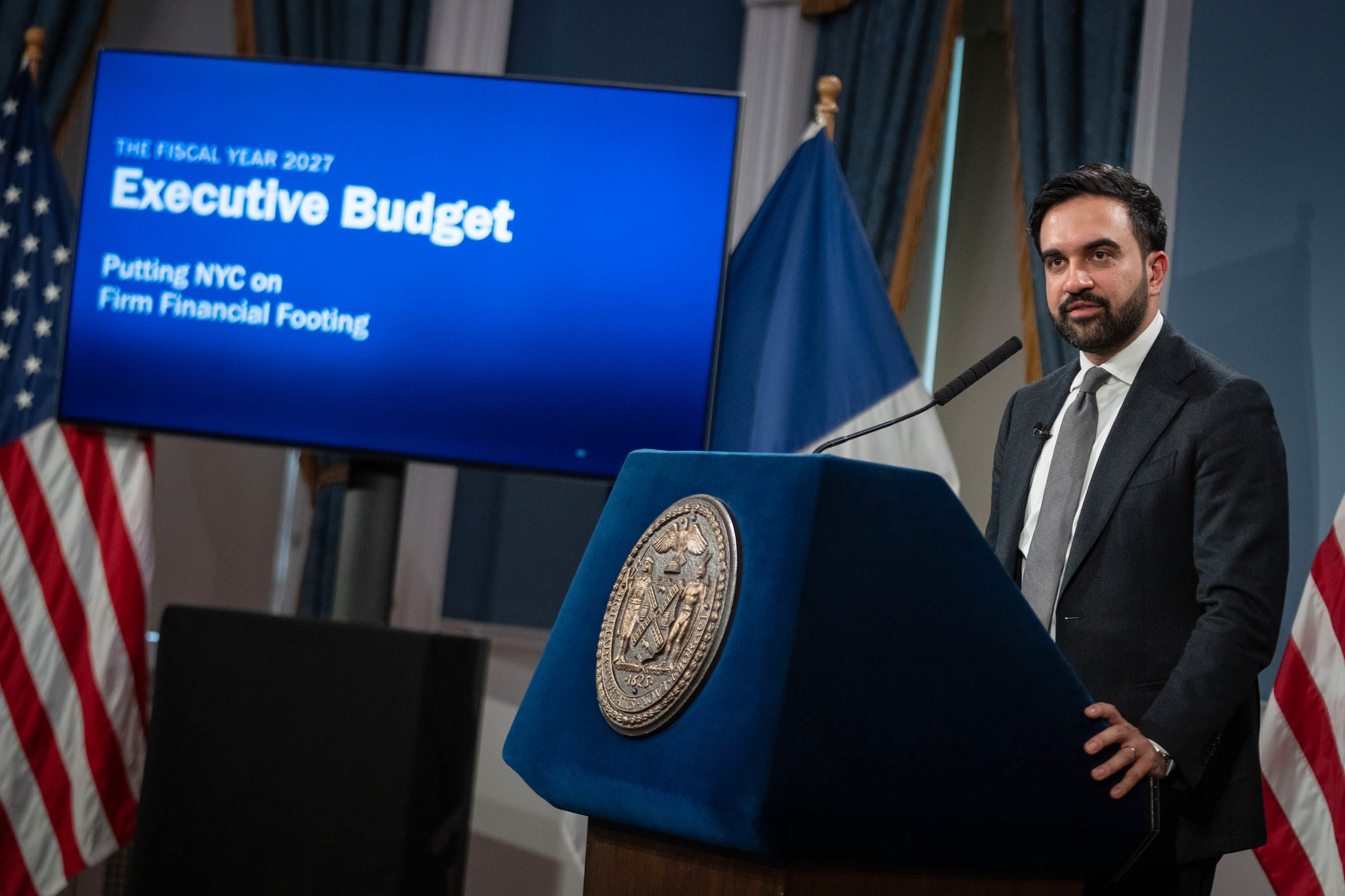

With Mayor Zohran Mamdani’s first budget ratified, now is a good time to look at his campaign claims for change and how they align with his budget and managerial choices. In his early tenure, when his political capital is at its highest, how well has he delivered on promises made? Not just in terms of free buses, free childcare and a rent freeze, but his broader vision of the city.
Can we see evidence that his democratic socialist identity has affected budget and management choices and been a challenge to the city’s status quo—a reflection of his pledge to support the city’s working class while holding the powerful accountable?
Mamdani came into office with many observers skeptical of his ability to manage a sprawling 300,000-person municipal workforce and a budget of roughly $126 billion. Has he made the transition from an insurgent democratic socialist to be an effective mayor?
As a veteran city manager, with experience as head of the Mayor’s Office of Operations as well as top management positions in some of the city’s largest and most complex agencies, I see myself as an honest broker, taking a look at how his transition has evolved in the first months of his mayoralty—and some of the major challenges he faces ahead.
True to the cause
There are various examples of early managerial choices and budget commitments that reflect the values and promises of Mamdani’s campaign. A prime example is his pledge to make city buses fast and free. Buses are an integral part of the city’s public transportation system, especially for lower income New Yorkers who live beyond the reach of the subways. While the buses are operated by a state agency that controls whether the buses could be free, it’s the mayor who controls the streets and can take steps to make them faster. He’s doing this by accelerating dedicated bus lane construction and other improvements along 50 corridors in the city.
Transforming the city’s curbs may not be the kind of initiative that propels campaigns, but as the mayor said in an April press release, “How we manage our curbs is how we show our streets are for everyone.” To accomplish this, he created a new office within the Department of Transportation that will focus on improving safety and reducing double parking.
In another reflection of his commitment to “below the radar” public infrastructure, Mamdani committed $108 million to upgrade or replace 6,700 catch basins throughout the city, an effort that helps protect neighborhoods, many of them low income, from the destruction caused by severe storms.
Fitting his agenda: 3 examples
Mamdani is fulfilling another campaign commitment to reducing burdens on small businesses, taking steps to rid owners of nuisance fines and summonses. At the same time, he’s seeking to clear the backlog of small business applications and certifications, an effort that can speed up job growth and improve neighborhood vitality.
Mamdani kept another core campaign pledge: The Rent Guidelines Board recently voted to freeze rents on one- and two-year leases. that will cover 1 million rent stabilized apartments, effective Oct. 1.
The Department of Consumer and Worker Protection (DCWP) is a relatively small department, but one that Mamdani has signaled will be key to his affordability agenda. It is tasked with targeting deceptive business practices, protecting renters, and immigrants.
In the coming months, we will see how the commissioner will address key priorities: 1. take on the biggest corporations that squeeze consumers; 2. protect small business owners from predatory lending; 3. take on employers engaged in wage theft; and 4. enforce paid sick leave and protect workplace rights.
Affordable housing: a juggernaut need, coupled with a massive commitment
Addressing the city’s need for affordable housing was a cornerstone of the mayor’s campaign. His plan committed to build 200,000 apartments and preserve another 200,000 units. Another part looks to reduce the backlog of apartments sitting vacant, sometimes for 12 months, because they need renovations.
A better accounting platform is needed to track: 1. vacant apartments under the Department of Housing Preservation Development’s (HPD) control; 2. supportive housing, primarily managed by the Human Resources Administration, with close collaboration with HPD. These units are designed for individuals and families who are experiencing homelessness; and 3. housing units at the New York City Housing Authority, or NYCHA.
HPD’s plans call for coordinating these expedited renovation efforts. The agency is also charged with stricter enforcement and heightened oversight of distressed housing, operated by bad landlords with repeat code violations. The agency will closely monitor these properties through frequent inspections, and step in to fix conditions when landlords refuse to maintain their properties, then billing the owners for the costs.
For each of these efforts, Mamdani has invested millions in both capital and expense expenditures over his first term to vastly improve renovation times so new residents can access apartments they deserve.
Each of these examples above underscore Mamdani’s managerial approach: the importance of “taking control” of what he, as mayor, can control, and not depend on others to move the city forward. He also understands that small initiatives can have large impacts on city life.
Budget adoption: early flip-flops
In early May, the mayor’s executive budget included only a modest increase in the Fair Fares program, which offers reduced transit fares for low-income bus and subway riders.
Mandani in his first budget also failed to increase the number of city rent vouchers, concerned about rising costs. The program provides rental assistance that functions like a local version of Section 8, which pays rent subsidies to private landlords on behalf of tenants. Yet, during the campaign he pledged to expand the city’s rental subsidy program, aimed at preventing homelessness and easing the extraordinary burden faced by many lower income New Yorkers.
The executive budget also called for increasing the NYPD police force by 850 positions, for a total headcount to 35,555, up from 34,705.
But in the final adopted budget, the picture looked quite different.
- Mamdani promised to keep the NYPD headcount flat and cancelled a planned expansion.
- He agreed to expand the number of New Yorkers eligible for the city’s Fair Fares program, increasing total eligibility to 1.3 million riders at an increased cost to $175 million, up from a previously budgeted $120.7 million.
- On the housing front, a most charged issue: Mamdani and the City Council settled on spreading additional funding across two years—$175 million in FY2027 and $125 million in FY2028—for the city’s rental assistance.
Clearly, managing the budget was a major test for the mayor. Protracted negotiations were intense, and various community activists played a role. What can be said about the ultimately negotiated choices? For Mandani, how do these choices fit his democratic socialist identity?
Beyond symbolic change
Ultimately, Mamdani’s mayoralty will not be judged by his proponents or detractors—or the broader city public—by his early initiatives or backtracking. What will matter are the structural changes he can achieve when it comes to service delivery, agency management and budgeting. Symbolic changes, such as having a deputy mayor for economic justice rather than economic development, won’t matter if policies and programs remain relatively unchanged.
For example, will Mamdani squash the $2 billion proposal currently targeted for Hudson Yards, because of the limited commitment to affordable housing creation? Will he, in his next budget, choose to make a “downpayment” on his campaign pledge to double the Parks Department budget in his first term? And will he make good on his campaign pledge to cut NYPD overtime spending, an out-of-control expense for years, which is budgeted for $850 million in FY2027?
The city’s inability to fill vacancies has been a marked impediment on service delivery and providing basic government functions. In fact, according to the Comptroller’s monthly vacancy dashboard, vacancies have remained flat since January, at over 13,000 positions.
This lost workforce capacity translates into: The Human Resources Administration’s inability to process timely government benefits such as SNAP and cash advances, the Finance Department’s inability to address long standing collections backlog, and the Buildings Department is hampered from timely inspections and processing complaints. Some were skeptical about Mamdani’s ability to manage a massive municipal workforce. In the coming months, we will see what he plans to meet this massive vacancy challenge.
Another major test ahead for the Mamdani administration: upcoming municipal labor negotiations. Agreements with major unions such as District Council 37 and the United Federation of Teachers will expire later this year and next year. The budget includes funding for raises of 1.25 percent, well below inflation, and below what the negotiations are likely to yield. Each 1 percent in wage hikes costs the city about $550 million, according to the Independent Budget Office.
While the mayor’s ideology would clearly champion substantial wage increases for city workers, especially workers in unions like DC 37, who are among the city’s lowest paid, such a commitment runs smack up against funds needed for other mayoral initiatives and outyear budget gaps. A binary choice? Or can a different outcome be forged?
The mayor could seek structural changes that would be a win for labor—and the whole city. One way would be to expand the current 35-hour workweek at most city agencies to 37.5. New York State designates full-time work as 37.5 or 40 hours, depending on the civil service title and specific agency. In Los Angeles, standard schedules for full-time work are set at 40 hours per week, as they are in Chicago for many municipal agencies. The benefits of this structural change are many, including improved government service and basic functions.
Also ripe for structural change is the role of the Mayor’s Office of Management and Budget. Much has been written about OMB and its culture and the power and influence it exerts at City Hall. As a story in Vital City noted, “OMB not only oversees the city’s budget, creates the city’s economic forecast and predicts the impact of tax policies; it also has the power to decide which projects get funded and why. However, it often operates siloed in its role as a fiscal gatekeeper—as the Bureau of No—rather than a strategic partner.”
As I know from my years in city government, OMB’s culture is one of cutting, not managing. New agency initiatives are thwarted. Hiring approvals are intentionally slow, knowing that accruals will be generated from these ingrained policies. They call it “accrual management,” while I call it “a cruel management.”
To realize his broader democratic socialist vision for the city, Mamdani will need to check OMB’s power and empower a broader range of perspectives in budget crafting. To this point, as Vital City wrote, Mamdani “…brings big ambitions to expand the role of government with limited resources, the office will need to be much more operations—and execution-minded—moving to find efficiencies and savings that actually improve service delivery.”
With his first budget adopted, it would be fair to assess that both the process and budget choices did not fit some of his ambitious agenda. And given the need to find sizable efficiencies and savings to meet the twin goals of gap-closing and enable governing priorities to be met—it was disappointing. Agency efficiencies totaling $1.7 billion did not yield structural changes, and instead picked “low hanging fruit” that did little to improve workforce performance. A less than an impressive outcome. It is structural changes, while more difficult to implement, that deliver sizable savings and improve services and basic government functions. Will Mamdani meet this governing challenge?
Burden sharing
Mandani must continue to press Albany to increase the personal income tax rate for the wealthiest individuals, to challenge the wealthy few to return a modicum of their wealth to the larger community. Knowing and delivering this aspect of his agenda will be a tough lift.
Mamdani brings fresh moral clarity, offering new governing choices. He’s committed to correcting the daily abuses that too many New Yorkers endure—rising incivility, unchecked greed, deepening and relentless degradations. A city unaffordable to too many of its residents. But the road ahead is choked with barriers: a federal government squeezing aid to the city and programs for the poor, coupled with Trump’s draconian immigration policies and increased deportation policies, instilling fear and intimidation in immigrant communities. A local budget gap is expected to exceed $7 billion next fiscal year and a precarious economy.
In the coming months, the mayor will face new tests, and we will better understand what he is willing to fight for. He came to office determined to curb the cost of exploitation and inequality. As an effective and persuasive communicator, he’s exhibited a deep concern about precarious workers, threatened tenants, abused consumers and frightened immigrants. He believed that government, if managed well, could soften the harsh edges of the city’s coarse culture.
His mayoralty comes at a momentous time in our city’s history. He understands that to rebuild the city, we must first begin with the truth about civic leadership: about the malevolence, greed, and hubris of the institutions they lead. A civic leadership that has abandoned our city. Their participation is evidenced by exploiting problems, rarely solving them.
To succeed—and achieve real, lasting changes in the city—Mamdani will need to doggedly pursue and challenge its wealthy stakeholders and the institutions they lead. Mandani could use the increasing post-primary political power to push for change in the social contract with sports titans, white shoe law firms, wealthy “non-profit” universities, cultural institutions and foundations.
Wealthy sports owners and arenas like MSG, Barclay’s Center, the Mets and the Yankees don’t pay any property taxes. Their paying an annual amount of $50 million each would generate $200 million in revenues to the city’s treasury. This recurring revenue would go a long way in supporting our public parks and libraries.
Wealthy foundations, with billion-dollar endowments, could choose to award sizable annual grants, instead of only providing grants that meet the minimum federal tax requirements. These could support safety net services to offset reductions in federal subsidies for food stamps, and needed resources to prevent evictions.
Wealthy cultural institutions, with their billion-dollar endowments, could choose to award significant grants to support smaller neighborhood museums and arts programs. Large law firms could be pressured to offer pro bono services for immigrants, small businesses, tenants facing evictions and consumers and worker protections. A through-line for all these institutions: all require a value shift to contribute to the city. Burden-sharing must be included in the political culture Mamdani wants to foster.
The mayor has clearly defined the moral parameters of his politics, and what he is willing to fight for: a willingness to assert himself on the issues that affect the working class and the most vulnerable in our city. Clearly, he’s displayed both in urgency and ambition—not for himself—but for others. Providing hope in these morally fraught and dark times.
Mamdani will be tested. He may not “win” all the battles. But if he pushes for structural changes in municipal government and challenges wealthy individuals and institutions to shoulder a heavier share of the city’s needs, his administration will have clearly moved beyond the symbolic and rhetorical.
For over 40 years, Harvey Robins has worked in various positions in government, non-profits and foundations, including the NYC Human Resources Administration as first deputy administrator; Board of Education as deputy chancellor for finance and administration; the director of the Mayor’s Office of Operations; The Children’s Aid Society, as director of strategic planning; and the Edna McConnell Clark Foundation as director of strategic planning and operations. Recently he has written opinion articles for City and State and City Limits.