


Share This Article
Tenants erupted into cheers when the motion passed inside a packed Museo del Barrio in East Harlem. “I kept saying, just like the Knicks won the championship, let’s make history today. We did,” said Sarah Delany, a rent stabilized tenant from the Bronx.
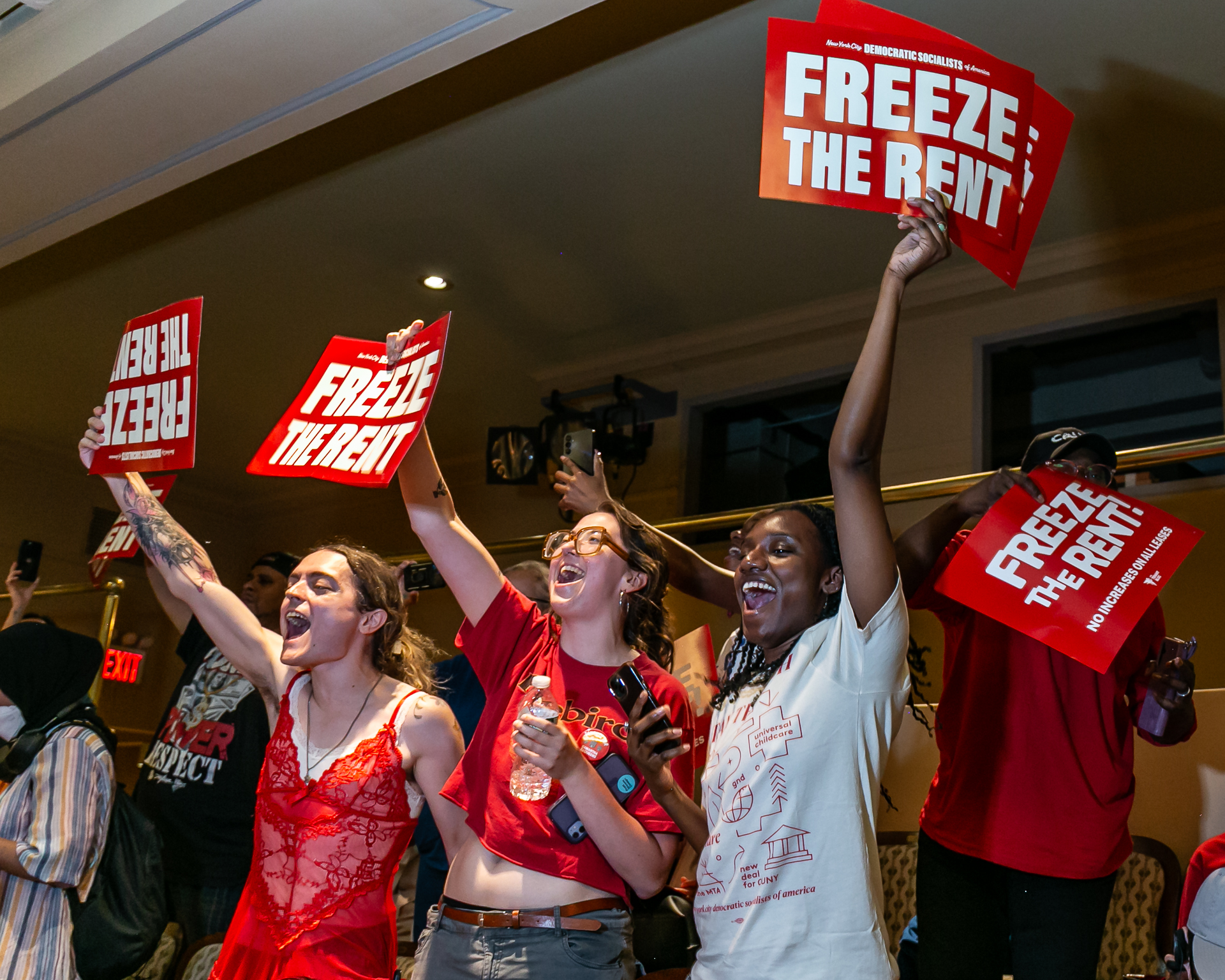
After much consternation, chanting, and even a zombie invasion, New York City’s Rent Guidelines Board members cast their final votes Thursday night, freezing the rent for the city’s 1 million rent-stabilized apartments.
The controversial proposal was a pillar of Zohran Mamdani’s affordability-focused mayoral campaign last fall. It caps a big week for the mayor, who also endorsed winners in three key congressional primaries in the five boroughs.
The board also took the unprecedented step of freezing rents on both one- and two-year lease renewals. The board froze the rent three times under Mayor Bill de Blasio, but never froze it for two-year leases.
Tenants erupted into cheers when the motion passed inside a packed Museo del Barrio in East Harlem.
“I kept saying, just like the Knicks won the championship, let’s make history today. We did,” said Sarah Delany, a rent stabilized tenant from Highbridge in the Bronx.
The RGB, which sets the allowable rent increases for 2.4 million rent stabilized tenants, last voted to freeze them in 2020, during the COVID-19 pandemic.
Landlords and some of the mayor’s political opponents are critical of a rent freeze, arguing that it will make it more difficult for the city’s rent stabilized owners to maintain buildings amid rising operating costs.
“This is a historic victory for New York City tenants. After reviewing the data and hearing from New Yorkers across the city, the independent RGB has delivered a freeze on one-year leases, and the first-ever freeze on two-year leases in our city’s history. This is the relief that working people across our city deserve,” said Mamdani in a statement.
Mayor Mamdani appointed six of the board’s nine members, and the rent freeze measure passed with seven votes. Christina Smyth, a landlord member appointed by former Mayor Eric Adams, resigned just before the vote Thursday morning. In a resignation letter, she called the integrity of the process into question, writing, “This year’s RGB order was decided last year on the campaign trail.”
The board still had the quorum needed to vote. Arpit Gupta, a public member appointed by Eric Adams, was the lone “no” vote.
Tenants drew attention to the city’s high cost of living, arguing that a rent freeze would help them afford to stay in the city.
“This rent freeze would actually provide some relief to the working class New Yorkers, and it would also provide some mental peace and make our lives just a little bit easier,” said Farhana Rahman, who spoke to City Limits with a Bangla interpreter.
She lives in a rent stabilized apartment in Astoria with her husband and son. “We love this city, New York runs on the work that the working class is continuously providing and we want to stay in our city,” said Rahman.
The freeze on two-year leases, tenants say, provides extra security.
“A rent freeze for two-year leases as well just means that many more months of peace of mind in my household,” said Rahman.

The mayor toned down his overt support for the rent freeze after taking office, perhaps wary of the board’s charge to remain independent.
Landlords have been critical of the process, which they say had a predetermined outcome, despite the board’s charge to be independent. Some have threatened to sue.
“When the mayor made freezing the rent his signature campaign promise before any data was presented or testimony was given, he crossed a line and destroyed the RGB’s credibility,” said Kenny Burgos, president of the New York Apartment Association, in a statement.
Most years, tenants and landlords tug-of-war over the rent increase number, each side armed with its own numbers, and each leaving unsatisfied.
This year, tenants made the case that rent went up 12 percent under the Eric Adams’ administration. They said that landlords’ net operating income—what they have left over after paying their operating costs—rose by 6 percent, according to the RGB’s data.
That came while tenants were struggling, said Emily Eisner, chief economist at the Fiscal Policy Institute.
“The major cuts to the safety net, the inflation and current high energy costs that we’re seeing, and the stagnating New York City economy that is making it hard for people,” Eisner said. “People just haven’t seen wage growth as high as price growth over the last six years.”
But landlords pointed to rising operating costs and the fact that one in 10 rent-stabilized buildings had rent rolls that did not cover expenses, according to the board’s data.
“Defunding rent-stabilized housing when the RGB’s own data showed a 5.3 [percent] increase in operational costs and expenses is setting up already financially distressed small owners for failure,” said Ann Korchak, president of the Small Property Owners of New York in a statement.
As those concerns grew louder, the Mamdani administration announced some steps to try and cut costs for operators, launching a city-backed insurance program, and pledging to engage state legislators on property tax reform.
“I think that the data suggests that the balance sheets of these landlords are overall healthy,” said Eisner.
During his campaign, the mayor promised four years of frozen rent. But concern from landlords and other housing groups will only grow louder.
“Buildings can’t absorb it,” said Erin Burns-Maine, chief strategy officer at the Community Preservation Corporation. “I think we’ve gotten to this critical moment where folks are realizing New York City tenants cannot absorb continued increases, but we also need to get to a point where we say these buildings cannot absorb that multi-year rent freeze without other intervention.”
But relief to operating costs will not come immediately and some policies, like property tax reform, may require state sign off, perhaps making four years of rent freezes more difficult to stomach if conditions in some buildings continue to worsen.
“Physical distress follows financial distress very closely,” said Burns-Maine. “A few percentage point rent increase, if that was something that we were going to see today, would not solve this problem either.”
Tenants say they will hold Mamdani to the full promise of a four-year freeze.
“As long as we continue our fight, he will be able to follow through on his promise, because he has the working class people behind him,” said Rahman.
To reach the reporter behind this story, contact [email protected]. To reach the editor, contact [email protected]
Want to republish this story? Find City Limits’ reprint policy here.