


Share This Article
“My mother’s generation still talks about when Jesse Jackson came to Harlem, about when Bill Clinton came to Harlem,” said Darique Warren, a 38-year-old NYCHA resident of Polo Grounds Towers. “That really goes a long way, and to me, it speaks to a more intelligent way of operating in politics.“
Darique Warren, a 38-year-old resident of Polo Grounds Towers, a public housing development between Upper Manhattan and Washington Heights, believes one of the most impactful things a politician can do is “show up to meet people, shake the hands and kiss the babies.”
“My mother’s generation still talks about when Jesse Jackson came to Harlem, about when Bill Clinton came to Harlem,” Warren told City Limits. “That really goes a long way, and to me, it speaks to a more intelligent way of operating in politics.”
Warren was just 11 when he moved into the New York City Housing Authority (NYCHA) development, situated on 155th Street and Frederick Douglass Boulevard. At the time, he said, “residents were very proud to be from Polo Grounds.”
Over the decades, as conditions he was once proud of deteriorated, he said he’s “seen more and more despondency” in his neighbors. He told City Limits, “when you see candidates physically and in person, that resonates still. It kind of seems like the more upper class candidates forgot that.”
The issues public housing residents face are as varied as the boroughs and neighborhoods their homes are in. Many residents, public officials and city leaders consider deteriorated building conditions as the top line issue for the more than 500,000 residents who live in NYCHA.
Some of those residents told City Limits that in general, the people running to represent their districts in public office—who often court NYCHA voters and vie for tenant leader endorsements—don’t talk about those issues nearly enough.

They say they resonate most with candidates who show up to their neighborhoods, double down on how important it is to tackle the city’s affordability crises, and propose smart ideas to chip away at them.
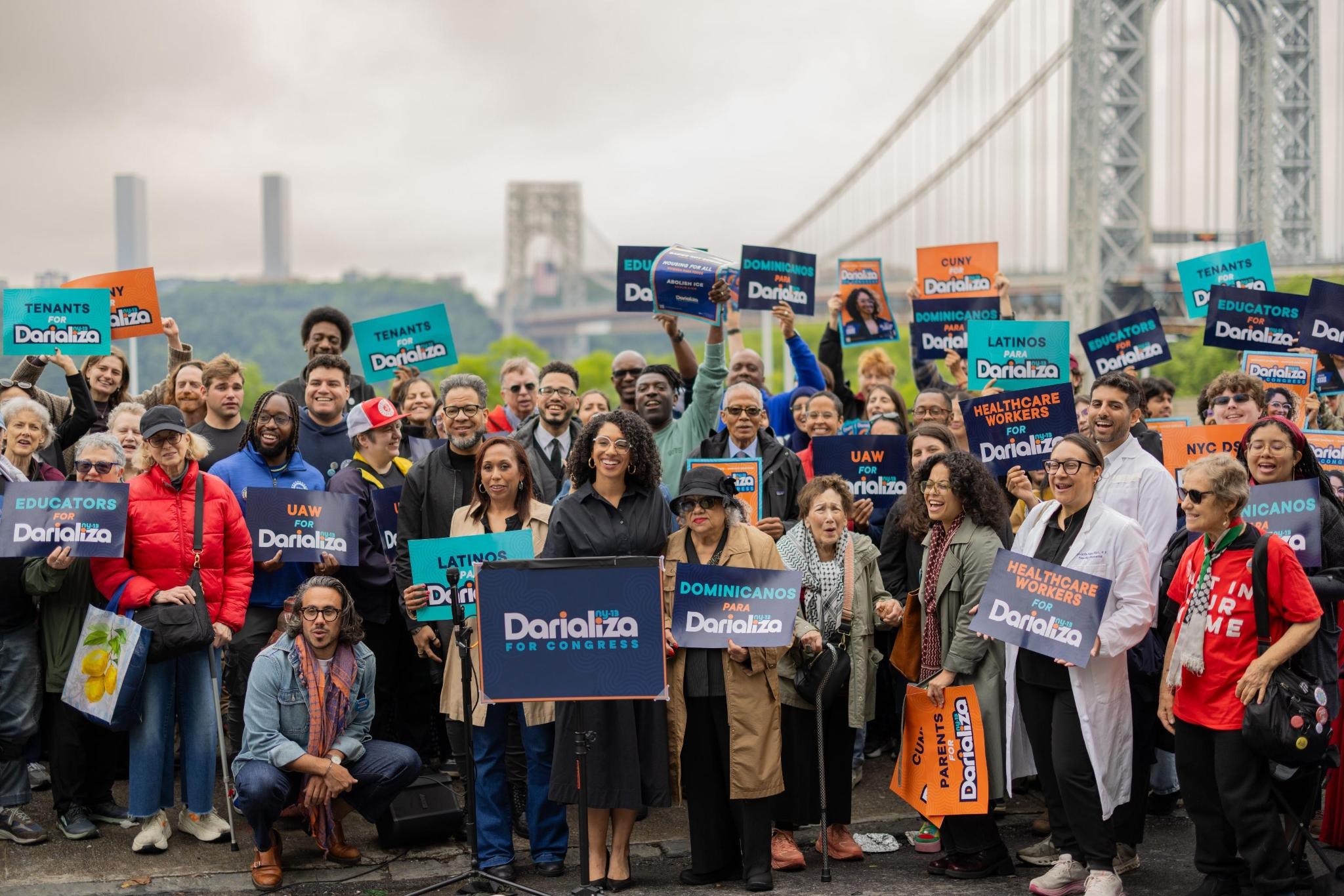
For example, Warren said he was surprised when he ran into Darializa Avila Chevalier—who won the primary this June for his neighborhood’s seat in the U.S. House of Representatives—at a community cookout before Election Day.
“She showed up to talk her campaign,” he told City Limits. “I was impressed and resonated with how she was building her platform, editing it based on what people were saying.”
From offering clear solutions to affordability issues to showing up to cookouts in East Harlem, here is what some NYCHA residents say they look for in candidates’ campaigns—and what they say is still missing from those conversations.
D13: Avila Chevalier vs. Espalliat
Warren, who works as a freelance web developer, is also a member of Community Voices Heard, a grassroots organization that educates community members on housing and tenant rights and policy.
He feels the biggest issue NYCHA residents face are lacking or poorly done repairs. “A lot of NYCHA is not ADA-accessible, and it hasn’t been addressed,” Warren said.
That issue is on candidate Avila Chevalier’s mind. “Particularly in communities that have so many seniors and people with disabilities, a broken elevator isn’t just an inconvenience. It means you can’t access your home, and this is a crisis,” she said in an interview with City Limits.
In June’s primary elections, Avila Chevalier achieved a major political victory by winning the Democratic nomination, unseating the current Rep. Adriano Espaillat, a five-term incumbent.
Her strongest areas of support in the district, which spans Upper Manhattan and a swath of the West Bronx, included neighborhoods in Inwood, Morningside Heights, parts of West Harlem, and Hamilton Heights. She’s expected to easily win the November general election in the overwhelmingly Democratic district.
Avila Chevalier is one of several New York candidates endorsed by the Democratic Socialists of America who amassed particularly strong support in June. But election data shows some of those DSA-backed primary winners struggled to gain support from voters who live in election districts that closely align with NYCHA development boundaries.
Espaillat, for example, received his strongest support from a variety of election districts, including parts of Marble Hill and Washington Heights, and precincts that make up Yeshiva University and its campus housing. Notably, he also garnered the majority of votes in precincts with NYCHA developments.
According to data from the city’s Board of Elections, the precincts that contain the Dyckman Houses, Washington Heights Rehab Houses, Fort Washington Avenue Rehab Houses, Polo Grounds Towers, Harlem River Houses, Drew-Hamilton Houses and others voted in stronger favor of Espaillat.
Notably, Espaillat won 80 percent of votes in a precinct that closely aligns with Dyckman Houses, and he won about 90 percent of votes in a precinct that includes Fort Washington Rehab Houses, along with a senior center independent of NYCHA. In a precinct that includes Harlem River Houses, Espaillat won 56 percent of the vote, while Avila Chevalier amassed about 36 percent.
Rep. Espaillat did not respond to City Limits’ request for comment.
Eli Valentin, an assistant dean at Virginia Union University’s Graduate Center in Harlem and an author, cautioned that not all voters in an election district, even one that closely aligns with the boundaries of a NYCHA development, are public housing residents.
“It’s tricky to see which election districts are NYCHA voters and which ones are not because it also depends on what other facilities are around the NYCHA developments,” he said. As a general trend, he explained, public housing residents are typically “older voters who have tended to back incumbents.”
Warren, a Polo Grounds Towers resident, said he aligns more closely with Avila Chevalier.
“She’s a union member, and that was a big green check for me,” he said. He was made aware of her about a month before the primary election, he told City Limits. A week later, he happened to run into her at the cookout event. “Then I was able to hear directly from her,” he said.
Valentin described Avila Chevalier’s primary win over Espaillat as “a repudiation of someone who has been in Congress for 10 years, but in office for a total of 30 years.”
He believes younger voters have bolstered campaigns backed by the DSA in several congressional races, including Avila Chevalier’s, because they “have expressed a preference to do away with establishment-type candidates.” The district’s overall shift to Avila Chevalier, he explains, could be a sign that she’s “speaking their language.”
Avila Chevalier described NYCHA’s stock of over 177,000 apartments as “a city within a city,” and added, “this district in particular has the largest public housing stock in the country.”
“We need to fund the repairs. The human cost of that is you have hundreds of thousands of people living in deeply undignified conditions with lead paint, with mold, with lack of heat and hot water,” she said.
Avila Chevalier’s focus on delivering quality repairs is a sticking point for Warren, who believes that the housing authority overcites its hefty $78 billion repairs backlog to explain delayed or shoddy improvements.
“The money that the city gets from NYCHA renters is a significant portion,” he said. The city estimates to receive about $920 million in tenant rent revenue in 2026.
Avila Chevalier has said she doesn’t support NYCHA’s efforts to convert its properties to Section 8, bringing in private management companies as a means to unlock repair money the housing authority can’t access on its own. During a debate against Espaillat in June, she cited a “need to make sure that public housing remains public.”
Instead, she endorses the Green New Deal for Public Housing Act, which was proposed by Rep. Alexandria Ocasio-Cortez, Rep. Delia Ramirez and Sen. Bernie Sanders and would invest up to $234 billion over 10 years to transition all of the country’s public housing stock into zero-carbon homes. Incumbent Espaillat is a supporter too, and listed as a co-sponsor of the legislation.
Avila Chevalier says it would ensure NYCHA buildings get needed repairs and essential decarbonization upgrades, and help create hundreds of union jobs. She said she also supports creating more pathways to homeownership.
“This district is 88 percent renters,” she told City Limits. “I think one of the ways we fight back against the way folks have been pushed out of the city, is about making homeownership accessible to people.” She believes strengthening programs like community land trusts and Housing Development Fund Corporations (HDFCs) can accomplish that.
D12: Lasher vs. Bores vs. Schlossberg
Primary candidates in the city’s 12th congressional district, covering Chelsea and parts of the Upper West Side, grappled over the contentious redevelopment project at NYCHA’s Fulton and Elliott-Chelsea Houses, which will demolish all 18 public housing buildings and replace them with six new replacement towers for public housing residents. The plans also include new construction of 2,500 market-rate and 1,000 affordable apartments.
The redevelopment debate there is similar to those playing out at NYCHA developments across the city, as the housing authority shifts operations of thousands of its campuses to private management companies, in order to qualify for a different federal program with a higher subsidy, mainly through an initiative called Permanent Affordability Commitment Together, or PACT.
At Fulton and Elliott-Chelsea, the plans were halted twice by courts as dozens of seniors refused to temporarily relocate and opponents filed several lawsuits challenging the plans, arguing that NYCHA should rehab the existing properties rather than tear them down and rebuild from scratch. On July 9, however, an appellate court gave NYCHA and its partners a green light to proceed with the demolition. The seniors have since filed their own lawsuit claiming NYCHA and its partners are harassing them.
The redevelopment plans were a hot button topic for several of the candidates looking to represent the district.
In the primary election in June, Micah Lasher, a state assemblyman who’s been dubbed the protégé of the district’s current representative, secured a narrow victory over Alex Bores, also an assemblyman representing Manhattan’s east side. Jack Schlossberg, a social media commentator and the grandson of John F. Kennedy, received just more than 10 percent of the district’s votes.
Lasher supports the current redevelopment plans because he believes it’s the only way to ensure those residents have livable homes, following decades of government underfunding that’s fueled sometimes dangerously deteriorating conditions in public housing.
“I don’t think anyone wants to have gotten to the place we’re in,” Lasher said in response to a social policy researcher who asked about his stance on the project in a video posted to X on June 9. “I think we’re at a crisis point at Fulton and Chelsea-Elliott and I think the plan on the table is the only viable path forward.”
Schlossberg, on the other hand, oriented himself with the seniors who refuse to leave. In March, he posted a video to Instagram where he’s seen surrounded by residents of the senior-only building, stating, “they should not be forced out of their homes.”
“We need to stop the demolition and get the private money out of here,” he said.
One 80-year-old resident, Yu Zhen Story, who is part of the group of seniors who filed a harassment case against NYCHA, described the ongoing plans as “mental torture” in the video. “I want to keep my home,” she said, and then to Schlossberg, “Jackie, you fight it for us.”
According to data from the city’s Board of Elections, precincts that contain the Chelsea and Fulton Houses voted in favor of Schlossberg.
Further north in the district, precincts that make up Harborview Terrace, at 55th Street and 10th Avenue, voted for Bores, while precincts that contain NYCHA’s Straus Houses in Kips Bay voted in favor of Lasher.
One longtime resident of the Fulton Houses, Tenant Association President Miguel Acevedo, told City Limits that he supports Lasher because he’s been a staple in the community, and has shown up to several of his building’s events over the years.
“Micah Lasher has talked about health. He’s talked about affordable housing,” Acevedo told City Limits. “Our family day events and our NYCHA night out events, even my tenant association meetings, back when he worked with Jerry Nadler, Micah was there.”
Lasher told City Limits in an email that “residents in my Assembly district know how closely my team and I work with tenants in NYCHA housing, and how I’ve fought for resources for NYCHA at the state level.”
“There is a decades-long history of utter neglect by the federal government, combined with mismanagement by NYCHA, that absolutely must change,” Lasher wrote, adding that he knows residents “also want to see their elected officials on the ground in their developments more, so they can provide a greater level of attention and responsiveness to the significant challenges residents face.”
Acevedo believes NYCHA can’t afford to fix or maintain the Fulton and Elliott-Chelsea Houses, and that the private partnership is one of the most reliable ways to not only get needed repairs, but also create more affordable housing.
“Many of the next generations want the opportunity to live in communities where they were born and raised, and it’s unfortunate that it’s gone so out of scope,” he told City Limits.
“You can’t let gentrification move you,” he said. “The only way you prevent that from happening is by being part of the conversation, and making sure people understand this is where you were born and raised, and this is where you want to live and die.”
D7: Valdez vs. Reynoso
Claire Valdez, another candidate endorsed by the DSA and Mayor Zohran Mamdani, secured the primary win in the city’s 7th Congressional District, which includes Queens neighborhoods like Long Island City, Astoria, Ridgewood, and Brooklyn neighborhoods Bushwick, Williamsburg, and East New York.
By 20 percentage points, Valdez beat her opponent Antonio Reynoso, the current Brooklyn borough president who was also endorsed by the district’s incumbent Representative Nydia Velázquez, the first Puerto Rican woman elected to Congress.
But election data shows that the DSA-backed candidate struggled to gain the support of voters who live in precincts that encase NYCHA developments. Voters in precincts that contain Ravenswood Houses, Queensbridge Houses, and Woodside Houses all leaned towards Reynoso.
Still, Valentin told City Limits he believes the neighborhood’s “dynamics were favorable for a DSA candidate in that race.”
“The heart of it is North Brooklyn, that’s the heart of the commie corridor,” he said.
He described Valdez’s victory as part of a broader trend unfolding across the city, in which voters are favoring newcomers with fresh ideas instead of familiar faces.
“Claire Valdez has only been in office for two years,” he explained, “Let’s compare that to Reynoso, who’s been in elected office since 2013. And she beats him handily. I think that just speaks to how the language that DSA is speaking is resonating with a lot of people.”
To reach the reporter behind this story, contact [email protected]. To reach the editor, contact [email protected]
Want to republish this story? Find City Limits’ reprint policy here.