


Share This Article
Tenants in buildings owned by one of New York’s most notorious landlords have suffered for years. Could Zohran Mamdani’s new housing plan, which pledges to beef up the city’s capacity to go after negligent owners, make a difference?
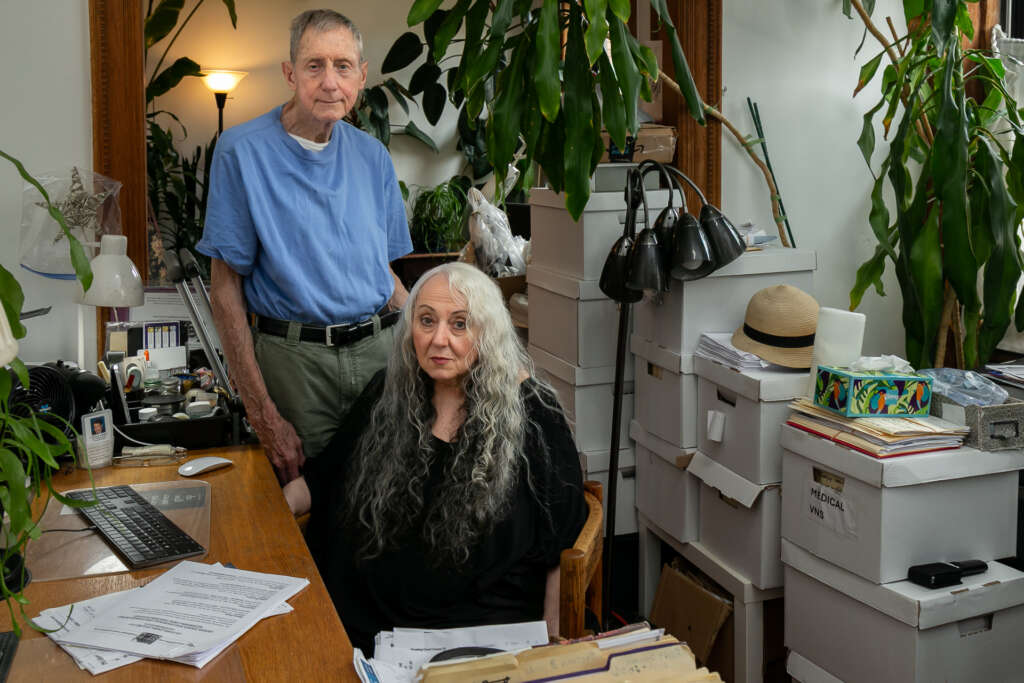
Cynthia Chaffee has been fighting her landlord, Steven Croman, for decades. Her rent-stabilized Gramercy apartment is overrun with stacks of boxes and cabinets holding thousands of files relating to her work as founder of the Stop Croman Coalition, a tenant organization that she has helmed for nearly 20 years, dedicated to chronicling his alleged misdeeds.
“He’s the poster child of bad landlords,” said Chaffee, age 75.
Croman is one of New York City’s most notorious landlords. His practice of purchasing properties, mostly in Manhattan, and attempting to force out rent-stabilized tenants to deregulate the units and turn a profit has been extensively reported since the 1990s.
In 2017, Croman was sentenced to a year in jail for tax fraud related to this practice, and was also forced to pay a $5 million tax settlement. He served eight months of jail time, avoiding a year on Riker’s Island as originally sentenced, in the Manhattan Detention Complex.
Now, Croman is facing a new slew of challenges. At the end of last year, one of his lenders launched a series of foreclosure cases against him and several apartment buildings owned by his company, Centennial Properties. Another of his lenders filed several additional lawsuits earlier this year, one of which included Croman’s personal residence.
Despite his financial woes, Croman is still involved in the day-to-day management of many of his properties, and his sons Jake and Adam have continued in the family business with a series of residential real estate purchases within the last year.
Croman’s current situation, and the pattern of distress affecting much of his real estate portfolio, could make him a prime target for the Department of Housing Preservation and Development (HPD) under Mayor Zohran Mamdani, who has pledged to beef up the city’s capacity to go after bad landlords.
Mayor Mamdani’s Block by Block housing plan features an initiative called “Fix the City” that targets enforcement against problematic housing portfolios, such as those which cycle in and out of foreclosure, with the ultimate goal of transferring buildings to preservation-focused owners. The plan also seeks to strengthen the city’s collaboration with tenant organizations, like the Stop Croman Coalition.
“These buildings are in foreclosure, but I won’t give up going after him,” said Chaffee. “I’ll never let him get away with what he did.”
An HPD spokesperson told City Limits that several organizations are being brought in to lead a preservation effort for Croman’s portfolio. Tenants are working to align with a preservation buyer while HPD plans to meet with a lender to determine next steps, the spokesperson said.
Even so, there are many Croman-owned buildings that are not currently facing foreclosure. In these cases, tenants may depend on legal action and stronger housing code enforcement—which could come with the Mamdani administration’s housing plan—to bring about decent living conditions in their apartments.
City Limits attempted to reach Croman for comment directly via his work and personal email addresses, text message, through the general contact at Centennial Properties, and through his lawyers at two different firms that are actively representing him in court, but did not receive a response.
A sordid history
Steven Croman purchased some of his first buildings on Mott and Mulberry streets in downtown Manhattan starting in 1992. Soon after, tenants began to report that he would harass and harangue them to leave their apartments, first offering buyouts, then threatening (and actually filing) lawsuits to try to evict them.
In 1999, Croman bought three adjoining buildings on 18th Street in Gramercy. At the time, as The Village Voice reported, tenants immediately began to organize, posting flyers warning that Croman was in town and that he might begin what they had already identified as a trademark harassment campaign.
Cynthia Chaffee was one of those tenants. In her living room at 346 E. 18th St., years after Croman bought the building, the Stop Croman Coalition was born.
Croman, who started doing business under Croman Real Estate and later under the related entities 9300 Realty Inc. and Centennial Properties, quickly built a real estate empire comprising dozens of buildings.
After buying one of these rent-stabilized buildings in the Upper East Side for $5.5 million in 2002, he evicted all of the tenants living there—emptying and demolishing more than 20 apartments—to build a massive mansion for his family.
Eventually, city and state authorities began looking into the numerous complaints of tenant harassment and other misdeeds. In 2016, then-Attorney General Eric Schneiderman filed both civil and criminal lawsuits against Croman, whom he called the “Bernie Madoff” of landlords.
Schneiderman charged Croman with 20 felonies, primarily related to falsifying loan documents and evading taxes, which led to his eight months of jail time and $5 million tax settlement.
The civil suit, on the other hand, concerned a pattern of what the state alleged was illegal harassment, coercion, and fraud. It resulted in a historic $8 million restitution fund, the largest financial settlement with an individual landlord at the time. The settlement also placed most of Croman’s portfolio under an independent management company for nearly five years, and a monitor to ensure compliance with the consent decree.
Schneiderman described Croman’s business model in the petition as “predicated on fraudulent and illegal practices that exploit rent-regulated tenants, and on flouting laws designed to protect the safety and well-being of New York residents.”
“With each new building he acquires, Croman and his business associates harass, coerce, and deceive rent-regulated tenants to drive them out of their long-term homes, so that they can then convert the apartments into highly profitable market-rate units,” the petition continues.

In theory, this extreme degree of enforcement should have improved living conditions for residents. It’s also gotten much harder in recent years for landlords like Croman to deregulate rent-stabilized units, thanks to an overhaul of New York’s rent regulations which eliminated a provision that let owners hike rents between tenants, among other renter-friendly changes.
Even so, 10 years later, tenants and advocates say that Croman has hardly changed his tune.
One issue that Chaffee points to is the court-appointed property manager, which was intended to be totally free of ties to Croman but, she says, was not actually. Under the consent decree for the settlement, the company that was chosen to manage Croman’s portfolio, NYC Management, was permitted to hire employees of Croman’s companies.
Chaffee says that this practice undermined the spirit of the consent decree, allowing the same abusive tactics that brought about the civil lawsuit in the first place to continue. Many tenants voiced the same concerns at the time.
One tenant living at 206 E. 83rd St. in the Upper East Side, who requested anonymity for fear of retaliation, told City Limits that the conditions in his building noticeably deteriorated when Croman regained control from NYC Management, per the timeline set by the consent decree, in 2023.
The tenant says that Croman’s management rarely performs proactive maintenance, and that his “skeletal crew” is unfit to perform the work that they are tasked with in the first place. Photos provided by the tenant show stacks of trash in front of the building, contributing to a significant mouse and rat infestation, corroborated by court records and an open “immediately hazardous” violation that HPD issued in April.
Furthermore, the tenant described a “clown car” of people moving in and out of one of this building’s units, which is listed on Centennial Properties’ website as a five-bedroom duplex, although the Department of Building (DOB) certificate of occupancy only allows for three bedrooms, records show. There are approximately $20,000 worth of unpaid penalties associated with DOB violations related to that apartment, most of which are from over a year ago.
In 2024, Gov. Kathy Hochul announced a $514,000 settlement against Croman for “unlawfully defrauding renters” by listing rent-regulated apartments as short-term rentals, following an investigation arising from tenant complaints (206 East 83rd St. was not one of those apartments). The investigation uncovered systemic violations of lease agreements and rent laws.
Construction as harassment—then and now
Francis Di Donato remembers when his building in the Lower East Side was a vibrant, multicultural community. He moved to 159 Stanton St. in 1993, 20 years before Croman bought it from the socialite “Baby Jane” Holzer. Then, Di Donato says, about a quarter of his neighbors were compelled to leave for “dubious reasons” that he doesn’t fully understand.
“There’s always been a sense of how to make our lives as unpleasant as possible, I think, so we’ll leave,” said Di Donato. “It seems to be a cookie-cutter experience for a lot of other people too.”
In 2016, the tenant advocacy organization Cooper Square Committee, which primarily focuses on residents of the East Village and Lower East Side, identified over $1 million in unpaid fines from violations related to construction safety, despite Croman still regularly receiving construction permits.
In the same year, several tenants filed a lawsuit, describing a “deliberate campaign of harassment” by creating hazardous conditions through construction, particularly by demolishing apartment units made vacant when tenants are evicted.
Di Donato also says that his apartment was burgled after someone fell through a hole in the ceiling that he believes was caused by shoddy construction work in the upstairs unit. Over half of the apartments in the building are currently unoccupied, he and reps for Cooper Square say, many of which have been gutted.
“That happened after I had already been forced to leave my apartment for three months while they were doing repairs,” Di Donato added. “This was my welcome to the Croman world.”
Di Donato and his fellow tenants also filed suit against Croman in 2021, resulting in a judge’s order to correct dozens of “hazardous” and “immediately hazardous” housing code violations.
Even so, in 2024, the DOB assigned eight stop work orders and a violation due to structural work that it deemed detrimental to the building’s stability and hazardous to residents (it’s not clear what that halted construction was intended for, exactly, as city records show no active DOB permits or applications for the building at that time).
The stop work orders are still in effect and the DOB violation from 2024 is still active, and although DOB has not handed down any additional violations since then, Di Donato still feels like he’s living in a half-finished construction zone.
“It’s just not like living in a normal building. I don’t have many neighbors. I have these doors covered over in plastic,” said Di Donato. “It’s like living in a squat right now. Half the building is demolished, and they leave construction dust all over the place.”
In court filings, Croman stated last year that many of the apartments at 159 Stanton St. have remained gutted and unfinished because “the cost of renovation is not justified by the return on investment” following the 2019 passage of the Housing Stability and Tenant Protection Act, a concern frequently echoed by property owner groups. He also highlighted that recent changes to the rent stabilization code have made it impossible for owners to set a first rent after creating new apartments.
Residents took up their lawsuit again in 2025, this time with a motion for civil and criminal contempt, citing Croman’s continuous disregard for tenants’ safety and wellbeing. Alex Matak, a lawyer at TakeRoot Justice who represented the 159 Stanton tenants, said that orders to correct can only go so far, but more aggressive legal actions can heighten pressure on chronically negligent landlords.
One of the issues with the current legal landscape, says Matak, is that the burden of proof for landlord neglect is placed on tenants, which often requires that there be existing DOB or HPD violations. But those agencies may close tenant complaints if they’re unable to gain access to the premises, or they may close violations without adequate proof of correction. This system, says Matak, is “unnecessarily hostile to tenants.”
Under the Mamdani administration, the system for resolving tenant complaints is changing. Starting this fall, tenants will receive a text if an inspector fails to gain access, allowing them to reschedule. Over the next few years, HPD will create an online system for tenants to schedule initial inspections directly, according to the mayor’s “Rental Ripoff” report unveiled in July.
An HPD spokesperson also highlighted the city’s plan to schedule building-wide inspections with tenants, in collaboration with community partners, as part of the “Fix the City” initiative.
The administration says it will also revamp or ramp up the use of other tools aimed at negligent landlords, like the Alternative Enforcement Program, which places buildings on an accelerated inspection schedule and empowers HPD to issue orders to correct; the 7A program, which assigns a court-appointed administrator to buildings with continuously hazardous conditions; and the emergency repair program, in which HPD carries out urgent repairs and bills the landlord.
On Tuesday, Mamdani announced an initiative to “fast track” certain critical repair cases in Housing Court, which officials said will strengthen the efficiency of the enforcement tools referenced above. At a press conference unveiling the plan, Manhattan State Assemblymember Linda Rosenthal referenced Croman by name as one of the “chronically bad actors” officials are seeking to hold accountable.
At 159 Stanton, the case resulted in a settlement in November 2025 that included a five-month rent abatement, as well as an order to correct the outstanding violations in the building and remedy the unsafe conditions caused by the construction and demolition work. On Aug. 12, DOB approved an alteration permit for structural work to reinforce the building’s floor joists.
If Croman fails to comply with the terms of the settlement, tenants could sue again. However, such court actions have limited effect without the support of strong code enforcement efforts by the city, says Matak.
According to Emily Goldstein, director of advocacy and policy at the Association for Neighborhood and Housing Development, “there’s no silver bullet.”
Goldstein says that housing court cases often result in settlements, which can counterintuitively hinder the amount of leverage that HPD has. Carrying out comprehensive inspections and converting uncorrected violations to liens, on the other hand, could place significant financial pressure on bad actors.
In the meantime, the tenants who remain in the building continue to live in hazardous conditions, fearful that their ceilings might collapse at any given moment.
“Some of them are literally living with a to-go bag by the front door, worried about having to be vacated at any moment due to the level of uncertainty about the building’s stability,” said Brandon Kielbasa, director of organizing and policy at the Cooper Square Committee.
The family business continues apace
In May, the tenants at 118 Mulberry St. in Little Italy received a letter stating that their building had been purchased, and that rent payments should be sent to Centennial Properties NY Inc., care of the new owner, 118 Mulberry LLC, whose manager and authorized signatory according to real property records is Harriet Croman (Steven Croman’s wife).
The LLC’s registered business address corresponds to Centennial Properties, and Harriet Croman is the only manager listed in real estate records. Croman’s son Jake told The Real Deal in a statement that he and his brother, Adam, were behind the purchase of 118 Mulberry St., and operate separately from their father. Adam Croman told City Limits that his father has “no ownership involvement in that building whatsoever.”
Steven Croman purchased the neighboring properties at 115 Mulberry St. and 120 Mulberry St. in 2012 and 2015, respectively.
Adam and Jake Croman, along with their business partner Jeremey Tahari, also purchased another mixed-use building in West Harlem this year, according to the real estate transaction platform Traded.
About two weeks after the purchase, tenants at 118 Mulberry St. reported disruptive construction coming from one of the upper apartments—workers were carrying out a demolition. DOB received the first complaint about this after-hours, unpermitted work on May 27, city records show.
A DOB inspector visited the site on June 3 but was unable to gain access; regardless, the work had been completed and all the trash had been removed by then, according to a tenant who wished to remain anonymous for fear of retaliation.
A Department of Health and Mental Hygiene inspection through the Healthy Homes program on June 4 also identified an accumulation of dust from the demolition work, leading them to issue an order to stop work and clean the debris. A Health Department spokesperson confirmed that the samples it tested from the building contained lead paint.
The building has a partial stop work order that was issued by the DOB in 2019, under a previous owner. Two construction workers died under unknown circumstances after working in the building in May 2025, before Jake and Adam Croman acquired it.
“No agency has issued a finding of illegal construction at this building during my ownership,” Adam Croman said over email. “There is also no construction underway at the building.” He did not reply to inquiries about whether there was any construction at 118 Mulberry St. during the last week of May.
Construction work is also common in buildings that Steven Croman manages. Another tenant who wished to remain anonymous due to fear of retaliation showed City Limits a video from October 2025 of what appeared to be a demolition combining a fifth-floor apartment on 110 Bedford St. in the West Village with the adjoining building at 122 Christopher St., removing the wall between the two buildings.
A DOB complaint from October 20, 2025, about the demolition went unaddressed because an inspector was unable to gain access to the vacant apartment upon two attempts.
Those buildings and dozens of others in Croman’s portfolio are currently under foreclosure after a series of lawsuits filed by Orange Owner, LLC, a corporate subsidiary of Bellwether Asset Management, at the end of last year. The suits allege that Croman, through his LLCs that own the properties, failed to make mortgage payments, water and sewer charges, and insurance. The loans under foreclosure, from Bellwether and other lenders, total more than $300 million.
Months later, a corporate entity linked to Dalan Real Estate filed seven foreclosure lawsuits against Croman, adding to four it had filed in 2025. The creditor had also initiated the sale of Croman’s Upper East Side mansion in late that year, which Croman managed to halt. He is challenging the latter case in court, pleading that the sale of his residence could cause “irreparable damage” to him and his family. The case is still active.
Croman’s buildings currently subject to foreclosure have been placed under temporary, court-appointed receivers. Chaffee’s is among them.
In January, Croman filed a holdover case to remove her and her husband from their apartment, claiming the couple failed to make the apartment accessible for inspections and repairs, which Chaffee disputes. The case is still ongoing.
In their answer, Chaffee’s lawyer cited the receivership, management’s failure to adequately maintain the building, and continuous harassment as reasons for dismissal.
“This man turned my life upside down,” said Chaffee. “I hate him so much, and what he’s done to people.”
To reach the reporter behind this story, contact [email protected]. To reach the editor, contact [email protected]
Want to republish this story? Find City Limits’ reprint policy here.
1 Comment