


Share This Article
Some lawmakers are considering a “no” vote on any budget deal that doesn’t include a significant expansion of the city’s housing voucher program, CityFHEPS, revealing a rift with Council Speaker Julie Menin. The expansion has not appeared in either the mayor or the speaker’s budget plans.
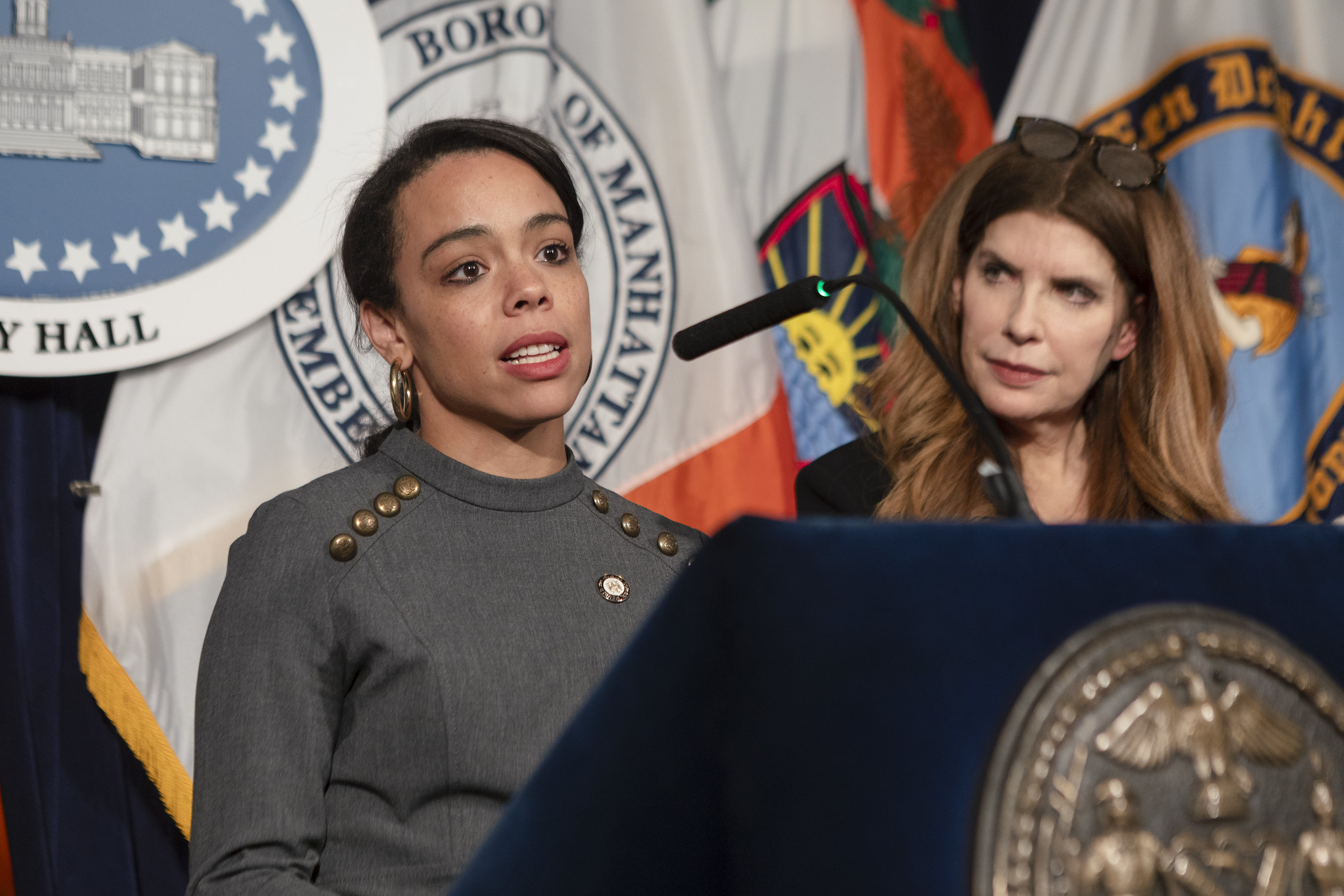
Frustration is mounting among some New York City Council members who think the long-delayed expansion of the city’s housing voucher program isn’t getting prioritized in budget negotiations.
An expansion of the CityFHEPS program, passed by councilmembers in 2023, has been held up in court ever since—after Eric Adams’ administration, and then Zohran Mamdani’s administration, declined to implement the changes, citing the high costs.
But tense budget negotiations have revealed a rift in the City Council, with some progressive councilmembers questioning why CityFHEPS has been absent in budget plans from Speaker Julie Menin and Mayor Mamdani. Several progressive councilmembers told City Limits they would not vote for a plan that fails to include an expansion of the program that tries to meet the spirit of the 2023 laws.
“I would have a tough time voting on a budget that doesn’t include significant expansion,” said Councilmember Pierina Sanchez.
Sanchez, who chairs the Council’s Housing Committee, has been trying to negotiate a legal settlement with Mayor Mamdani after the Council sued his predecessor to force him to implement the expansion. The original package of laws would have increased eligibility for the program to people with higher incomes and those facing eviction. It would also drop work requirements.
The program currently serves 70,000 households, and more people in shelters are using vouchers to find permanent housing than any other period on record. Under CityFHEPS, participants usually pay a third of their income towards rent, with the voucher covering the remainder via direct payments the city makes to landlords.
But the program’s budget has exploded in recent years to nearly $2 billion—up from $250 million five years ago—alarming some budget hawks and prompting the mayor to renege on a campaign promise to expand CityFHEPS as he tries to fill a significant budget gap.

Speaker Menin has urged the Mamdani administration to drop its opposition to the Council’s lawsuit, and pushed the administration to find funding for the expansion.
“Speaker Menin and the Council have repeatedly said that it’s the Administration’s financial obligation to fund the expansion of CityFHEPS in the upcoming budget. The Council fully intends to reach a budget deal with the Administration that expands this essential program, protecting vulnerable New Yorkers,” said a spokesperson for Speaker Menin in a statement.
Approximately one-third of people in shelter right now are not eligible for the vouchers, according to Chris Mann, vice president of strategy at the family shelter provider Women in Need (WIN). “It’s a huge number of folks that are currently ineligible that would become eligible, and we know that CityFHEPS is the number one way that households are leaving the shelter system and staying out,” he said.
Advocates have argued that the expansion will actually save money in the long term by reducing what the city pays to house people in shelters. It would “shift a $4 billion shelter industry toward permanent housing solutions that are more affordable to the city,” Sanchez said.
Speaker Menin has said she supports finding a sustainable path for CityFHEPS. She also continues to verbally commit to the program, saying Thursday at a press conference that the Council budget proposal had a higher estimate of tax revenue for next year, funding that could provide, “support for expanding CityFHEPS, which has remained a top priority of the City Council, and many, many other priorities.”
But the expansion was absent from Menin’s list of earlier budget priorities released in March. Another press release from last week did not mention the program among the Council’s priorities.
Several lawmakers are concerned that a firm financial commitment to the program won’t make it into this year’s budget, which the Council is negotiating alongside a CityFHEPS expansion settlement.
While other Council budget priorities—like a $180 million college savings program, a $130 million expansion of the Fair Fares transit program, and $32 million commitment for the Department of Consumer and Worker Protection—have dollar figures attached, leaders haven’t floated a sum for a CityFHEPS expansion, even though it could be the largest line item among them.
Mamdani’s executive budget proposal actually cuts $500 million from the program, citing administrative reforms to make it more efficient.
“If you don’t do it in this budget, that’s at least another several months to several years of litigation, and frankly, more families being in shelter for longer than they need to be, so I think this sense of urgency is very real,” said Mann.
Some compromise version of the expansion remains on the table, according to sources familiar with the negotiations. It could widen eligibility for people in shelters, but not for most people who are still housed but at risk of eviction, costing the city significantly less. It could also include a delayed implementation.
The full expansion could cost an additional $6 to $20 billion over the next five years, according to an analysis by Comptroller Mark Levine.
But a version of the program that waives work requirements and increases income eligibility—but limits eligibility outside shelters only to people in rent stabilized apartments who are facing eviction—could cost $500 million, according to an estimate from WIN.
“It’s a kind of tough thing to limit, but at the end of the day, when we look at what that money could do the most good for, we’re thinking about being able to preserve those [rent stabilized] units,” said Mann.
In a compromise expansion scenario, WIN estimates, the program would serve an additional 31,798 households—16,000 or so in rent stabilized apartments and another 15,000 newly eligible households from shelters.
“It’s a number and a proposal that is both effective and fiscally responsible, because if it doesn’t happen, the shelter costs are going to go up,” said Christine Quinn, CEO at WIN.
Both Speaker Menin and Mayor Mamdani have publicly signaled a desire to settle the ongoing CityFHEPS lawsuit. But some councilmembers are turning up the pressure.
“We cannot pass a budget that does not have significant expansion to CityFHEPS and a dropped lawsuit,” said Councilmember Sandy Nurse, who represents Bushwick and East New York in Brooklyn.
In the event that an expansion does not make it into the budget, settlement talks with the Council could continue. But advancing such a budget may prove risky for Speaker Menin, and invite some “no” votes from her progressive colleagues—though it’s not clear if there would be enough opposition to move the needle.
The City budget is due June 30.
On Tuesday, the homeless advocacy group VOCAL-NY called on lawmakers to vote “no” on any budget that didn’t include a CityFHEPS expansion.
“We need the Council to urge the Mayor and the Speaker to show how a united city government can deliver for struggling New Yorkers by resolving this legal conflict and funding expansion in this year’s budget,” the group said in a statement.
To reach the reporter behind this story, contact [email protected]. To reach the editor, contact [email protected]
Want to republish this story? Find City Limits’ reprint policy here.
6 Comments