


Share This Article
The CityFHEPS program’s expansion, first passed by city lawmakers in 2023, would extend eligibility to people facing eviction and people with more modest incomes, but has been delayed by a debate over its costs.
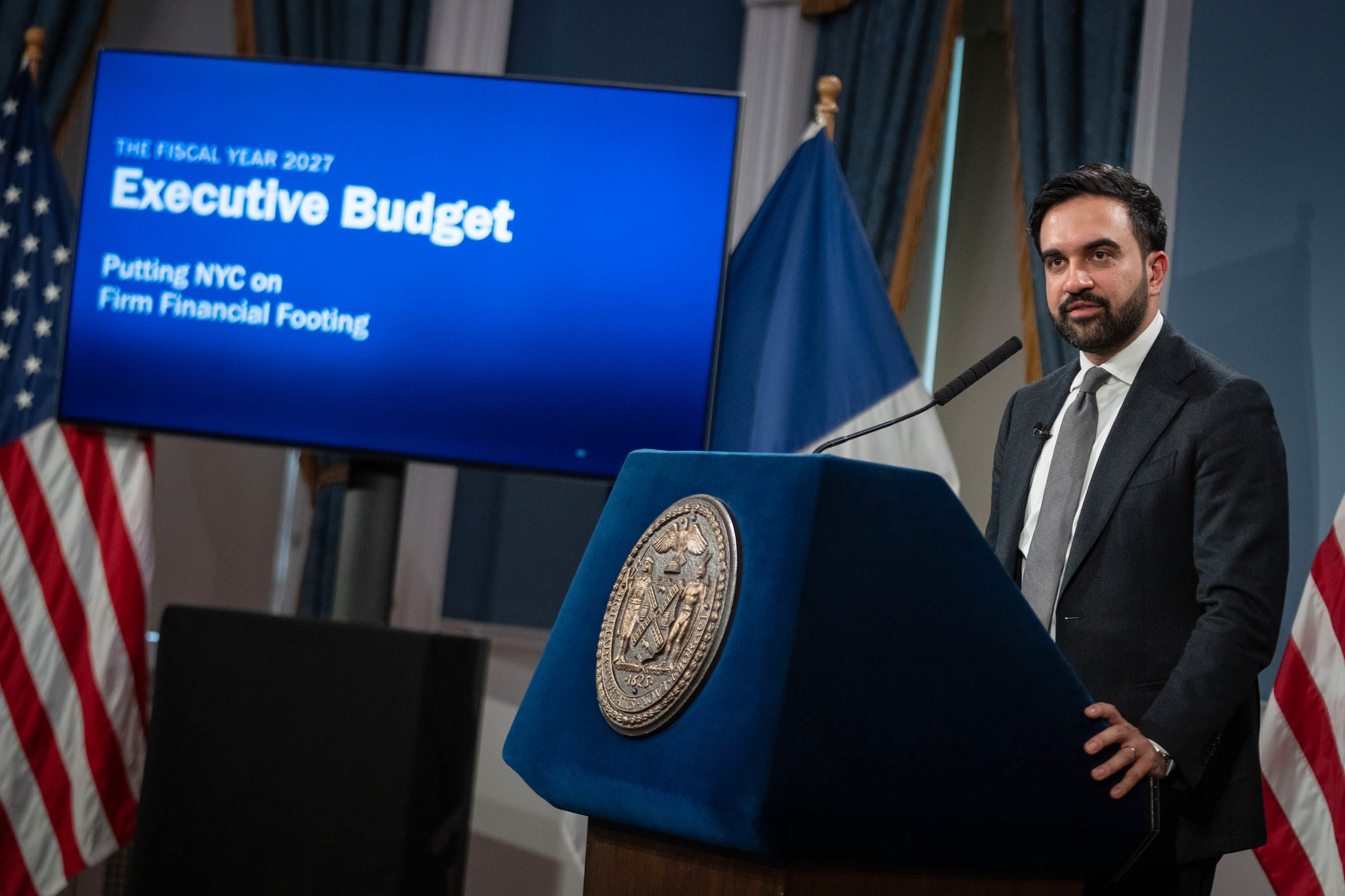
Mayor Zohran Mamdani declined to include an expansion of the city’s housing voucher program in his executive budget, released Tuesday—instead saying he wants to reform the existing City Fighting Homelessness and Eviction Prevention Supplement, known as CityFHEPS, to make it more efficient.
The program’s expansion, first passed by city lawmakers in 2023, would extend eligibility to people facing eviction and people with more modest incomes, but has been delayed by a debate over its costs.
The punt on the expansion comes during a testy budget season where the mayor said the administration faced a larger than anticipated deficit. As a candidate and mayor-elect, Mamdani had promised to implement the program expansion, something former Mayor Eric Adams had refused to do.
Mamdani said that he wanted to put CityFHEPS on firm financial footing for the future, stating that “conversations will continue” with City Council, Legal Aid, and advocates.
The expansion remains caught up in court after City Hall appealed a City Council lawsuit compelling the administration to implement the 2023 laws, which would have eliminated work requirements and increased eligibility—including to New Yorkers who are at risk of eviction, which supporters say would keep more people out of the shelter system.
Housing advocates were disappointed in the delays, but encouraged by some of the administration’s proposed reforms to make the program more efficient.
“I always remind people that it stands for ‘fighting homelessness eviction prevention supplement,’” said Milton Perez, a CityFHEPS voucher holder who lives in Brooklyn. “[We’ve seen] nothing on the eviction prevention side of it. So it’s a shame that they’re not following the law.”
Talks on implementing the expansion had stalled out as the city waited to see how much assistance it would get from New York State in closing a $5 billion budget gap, sources say.
The program, where tenants pay 30 percent of their income in rent each month and the city picks up the rest, has been successful in moving record numbers of people out of shelter and into subsidized housing. It now serves nearly 70,000 households in the city, making it the second largest voucher program in the country.
But with the success in placements came an almost $2 billion budget line—something that alarmed budget hawks, officials, and reportedly, Gov. Kathy Hochul.
“I am disappointed,” said Christine Quinn, the former City Council Speaker who now heads the family shelter provider Women in Need (WIN).
“The mayor, working with the governor and others, has come up with some unique and productive ways to balance the budget,” she said. “The program’s working because people are getting out of shelters. So to not continue that first-in-decades positive momentum with an expansion just doesn’t make any sense to me.”
While budget help from Albany did materialize—in the form of a new tax on second homes, delayed pension obligations, and postponed class size mandates—City Hall did not yet find money for a voucher expansion.
CityFHEPS is growing at a rate of 4 percent a month, according to Comptroller Mark Levine. Voucher holders also tend to stay on the program once they get on it, with 90 percent renewing their vouchers in year six, when the city hopes households may no longer need it.
In his budget presentation, the mayor also proposed half a billion dollars in savings from the program, efficiencies he said would be realized through administrative reforms. This includes helping voucher holders increase their income (thus lowering the city’s rent obligations), and optimizing other homelessness prevention programs, officials said.
“It’s not being cut and we are not creating waitlists. So vouchers will continue to be issued,” said City Hall budget chief Sherif Soliman in a news conference Tuesday.
But City Hall provided few additional details on how administrative reforms might affect costs and other barriers to using vouchers.
“Without having some details, my hope is that they have been taking the recommendations of the advocates and the providers seriously and are trying to implement some of those changes and finding ways of realizing some cost savings,” said David Giffen, director of the Coalition for the Homeless.
Soliman said the administrative savings might involve ensuring that the rent voucher tenants are paying is reasonable compared to federal standards, and reducing broker fees the city pays for.

CityFHEPS participants say the assistance can be difficult to use, in part because of discrimination against voucher holders and because of the city’s record housing shortage. But they’ve also been frustrated by administrative issues, like frequent income recalculations, hard-to-reach housing specialists, and other complications that can sometimes cause them to lose out on apartments and prolong shelter stays.
Perez said he and other voucher holders would often have to talk to several different staff on several different teams in order to get their paperwork sorted—something he would like to see the Department of Social Services address.
“I know a couple of people that had a promise of an apartment and they could not get their hands on the shopping letter,” he said, referring to a city document that participants need in order to start looking for apartments with their voucher. “Something as simple as that. If they’re not able to resolve that. I don’t expect much.”
Quinn pointed to several reforms advocates have called for: speedier shopping letter timelines, changes to make apartment inspections simpler, and having one DSS staff member follow applications from start to finish, as possible ways the program could save money.
The administration also sought to address some of those complaints in a report released earlier this week which laid out several ways to get households with vouchers into housing faster.
That includes a new program to more quickly fill units set aside for formerly homeless people in new buildings, paying rents electronically to avoid delays, and more flexibility for income recalculations. It also calls for reducing duplicative apartment inspections, and allowing for third-party or virtual inspections in some cases—ideas that advocates applauded.
The number of people enrolled in CityFHEPS jumped 120 percent over the last four years, as funding for other housing assistance programs has stalled out at the federal and state levels, despite the high housing costs in New York City, where 1 in 4 households live in poverty.
Federal voucher support has remained stagnant, funding only existing levels of Section 8, while leaving the city and state scrambling to find money for several thousand pandemic-era emergency housing vouchers that the Trump administration let expire.
A state housing voucher pilot, called the Housing Access Voucher Program, was funded at lower levels than many housing advocates wanted, and will serve just an initial 1,000 households in New York City. Lawmakers are calling on the governor to quintuple the program’s budget.
Adolfo Abreu, an organizer with VOCAL New York, said that the Mamdani administration’s proposed program fixes have potential. But the dearth of resources from the federal and state governments have made the city’s voucher all the more vital.
“I think we should use multiple tools in the toolbox and not just abandon one of the most effective ones that we have,” said Abreu.
To reach the reporter behind this story, contact [email protected]. To reach the editor, contact [email protected]
Want to republish this story? Find City Limits’ reprint policy here.