


Share This Article
“The economic data shows that holding rents steady for one year—or even four—will not substantially disrupt the city budget nor the housing stock.”
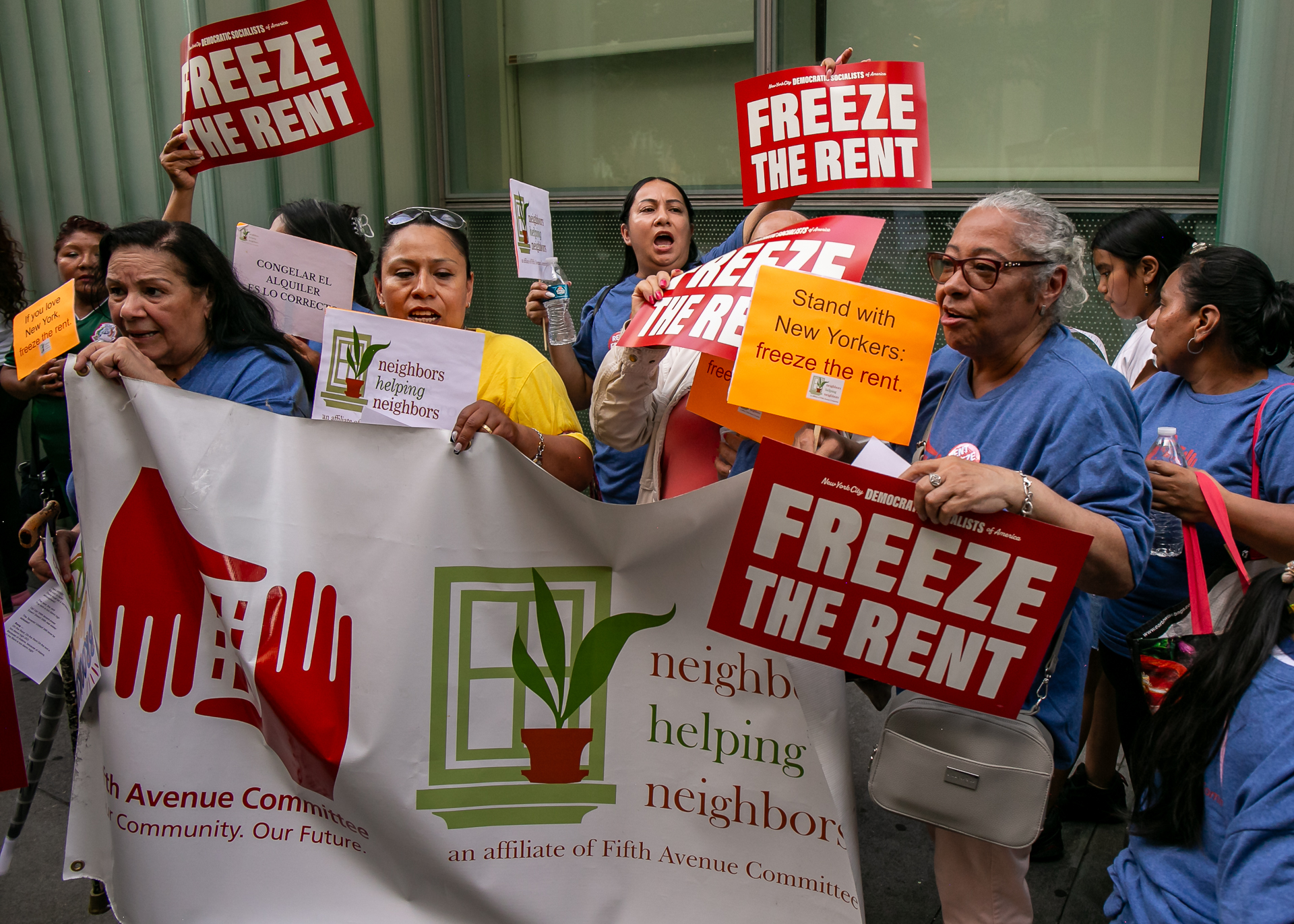

As the New York City Rent Guidelines Board (RGB) prepares for a final vote on legal rent increases, the city stands at a critical economic crossroads. Job growth has stalled after years of prices rising faster than the median income. With multiple global wars, housing shortages, and major cuts to the social safety net passing through to tenants’ budgets, we can expect the financial circumstances of New York renters to get worse over the near term.
Rent stabilization aims to protect tenants from rents rising faster than the cost of providing the housing. Politically, this looks like a zero-sum game between tenants and landlords. But from an economic perspective, the goal of rent stabilization is to eliminate cost increases in the housing market stemming from excess demand and concentrated market power. In a housing market that has experienced decades of underinvestment and supply constraint, rent stabilization acts as a crucial tool to keep rents sustainable.
The primary argument against a rent freeze is that landlords cannot afford to maintain their buildings without significant annual rent increases. This claim is false. As I argued before the RGB in March, the available data shows that most buildings with rent stabilized units are financially healthy and could sustain a rent freeze for multiple years.
The incomes of rent-stabilized buildings are largely healthy. Over the past 25 years, the average net operating income (NOI) for rent-stabilized buildings has increased by 56.6 percent after adjusting for inflation. The number of buildings in actual financial distress (negative NOI) is less than 10 percent and has been falling. In “legacy” buildings built before 1974, cost-to-income ratios remain remarkably stable at approximately 70 percent, regardless of whether the building is 50 percent or 100 percent stabilized. This indicates that the concentration of stabilized units is not the driver of financial ruin.
Want another perspective? Opinion: Small Owners Are Struggling with Affordability, Too
Recent independent analysis by Moody’s supports the feasibility of a freeze, finding that even a five-year freeze would place only 6 percent of stabilized landlords at serious risk of default.
Distress in rent stabilized buildings is rarely caused by the rising costs. Rather, it is often the result of speculative “bad bets” made by landlords who intended to push out tenants and deregulate units in these buildings. Before the 2019 housing law changes, many speculators purchased buildings at exorbitant valuations, banking on the ability to deregulate units and spike rents. When the law shifted to protect tenants, these investors were left with debt service they could no longer cover. It is not the responsibility of the Rent Guidelines Board, nor tenants, to bail out speculative investors who gambled on the displacement of New Yorkers.
While building fundamentals remain stable, tenants across the five boroughs are treading water. The inflation-adjusted median rent in New York City jumped from approximately $1,000 in 1993 to $1,500 in 2023, indicating decades of an overheated housing market, pushing rents far above a sustainable level. Outside of building many more residential units, rent stabilization is the primary tool we have to keep a stock of reasonably priced housing.
Meanwhile, real median wages for New Yorkers remain below pre-pandemic levels due to high inflation. The divergence has a stark human cost: 20 percent of rent-stabilized households report being food insecure. Financial stress is compounded by a looming “perfect storm” of federal policy shifts.
The One Big Beautiful Bill Act will remove approximately 450,000 people from New York’s public health insurance rolls this July, and up to two million by 2027. SNAP enrollment is down by about 100,000 already in New York and expected to decline by hundreds of thousands more over the next few years. When you add the inflationary pressure of new tariffs and spiked energy costs driven by the war in Iran, the average tenant’s budget has no room left to manage the rising cost of housing.
A rent freeze is not a radical demand and in fact it is an insufficient solution. The housing cost crisis requires more sophisticated tools and a long-term plan to add at least 500,000 new homes to New York City. However, in the near term, a rent freeze is a fiscally responsible corrective to a clear market failure.
The economic data shows that holding rents steady for one year—or even four—will not substantially disrupt the city budget nor the housing stock. Neither will it perfectly meet the needs of tenants. But it is a start, and one that policymakers and economists should take seriously as we search for ways to provide relief in a turbulent time.
Emily Eisner is the acting executive director and chief economist of the Fiscal Policy Institute, an independent, nonpartisan think tank focused on tax, budget, and economic policy in New York.