


Share This Article
A report from the Rent Guidelines Board, which sets allowable rent increases for stabilized units in the city, showed that landlord net income was up—but not as much as last year.
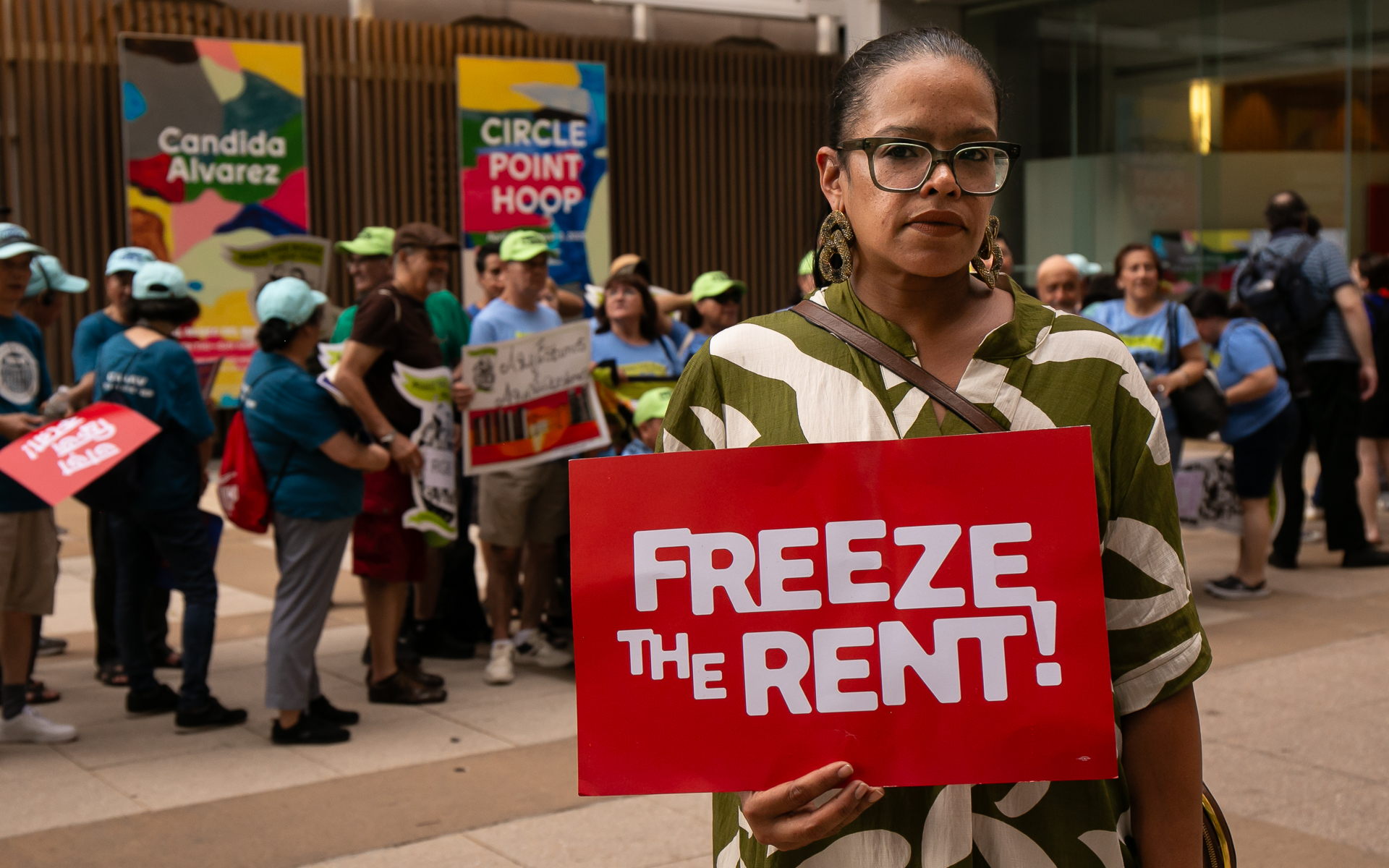
The “rent freeze” rhetoric that dominated the housing debate during last year’s mayoral race was absent from yesterday’s subdued first meeting of the Rent Guidelines Board.
Mayor Zohran Mamdani has called on the board, which sets allowable rent increases for the city’s roughly 1 million rent stabilized units each year, to freeze the rent for four years, citing the housing affordability crisis.
In a video posted to social media Thursday, Mamdani painted the RGB process as a board game, telling tenants how they can get involved at different stages of the process.
Absent from the video was any mention of the “rent freeze” he based his campaign upon. “You probably know how I feel about what should happen to the rent,” he alluded.
The word “freeze” was also absent from the board’s first meeting on Thursday, as members considered preliminary data they’ll use to decide whether to raise the rent when their public engagement process concludes in June. Mayor Mamdani appointed six new members to the nine-member board, which is made up of tenant advocates, landlord advocates, and members of the public, earlier this year.
The careful language from the mayor may also be due to the board’s charge to provide independent analysis, as well as threats to sue from members of the real estate industry, who have called a premeditated rent freeze illegal.
The debate centers around a contested figure: net operating income. The figure represents the revenue landlords of rent stabilized buildings make after they pay their operating costs.
Net income increased 6.2 percent, according to the latest RGB report, but less than it did last year, when it rose 12 percent. After counting for inflation, net operating income rose 2.2 percent, the report said.
“Tenants are winning our rent freeze. Landlord incomes continue to rise while tenant wages stay stagnant and the cost of everything from food to transportation keeps going up,” said Sumathy Kumar, director of the New York State Tenant Bloc, in a statement to City Limits. “A rent freeze is the common sense first step to making sure that the New Yorkers who keep this city running aren’t priced out of our homes.”
The New York Apartment Association, a landlord lobbying group, said that the net income measure was “misleading.” The group said that the numbers were buoyed by the profits in new buildings that have both rent-regulated units and luxury apartments.
“This report does not show a healthy rent-stabilized market,” said NYAA CEO Kenny Burgos in a statement. “If you take one millionaire and average it with minimum wage earners, you will not get a realistic average of wages, and you can’t do that with these buildings either.”
Burgos, NYAA, and others like the Small Property Owners of New York (SPONY), have railed against the rent freeze idea—saying that it will exacerbate financial distress for some owners.
“NOI is a flawed metric that presents a grossly inaccurate representation of the financial realities of small property owners,” said SPONY President Ann Korchak in a statement.
The RBG’s report showed that the share of buildings with rent stabilized units “in distress” declined slightly compared to last year, from 9.3 percent to 9.2 percent.
Taxes, labor, utilities and insurance were some of the biggest costs for rent-stabilized buildings. Mayor Mamdani has both called for reform to the property tax system that disadvantages multifamily rental buildings, and also threatened raising property taxes as one level to balancing the city’s budget.
But testimony from the Community Service Society (CSS, which is among City Limits’ funders) pointed out that the plurality of very low income New Yorkers live in rent stabilized housing.
And according to CSS’s survey of low income tenants, many were facing financial hardship and had little savings. “People are on the brink of eviction. If something bad happens they are a step away,” said Oksana Mironova, policy analyst at CSS.
Some buildings were doing better than others. The 500,000 or so units in almost entirely rent stabilized buildings were doing worse than the rest of the stock, Mark Willis, senior policy fellow at the NYU Furman Center, testified.
In some Bronx neighborhoods like Hunts Point, rent stabilized buildings had negative net operating income, despite the growth in net operating income in the city as a whole.
“Not all tenants find their incomes going up at the rate of inflation. Yet building operating costs keep going up,” said Willis. “There is no way both of these goals can be satisfied at the same time with one level of rent cap.”
The RGB will hold a series of meetings and public hearings in the coming months as its members deliberate, with a final vote expected in June. Any changes to stabilized rents would affect new leases starting in October.
Here’s what else happened in housing this week —
ICYMI, from City Limits:
- While high prices lock some New York City affordable housing tenants out of their luxury building’s amenities, some of their market-rate neighbors are getting the perks for free, a City Limits investigation found.
- The Mamdani administration is appealing a court decision compelling the city to expand the CityFHEPS rental assistance program—a suit he said he’d drop—after negotiations with advocates and City Council leaders failed to produce a compromise in time.
- This winter’s extreme cold is fueling sky-high energy bills for many New Yorkers, exacerbating a trend of steadily increasing utility rates.
- Complicated paperwork and administrative delays keep homeless families in the shelter system longer, according to op-ed author Jennifer Love Ortiz, a peer supervisor who works with homeless New Yorkers.
ICYMI from other local newsrooms:
- An appeals court is temporarily halting NYCHA’s plan to demolish and rebuild the Fulton and Elliott-Chelsea Houses in Lower Manhattan as part of a lawsuit challenging the proposal, according to The City.
- Meet the last Single Room Occupancy (SRO) tenants remaining at the Jane Hotel in the far West Village, via Curbed.
- New York State might pony up $350 million in aid for developers to finally finish the long-stalled Atlantic Yards/Pacific Park development in Brooklyn, according to Gothamist.
- Mayor Mamdani unveiled a new initiative this week to speed up affordable housing development on city-owned land by pre-qualifying a list of developers, amNY reports.
- Mamdani is backing off his threat to raise property taxes to fill the city’s budget gap, according to the New York Times.
To reach the reporter behind this story, contact [email protected]. To reach the editor, contact [email protected]
Want to republish this story? Find City Limits’ reprint policy here.
1 Comment
Effective Presenter
Landlords are still recovering from the 2,5-year Rent Moratorium they must have more money rent increases.