


Share This Article
“So many of these issues are interrelated, but so often treated as existing in silos,” says Department of Social Services Commissioner Molly Wasow Park, who departs this week after three years at the agency’s helm. “Homelessness is, in and of itself, destabilizing and traumatizing.”
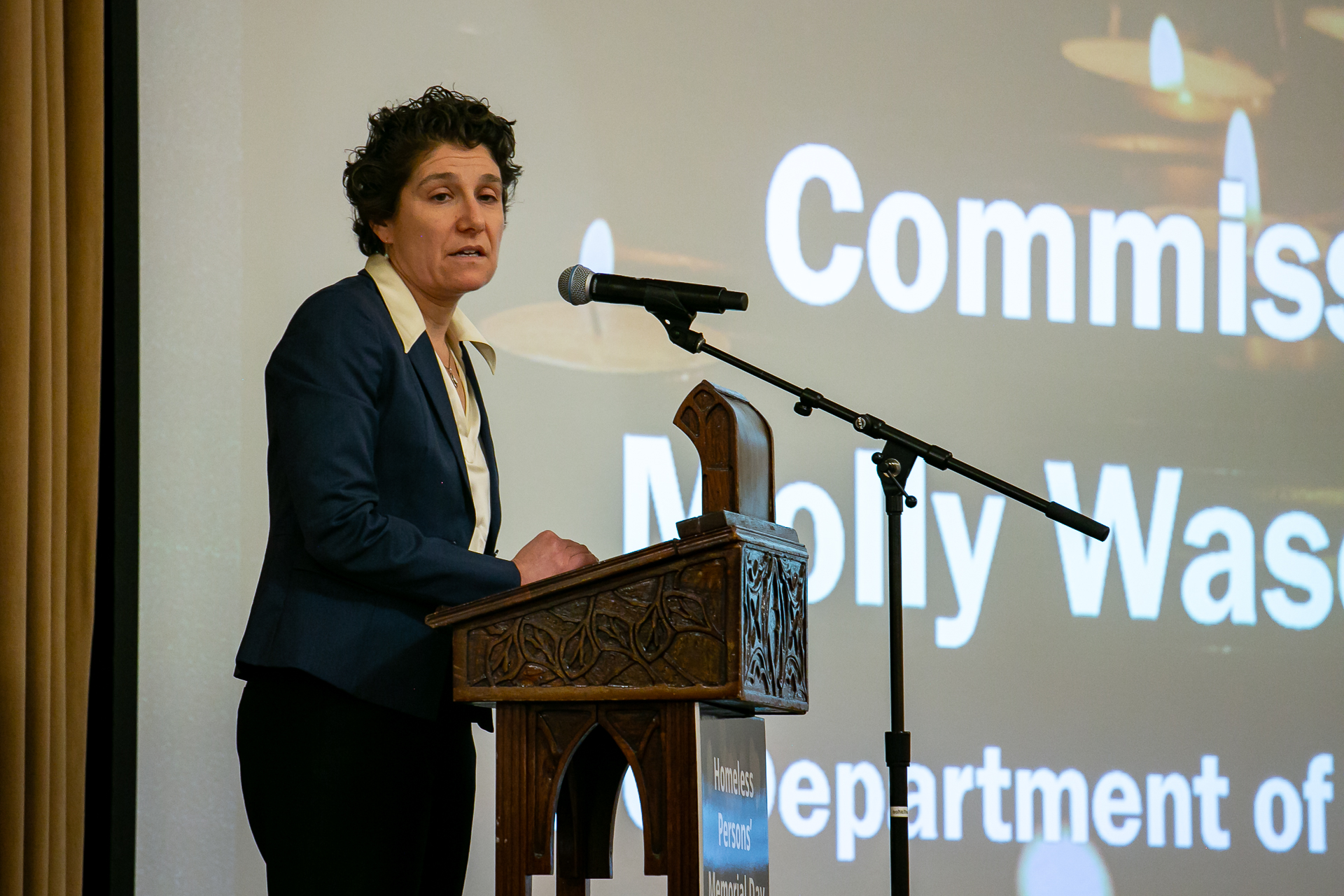
Molly Wasow Park’s tenure as commissioner of the Department of Social Services (DSS) closed as it opened: dealing with a crisis.
In 2023, when she took helm of the agency, the city faced an influx of thousands of migrants who needed shelter. In January and February of 2026, as she prepared to depart, the city experienced a cold spell that killed 29 New Yorkers.
After three years under Mayor Eric Adams, Park announced that she would resign in February after it became clear that Zohran Mamdani was moving in a different direction for leadership at the agency.
DSS oversees the city’s Human Resources Administration (HRA), which assists 3 million low-income and vulnerable New Yorkers each year, and the Department of Homeless Services (DHS) that provides temporary shelter to the homeless. It administers crucial programs like food stamp assistance (SNAP) and the city’s housing vouchers (CityFHEPS).
Mayor Mamdani appointed Erin Dalton, a city administrator from Allegheny County around Pittsburgh, Pennsylvania, as the next commissioner, as the New York Times first reported.
Park sat down with City Limits to discuss her time as commissioner, managing crises, and the future of the agency.
This interview has been edited and condensed for clarity.
When you started as commissioner in 2023, the city had a record high shelter population because of an influx of migrants to the city. Looking back, how do you think the city did in responding to that crisis?
Overall, I think the city did a really phenomenal job, and it was an immensely challenging hand that was dealt to the city and the individuals who were fleeing their home countries and coming to the United States. There were very limited external resources, a lot of people coming very quickly. It remains a point of pride for me that no child ever spent the night on the street, despite the fact that there were weeks where there were thousands of people who got bussed.
That certainly doesn’t mean that there weren’t challenges. That very emergency and very rapidly evolving response had some missteps, and things that were certainly solutions because they were what we had available to us as opposed to what we might like to do in a perfect world. But at the end of the day, the city stepped up and met the needs of what was a humanitarian emergency, and I’m really proud of that.
What would you count as the biggest accomplishments of your time in office?
The most important proactive thing that I did was really cement the agency’s identity as a housing agency. DSS has been involved in the affordable housing space for a while, but it was not part of the agency’s DNA. And under my leadership, the size of the CityFHEPS program more than doubled. There’s more than 65,000 households with rental assistance right now. We were able to dramatically increase the number of households exiting shelter to permanent housing. My first year was 15,000 households, my second year was 19,000 households, my third year was 23,000 households. Those are families and individuals who were in the most dire housing straits, they were in the shelter system, who are now permanently housed. That is an immense thing of pride.
Above and beyond just the growth in shelter exits and CityFHEPS and permanent housing placements, we created the Affordable Housing Services Program—essentially project-based CityFHEPS contracts where the agency is actually underwriting permanent housing. We restructured the 15/15 supportive housing programs, an ongoing source of housing options for really high needs individuals for years to come. We created a chief housing officer at the agency to really bring all of this work together and build on a lot of operational improvements that we were able to make. Previously, DSS did homeless services and benefits, and now one of the top of the most critical benefits that the agency administers, really embedded in everything it does, is affordable housing.
Your agency oversaw a complicated time for the city’s voucher program CityFHEPS, where costs have increased dramatically. Mayor Adams instructed the administration not to implement a planned City Council expansion, which would have made people facing eviction eligible even if they aren’t yet homeless. Your agency also proposed several cost-saving rule changes—like increasing rent contributions for longtime voucher holders and ending incentive payments for landlords holding units.
CityFHEPS is both essential and costly—how would you evaluate how you balanced the program?
Really, rental assistance shouldn’t be a municipal responsibility. I’ve been in this space long enough that I can remember when there was an annual debate about how many additional Section 8 vouchers there were going to be. And that hasn’t happened in decades. While the city shouldn’t have to be in the place of stepping up and solving for rental assistance, without it, we would be in a far worse off position.

Part of the reason that we very aggressively grew the CityFHEPS program and worked really hard to get more families and individuals out of shelter with CityFHEPS was the research arm of [the Office of Management and Budget] saying: with this many exits, we can start to bend the shelter census curve. If you don’t have a way for people to get out of shelter, then the shelter census is just going to keep going up. That’s an important consideration that sometimes gets left out of the conversation.
It is an extraordinarily expensive program. I do think that there’s things that the city can do to bend some of that cost curve. We were able to start some of it, as you noted, and fell victim to some politics. But a very concrete one that will play a role is DSS align[ing] to NYCHA’s payment standard for Section 8. That is gonna help with some cost management.
But particularly, on how much we can afford to spend on CityFHEPS and what kinds of expansion should there be—where that leads me is that any expansion that happens needs to be incredibly well targeted and really oriented towards people who would otherwise be experiencing homelessness. And the reality is that people facing eviction very rarely end up in the shelter system. Overwhelmingly, people who come into the shelter system have never had a lease or haven’t had a lease in many, many years.
One of the challenges—and this is still under litigation—with the Council legislation was that it was targeted to a population that was highly unlikely to enter the shelter system. So you have significant cost pressure combined with the fact that it isn’t gonna reduce the shelter census.
The past three years were undoubtedly a challenging time for the city—with a housing shortage in full swing and several emergencies, from the migrant crisis to the extreme cold. Is there anything that, looking back, you would have done differently? Do you have any recommendations to those leading this agency in the future?
Crisis response is always part of city government. That’s sort of the nature of the animal. I’ve been in state government long enough that I’ve been part of the 9/11 response, part of the response to the 2008 economic collapse, to Superstorm Sandy, to COVID, to the asylum seeker crisis. Responding to crises is all about making the best decisions that are available to you at the time, at that moment, with the resources that are available to you. It’s about making sure that you’re taking a broad cross-government perspective. There’s very rarely anything that a single agency can handle on their own.
And learning from it. You mentioned the cold snap. I know the DHS is doing an assessment now of what went right and what went wrong. But it’s really recognizing that it is about trying to make the best of the bad situation and also not losing sight of the fact that the proactive work is important too. It’s really easy in city government to do nothing but crisis response, but that doesn’t end up with the outcomes that anybody wants.
After the pandemic, record high levels of people were applying for social services benefits and processing delays frustrated many New Yorkers. When you took office, the city was deeply behind on processing SNAP and public assistance applications. The administration also came under fire for processing times for CityFHEPS vouchers, something that your agency worked to lower. Is there more to be done to make the agency more efficient, and how would you suggest they do so moving forward?
We were tens of thousands of cases behind. We were sued because we were so far behind on processing. It was an all hands on deck effort across the agency, to think creatively about what we could do there, because there wasn’t actually one plan when I walked in. It was very hands-on management and engagement, but also giving people from across the agency— HR and IT, the accountability office and others—space to say, “Here’s an idea.” And it worked.
It absolutely took a little while, we didn’t fully clear the backlog until the following summer, but we were able to do it because we put together a really specific work plan. We kept trying different things. We hired probably close to 1,000 people, frontline staff, to do the work, but we also got waivers on different pools from the state, we invested in technology. Thinking about all the tools that we have in our toolbox to be able to do this in a timely way. I mean, not just because we didn’t want to be sued, but because New Yorkers depend on those benefits, and they’re incredibly important.
With respect to CityFHEPS, there’s a lot of misconception out there. At this point in time, from the point where DSS receives a package to the point where it’s approved and somebody is ready to move in, it’s on average 27 days. There’s absolutely variation around that average but for the most part, [it] works relatively well. The biggest challenge with the time it takes to use CityFHEPS is finding an apartment. There’s 13,000 households in the shelter system with shopping letters [a document that indicates someone is eligible for the program and can seek an apartment] who have yet to find an apartment. So when the Comptroller put out an audit that talks about months from a shopping letter to move out—like yes, because we have a 1.4 percent vacancy rate—an absolute shortage of housing in New York City. It really sort of missed the whole point.
We did an enormous amount of work on processing times, and it was really similar to the cash assistance situation. There wasn’t one thing that the agency did. It was a combination of dozens and dozens of really technocratic and wonky projects.
Absolutely there is still more work to do. And I know the DSS team has a lot of ideas and are working on a lot of different things, so I’m excited to see what they do with that.
It sounds like you’re saying that the housing search frustrations are not entirely in DSS’s control. What solutions might help people use those vouchers more effectively or faster?
It’s very much a housing supply question. We need more housing, and we need more housing that is affordable to low and moderate income households. So really excited by the focus that we hear from the current administration on development, it is why we created the Affordable Housing Services Program. At this point, it’s about 1,000 units so it’s not enough scale to really change the needle in a city the size of New York, but those are units that are dedicated to households coming out of the shelter system—they don’t have to compete with anybody else for those units. At the end of the day, if there isn’t more housing, this is gonna be an ongoing problem.
Many homeless advocates criticized the Adams administration for its approach to street homelessness, which included sweeps that rarely led to placements in housing. They were encouraged to see Mayor Mamdani halt that approach, only to resume it a few weeks later, with a seemingly enhanced role for DHS staff and what he is calling “relentless outreach.” What do you make of his approach? Does the city need encampment sweeps?
The reason there’s traditionally been very little relationship between a sweep and placement, whether it’s shelter placement or housing placement, is because DHS does outreach in the days and sometimes weeks leading up to a sweep. And that was true during the Adams administration as well. So if somebody was going to accept a placement it is highly likely it was happening in the outreach phase of things, rather than in the cleanup phase, which is really led by the Department of Sanitation.
It’s utterly unsurprising to me, the fact that there isn’t a relationship between the moment of sweep and the placement. Centering outreach, centering that engagement—while recognizing that streets are shared spaces and that we can’t necessarily allow the accumulations of things and structures. That makes sense to me, but what is important to me is the outreach, the engagement, and then having the right placement to offer somebody. The low barrier beds—which expanded while I was commissioner but I definitely think that there is more to do there—if you don’t have the right number of low barrier bed placements or the right locations of low barrier bed placements, the outreach can only be so successful.
Are you optimistic about this approach that the mayor says involves more outreach? Is seven days enough?
With respect to placements, New York City is a “right to shelter” city. We will have a placement for anybody who wants it day of, whether it is being done seven days in advance or seven minutes in advance. That is our obligation.
I also think that this seven day piece of it is a little bit misleading. DHS and the DHS outreach contractors know what the landscape is, and they know where people experiencing unsheltered homelessness are, and they are out there doing outreach 24/7, no matter what. There are engagement efforts happening. The seven-day clock is the point in time from when the city says there is going to be a cleanup. But the likelihood that that is the first time that anybody ever shows up at that site is very, very low.
Your successor, hired from out of state, helped oversee the deployment of mental health professionals to answer 911 calls—something the new mayor campaigned on—as well as reducing street encampments. What advice do you have for the new commissioner as she tries to tackle those entrenched challenges?
I wish her all the best. I won’t presume to give advice, except to say that there’s a really phenomenal team at DHS and HRA, DSS, with a lot of knowledge about the landscape in New York City and the city and state programs, and hope that that team can continue to flourish and grow.
Last time I saw you was a solstice memorial for unhoused people who passed away last year, an event which we both found quite moving. Do you plan to continue working in homelessness and housing in the future?
I’m gonna take a little break for sure.
But yes, these are the issues that I care really passionately about and have every intention to keep working in this space. One of the things that I really came to appreciate from the DSS seat that I didn’t fully understand coming in is the extent to which so many of these issues are interrelated, but so often treated as existing in silos, right? So whether or not somebody can afford their food has an enormous impact on whether or not they’re paying their rent and what kind of job prospects somebody has is going to play into their housing stability.
There’s a lot of documentation around the relationship between healthcare issues and homelessness, but the extent to which that is not only cause, but also effect, right? Homelessness is, in and of itself, destabilizing and traumatizing and so one of the things that I’m really hoping to be able to do is to be in a seat where I can look beyond the traditional organizational or agency silos, and really think about people’s needs more holistically.
To reach the reporter behind this story, contact [email protected]. To reach the editor, contact [email protected]
Want to republish this story? Find City Limits’ reprint policy here.