


Share This Article
“Let’s not forget that the cost of vouchers represents people—people who can’t afford rent despite working full-time, people who without the voucher will become or remain homeless.”
Adi Talwar
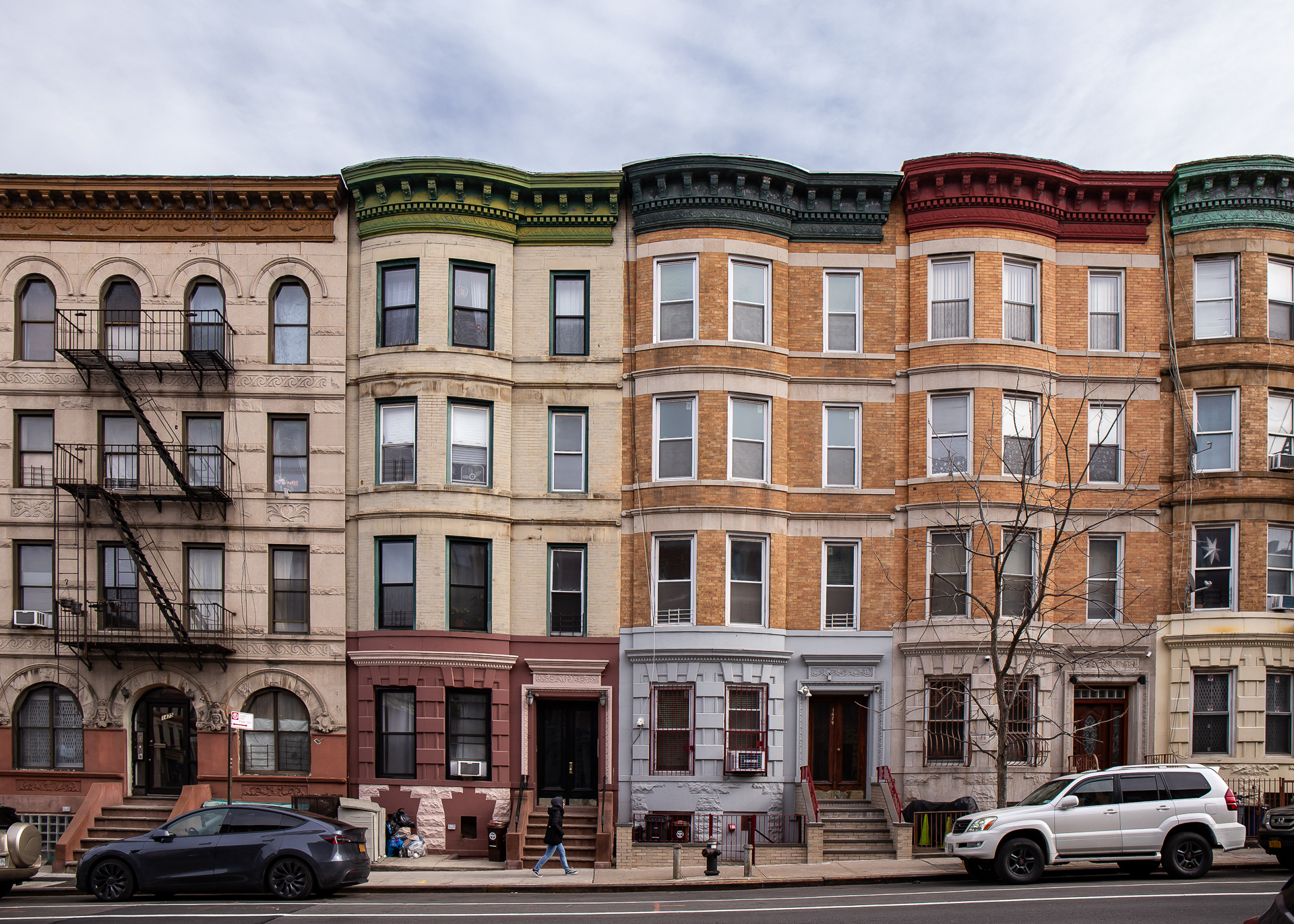
Apartment buildings along Bedford Avenue in Crown Heights, Brooklyn.As people who currently have and used to have CityFHEPS vouchers, we were troubled by the Citizens Budget Commission’s recent report on CityFHEPS. The report’s hyperfocus on the cost of CityFHEPS without meaningfully addressing the underlying reasons for that increase in cost is an incomplete framing that misses the point. The increased spending on CityFHEPS is a symptom of the housing crisis. It is one of many needed tools to help end homelessness.
It is easy to look at data and numbers and overlook the “why” or the “who.” Of course voucher spending has gone up: the cost of rent has gone up, inflation is high, and before the Good Cause Eviction Law was enacted in April of last year, 11,252 eviction filings were filed, which was the highest number since the pandemic began.
For decades, the city has prioritized building housing that working class and low income families can’t afford, while allowing the private market to inflate the prices of rent unchecked. The “who” is staggering: 85,000 people living in NYC Department of Homeless Services shelter, 32,000 of whom are children. These numbers don’t include the thousands of homeless youth and families staying in shelters for survivors of domestic violence.
Let’s not forget that the cost of vouchers represents people—people who can’t afford rent despite working full-time, people who without the voucher will become or remain homeless. People who are someone’s mother, sister, brother, aunt, cousin, son. They deserve the same level of care as a beloved family member, because they are someone’s family.

Yes, the City Council passed legislation in 2021 that “made each voucher more costly,” as the CBC report points out. However, that increase brought the voucher payment standard up to fair market rent, prior to which, families were languishing in shelters because their voucher was hundreds of dollars below market rate rent. Raising CityFHEPS to fair market rent helped thousands of New Yorkers exit shelter.
When administered correctly, and when voucher holders are able to locate apartments with reasonable rents and overcome source of income discrimination, CityFHEPS works like it is supposed to; it helps families move out of shelter and into permanent housing. That stability gives people the opportunity to pursue their goals of career advancement or furthering their education, and providing a safe home for their children.
CityFHEPS allows recipients to increase their income until they make enough money to pay rent on their own (80 percent of the area median income), unlike many vouchers which have a built-in income cliff, forcing voucher holders to choose between a roof over their heads or a job that pays decently.
The CBC report also discusses the lack of cost savings by continuing use of CityFHEPS vouchers. Some costs aren’t quantifiable; protecting children and adults from the trauma of homelessness, opening pathways for career and education advancement, providing stability that helps reunify families, protecting people from the dangers of living unsheltered on the street, to name a few.
No one wants to be homeless. It’s not a life choice someone aspires for. It happens as a direct result of circumstance, some of which are problems that a person did not create and are unavoidable, like the cost of getting an apartment, and the challenge of finding a landlord and/or property manager who will rent to you.
Being homeless is a stressful, depressing, humiliating and painful experience. Only a person who has never been in the shelter system and doesn’t know anyone who has been in the shelter system would suggest cost savings by keeping people in shelter instead of giving them a voucher. The human factor has to be considered when looking at these numbers.
The report zeros in on CityFHEPS as if it is the end all be all of the city budget. Framing CityFHEPS costs as unsustainable ignores the fact that the city’s budget is over $112 billion, making CityFHEPS 1 percent of the city’s budget. It ignores the fact that significantly more of the budget is being spent on things other than vouchers; the NYPD Fiscal Year 2025 budget was over $5.7 billion. Budgets are moral documents—they highlight values through the services in which dollars are invested.
If the administration wants to truly address the housing crisis, then it must do more and invest more in both long term and more immediate solutions. It must invest in permanently affordable housing that is removed from market speculation. It must put its weight behind advocating for the Housing Access Voucher to be included in this year’s New York State budget, and it must make deeper investments in eviction prevention, to name a few.
It is past time for Gov. Kathy Hochul to come to the table and fund the Housing Access Voucher Program, a state level voucher program, similar to Section 8 Housing Choice Vouchers. But, putting a lifesaving program like CityFHEPS in the crosshairs, without fighting for these other solutions with the same passion used to criticize the voucher, is both disingenuous and dangerous.
Jasmine Smith is a leader with Neighbors Together and a CityFHEPS voucher holder. Michael Bell is a leader with Neighbors Together leader and a former CityFHEPS voucher holder.
2 Comments
Voucher Holder
While I can’t agree more about the basic premise of your OpEd here, I want to bring up another issue with vouchers that the city needs to fix. I don’t hold a CityFHEPS voucher, but I hold another voucher from HRA. I am being told to go and find an apartment, apply if necessary, and then if the landlord approves you and agrees to sign the lease, only at that point can it be submitted to HRA for approval and payment, which will take approximately 30-60 days. In this rental environment, there are few (if any) landlords who are going to agree to sign a lease, which is a binding contract, and then wait 30 days (with unit off the market) to know if its approved and then another possibly 30 days to get paid. Why would any landlord take that risk, when there are plenty of tenants who will rent the unit and pay the deposit up front? Landlords are already hesitant about vouchers, and this gives them an easy way never to have to rent to a voucher holder. If I understand correctly, CityFHEPS tenants get a shopping letter, but the voucher I have from HASA has no such thing – nothing even says I am approved for a voucher or for what amount. I assumed there was no way this could be correct, so I went into the HASA offices to ask someone other than my caseworker, and I was told that’s how they work. This system, and not knowing an amount or whether you are approved, is completely backward, and it makes renting an apartment with a voucher almost impossible. For example, I went to an open house the other day that was from 5:15-5:30pm for a studio that was $2500. By the time I arrived at 5:20, there were already 2 applications submitted. What would be the point of submitting an application, asking the landlord just to have faith that it will come through in 30 days. Even if I was looking at apartments that were not available for 30+ days, other tenants are willing to put deposits down in good faith. None of this, by the way, was explained to me (in fact, i was told 3 conflicting things about how to use the voucher I am supposedly approved for) or is in writing anywhere that is coherent, and I wasted $200+ over the past month frantically trying to find an apartment with this voucher. I’m 4 days away from being homeless, and its because the program that is specifically supposed to help me avoid homelessness has made it so difficult that I have to find another option or move out of the city – even though I am a student and cancer survivor, trying in earnest to move my life forward in a responsible way and I moved to NYC because this was where i got the best financial aid offer at the best program (i’m an independent student, btw, and there are no dorms or anything like that). I don’t feel entitled to government help, and I am grateful so don’t get me wrong, but the reality is that the system works against voucher holders, both the landlords and the city itself, and until they realize that these vouchers are essential for normal people to live in this city and that the way the system works now will never truly work for normal people, then they should just stop complaining that its too expensive and maybe step into one of our shoes for a day and see what it’s really like. Voucher holders often times are good, hard working people who had had something go wrong in their life that put them in a situation they can’t dig themselves out of, but when the city complains about them and landlords don’t trust them, the only people that suffer are the voucher holders who can’t find a place to live. The problem is not the cost, or even SOI discrimination, the problem is much bigger than that, and the solutions proposed to help normal people find affordable housing in this city have been insufficient and unsatisfactory. Where are the leaders who have new and better ideas? That’s what we need right now.
Angry landlords
What is the criteria for renewing cityfelp voucher? If a tenant does not have a valid lease,agreement why should their voucher be renewed? You do them a favor and rent to them, they bring everyone from the street to your property and when their lease is up they refuse to leave. They should be taught how to live in a private house. No amount of money is worth leaseing to a cityfelp voucher holder.