


Share This Article
“The effort to develop an affordable neighborhood on Wards Island can be mixed with the development of a health museum in a way that supports the health and economy of the neighborhood.”
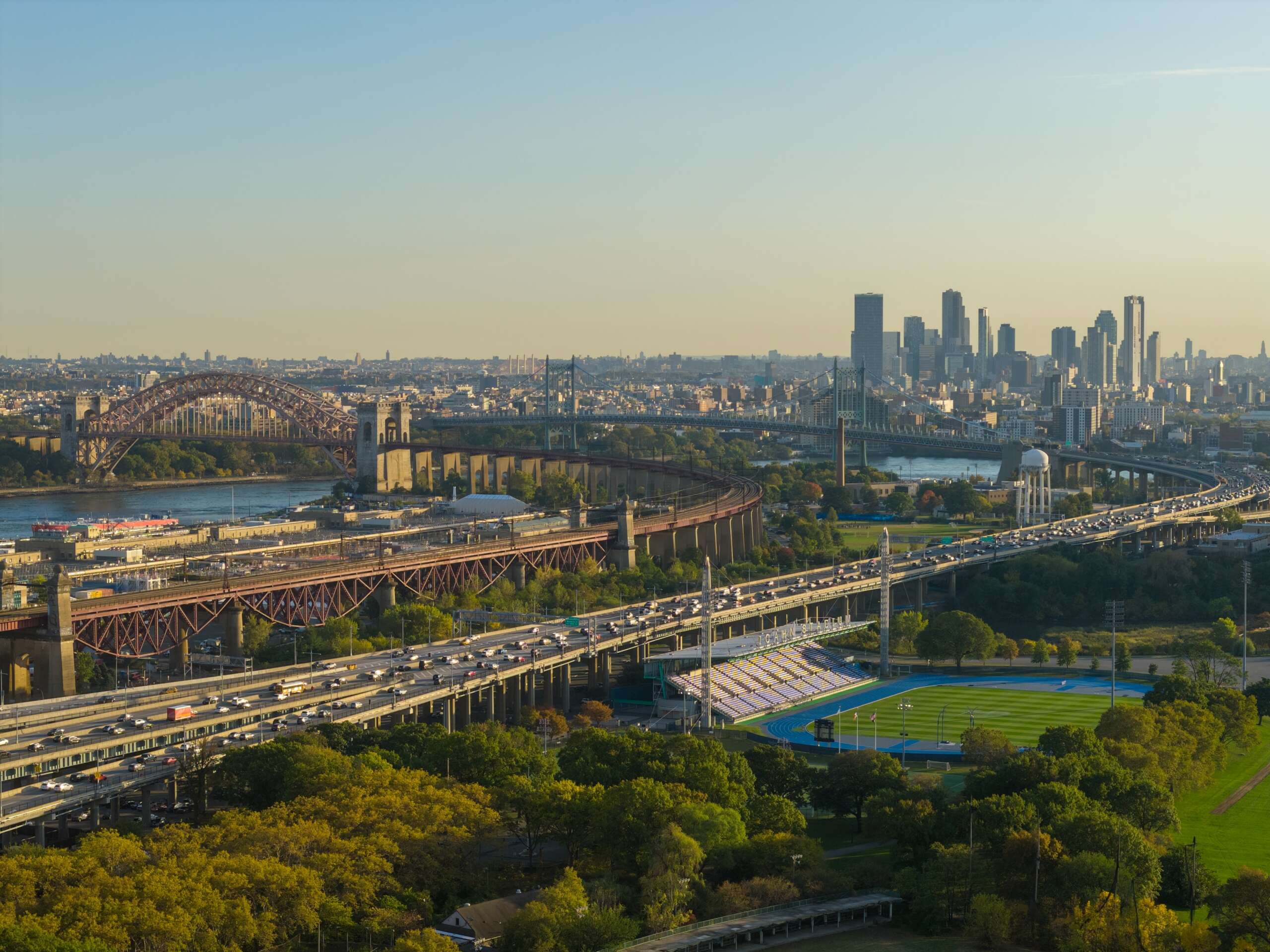

The City Council recently passed legislation for a feasibility study of affordable housing on Wards Island. Historically known as Great Barn Island, this land is rich with river views, and holds promise for affordable housing, an affordable neighborhood, and more. All involved in the effort, led by City Councilmember Gale Brewer, should be applauded.
For centuries, lovely Wards Island has been dedicated to the mission of helping people feel better, mentally. Whether the island remains a force for good in mental health for centuries more is up for grabs. The Council and the mayor’s office have gone back and forth on the future of the island. Those with commercial interests are surely hard at work, too.
Affordable housing advocates, and especially advocates for wholescale affordable neighborhoods, need to act quickly. Luckily, they have an ace in the hole, and plenty of examples to learn from.
In 1936, the sometimes heroic, oft-notorious, New York power broker Robert Moses opened the Triborough (now RFK) Bridge and sacrificed parts of Wards Island and its conjoined neighbor Randalls Island to become busy, spaghetti-string highways. In today’s parlance, Moses “uglied up” Wards Island. Yet, he also had a beautifying vision —at least from his perspective.
In the 2025 book “Exiles in New York City—Warehousing the Marginalized on Wards Island,” CUNY professor Phil Yanos explains Moses had two other goals. Moses envisioned lovely park space and a health museum on the island.
For whatever else historians think of Moses, his park instincts are reflected in the very good work of the Randall’s Island Park Alliance which serves both Randall’s and Wards Islands. RIPA has beautified park spaces and opened the land to the public in new ways. Given all we know about the health benefits of physical activity and the outdoors—including mental health—RIPA is helping preserve the culture of the Island.
So, why did Moses want a health museum too? Maybe he knew education and prevention efforts help improve both physical and mental health? My years working toward the goal of a national museum of mental health leads me to believe: Moses was right to call for a health museum, and America would benefit from one if the museum is designed to stay above cultural and political divides and focus on health concerns we all share, in ways we all trust.
The effort to develop an affordable neighborhood on Wards Island can be mixed with the development of a health museum in a way that supports the health and economy of the neighborhood, and is just as respected on Staten Island, as in Tribeca or the Bronx.
History shows there is no best way to create an affordable neighborhood. In the 1800s wealthy owners of local companies knew workers needed homes. Company towns sprung up and “affordable” housing became available. Philanthropy filled in the cracks as business owners and bankers funded churches, parks, libraries, sports, the arts, and more.
In the 20th Century, developers like Robert Moses (him again) solidified visions of affordable housing into brick, asphalt, and concrete in New York City and beyond. Tall towers maximize humans per square foot to keep prices down, but can lack community.
In this model, wealthy employers are less likely to live in the same community as employees and less likely to invest in the health and culture of those communities. Despite this, brilliant Americans have emerged from these spaces intellectually, creatively, and in other ways.
Many have tried, and some have failed in creating affordable neighborhoods. Others succeed in partial or small ways. Interesting ideas for mixed-use affordable neighborhoods are plentiful. Yet, how many offer a model that is self-sustaining, requires minimal government investment, and helps the neighborhood thrive for decades to come?
In management it is said that culture eats strategy for breakfast. In affordable housing, culture can eat everything. Lacking good culture, an affordable neighborhood can become defined by nothing more than affordable housing. When that happens, public value is lost, housing stock depreciates in value to society, and affordable neighborhoods risk becoming places no one wants to live…unless they have an economic ace in the hole.
For hundreds of years, Wards Island has stood in service to the common good, though imperfectly. Its history as a place for treating mental illness shares much in common with other mental hospitals that are now underutilized or closed elsewhere in the United States—or flourishing amidst redevelopment.
Just like there is no best way to create affordable housing, there are many ways to turn hundreds of acres of beautiful land that once was an “asylum” into a park, performing arts center, housing, playing fields, or lovely outdoor spaces.
Patients of the former Medfield State Hospital in Massachusetts once farmed its countryside and fields. Today, hundreds of acres surround closed buildings, arranged in the style of a village. A collaborative effort has transformed the outer lands overlooking the Charles River into trails, fields, and places where crickets chirp.
The buildings will be developed into a neighborhood that includes affordable housing. First, Medfield approved a cultural center for the former chapel. By 2027, the $30 million Bellforge Arts Center will open, with its leadership having developed a nifty collaboration with Boston-based music and entertainment innovator Redefined.
In Raleigh, North Carolina, the old Dorothea Dix Hospital has been skillfully opened to the public by the Dix Park Conservancy. The development of Dix Park was so successful that former Conservancy CEO Janet Cowell was elected Mayor of Raleigh. Today, with affordable housing an issue in Raleigh too, some are calling for the redevelopment of former hospital buildings.
The nationally recognized redevelopment of a former mental hospital in Traverse City, Michigan, offers yet another model. And, the redevelopment of Roosevelt Island just down the East River from Wards Island can be instructive.
Open spaces, cultural development, and the potential for affordable housing are common features of all of the above, and create employment. In the case of Roosevelt Island, a shrewd economic plan was part of the redevelopment mix.
In 2026, nowadays museums can be created in new ways to produce economic benefits and public value—perhaps this is what Moses foresaw when calling for a health museum to be built on Wards Island?
“You convinced me. Now put pressure on me.”
Let’s face it. When President Lyndon Johnson spoke sentiments like the above, he said many things. He signaled upon whom the burden to act fell and that a better world can happen if you work hard and learn quickly.
The physics of power described by LBJ are surely recognizable to leaders who develop affordable housing in New York City. Stay ahead. Outwork everyone. Get used to going up against well-heeled competing interests and faceless entities no one knows who controls. Make sure to have an economic or cultural ace in the hole.
Paul Piwko is co-developer of National Museum of Mental Health Project, Inc. and a lecturer in the Questrom School of Business at Boston University. (Note: Phil Yanos is on the Advisory Board of NMMHP, Inc.)
1 Comment