


Share This Article
The Fulton Correctional Facility was shuttered in 2011 and transformed into transitional housing for formerly incarcerated men. The program is now helping them find jobs, permanent homes, and second chances.
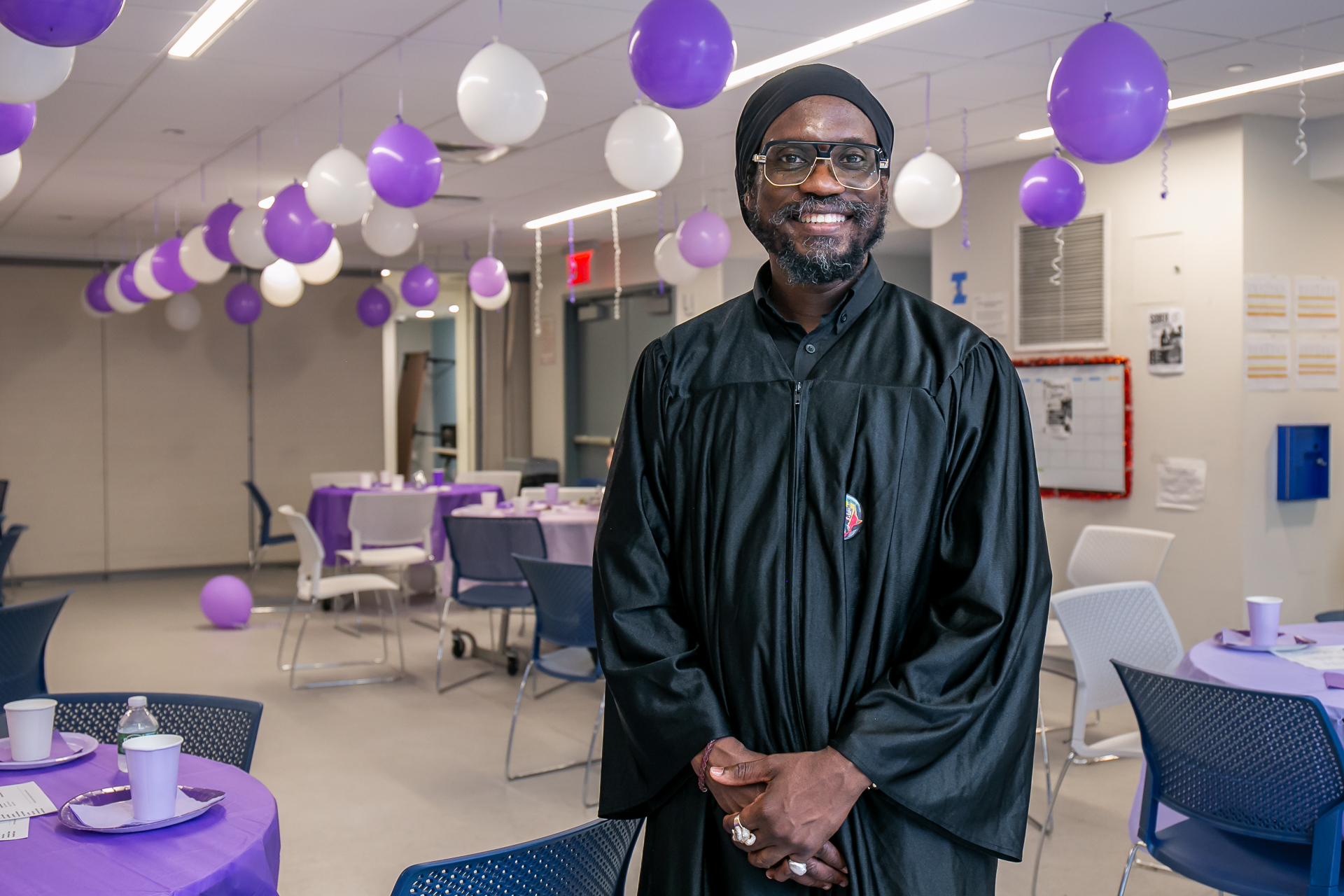
Two years ago, Peter Soto was sleeping on the bench in the park across the street.
In October, Angel Fabian was dropped off at a gas station with just his debit card and no phone.
Earlier this year, Dexter Joseph went from prison straight to the city’s homeless intake shelter.
All three men were released from New York State prisons after years of incarceration. Now they’re making a former prison in the Bronx their temporary home as they rebuild their lives.
The program, run by the city’s Department of Social Services and Osborne Association out of the remodeled Fulton Correctional Facility, provides temporary housing for formerly incarcerated homeless men over 40 reentering society—helping them find jobs, permanant homes, and second chances.
It seeks to fill a gap for people leaving prison—mostly Black and Latino men—who face significant discrimination in the housing and job markets.
“Here is different because a lot of brothers here [are] trying to change their lives. They’ve been through the fire, and they’re here to make a change,” said Joseph.
The Fulton Correctional Facility was shuttered in 2011 after 36 years of operation, as the state’s prison population continued a long decline.
Then-Gov. Andrew Cuomo said at the time that “an incarceration program is not an employment program,” referring to opposition to the state’s decision to close several prisons, which are major job sources in some regions.
Fifteen years later, the Department of Social Services runs a jobs program out of the same building that once housed up to 900 inmates.
After it sat empty for years, officials launched a $6.5 million effort to redevelop the building into a reentry hub for people leaving prison in 2015. In 2024, it opened as transitional housing and on Friday, 20 residents graduated from the center’s workforce development program.

Barred from certain types of employment, people leaving prison struggle to earn a paycheck to afford rent. And when they do seek apartments, they are sometimes discriminated against because of their criminal histories.
As a result, many people leaving prison go from living in one government facility to another: city shelters.
In spite of the challenges, Fabian said that his life changed when he decided he wanted better for himself. The help he needed was out there, he said. It was just a matter of finding it. “We know how this game go. Some want it, some don’t,” said Fabian.
Joseph, who found the program through a parole officer, said he was horrified by the congregate shelters he lived in right after he came home.
“That was the worst,” he said, describing the roaches and filth at Bellevue, which the city has since shuttered. “I couldn’t even sleep.”
Advocates have long called for better planning for people leaving the carceral system, but there aren’t enough housing resources to go around in an ever-expensive city. A report from the Coalition for the Homeless found that in 2024, 43 percent of people discharged from state prisons ended up in the shelter system.
The men at Fulton have different dreams. But they all start with one foundation: securing permanent housing.
Soto grew up in the Bronx neighborhood around Fulton. When he returned home, he bought from some of the same drug dealers he used to back in the day, and ended up sleeping on a park bench right across from the former correctional facility.
“Even after I left prison I was still imprisoned,” he said. Now housed, he hopes to “get clean, build a foundation, gain confidence, move forward into a normal life.”
For Joseph, his dream is to own a small business cooking Caribbean food. “I love cooking so it’s like therapy for me,” he said.
The seven-story building these men call home has lived three or four lives. It was an Episcopal Church in the early 20th century, a synagogue by the 1920s, a nursing home and drug treatment center in the 1950s.
Fabian said that it was weird to think about the building as a former prison, but that it was now unrecognizable. “You would never know,” he said.
It has been transformed from cells to 140 supportive housing beds for older adult men. The rooms range from singles to four beds, with common spaces, computer labs, a library, and shared bathrooms.
“Even places can have redemption and have a new chapter,” said Department of Social Services Commissioner Erin Dalton.
Since the facility’s opening in May 2024, 143 formerly incarcerated men passed through Fulton and were placed in permanent housing after, according to the Department of Social Services.
“People are getting placements and that’s not nothing in our system,” said Dalton.
During their stays at the facility, which vary based on their needs and ability to secure housing, the men can access job training, counseling, medical services and other resources on site.
Fabian secured a job as a maintenance supervisor at a Brooklyn shelter after a six-week internship. “My mother is so happy,” he said.
Last week, Fabian got a shopping letter from the city which allows him to start apartment-hunting with a CityFHEPS voucher—the most common way for someone to find permanent housing from a shelter. With the program, Fabian would pay 30 percent of his income while the city picked up the rest of the rent.
But using those vouchers can be challenging. While it’s against the law for landlords to reject a tenant because they pay with a voucher, discrimination is common. Buildings that rent to those with the subsidies are predominately concentrated in the Bronx, which would be a lengthy commute to his job at a Brooklyn shelter.
Nevertheless, Fabian has faith that he can rebuild his life, a change he credits to his mindset and the help he found with the program.
He said it was “a platform that I can transition into the man that I am today, a positive environment filled with quiet, discreet hope.”
To reach the reporter behind this story, contact [email protected]. To reach the editor, contact [email protected]
Want to republish this story? Find City Limits’ reprint policy here.