


Share This Article
The city notified two Brooklyn community boards that it will be converting hotels to new shelters for single adult men, stating that they needed to offset lost capacity from the planned closure of the central Bellevue intake facility on Manhattan’s East Side.
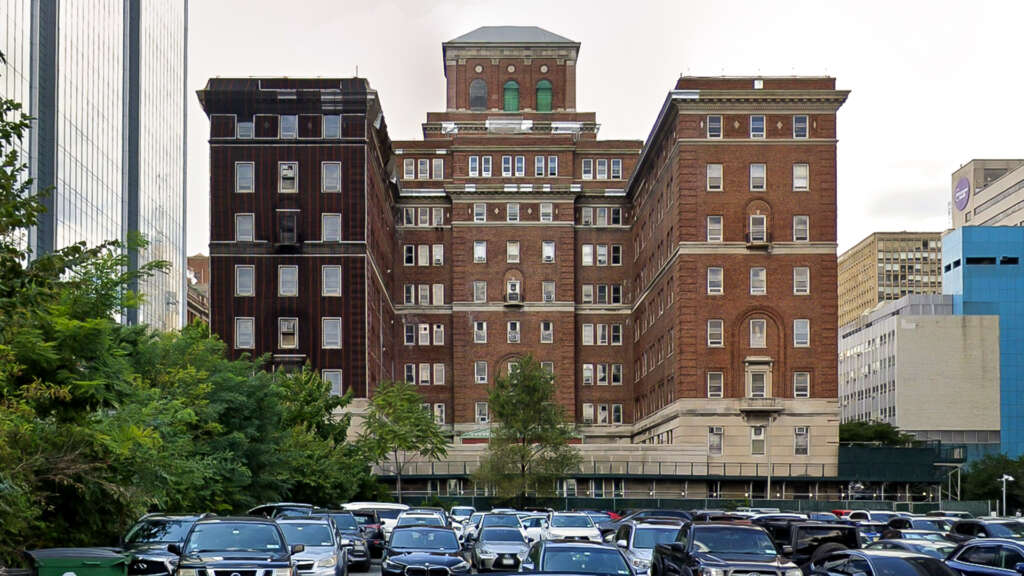
The opening of new hotel shelters is causing a stir in two Brooklyn neighborhoods as the city scrambles to replace capacity for Manhattan’s Bellevue shelter, which it plans to close due to safety concerns.
Two hotels in Flatbush and Crown Heights—a Red Roof Hotel on Flatbush Avenue and a Ramada Hotel on Empire Boulevard—will be converted to homeless shelters, according to members of Brooklyn Community Boards 9 and 14, who received notifications from the city.
A spokesperson for the Department of Homeless Services said the openings are in response to the shuttering of the Bellevue men’s intake center, replacing 250 lost beds there with 110 and 130 beds at the hotel shelters, which will be operated by the nonprofit Project Renewal. The crumbling East Midtown building is still available for intake but no longer operates as a shelter, with its most recent residents already relocated to other facilities.
Now those shelter beds are moving to Brooklyn, alarming some local residents.
“They’re reopening shelters in Brooklyn and closing them in Manhattan,” Cheryl Bernard, a Community Board 9 member, testified Wednesday night. “Why can’t we start with those communities that don’t have shelters?”
New homeless shelters often ignite “not-in-my-backyard” resistance from local communities. At Wednesday’s CB9 meeting, residents raised concerns about the speed of the process. DHS is required to notify community boards about shelters sitings in their district 30 days prior to their opening, which it did in this case. The agency sometimes provides greater advanced notice, but expedited use of the two hotels to meet urgent need.
“After halting shelter operations at the 30th Street Intake Shelter, it was necessary to identify suitable locations for temporary DHS shelters that could be quickly brought online to address the reduction in shelter capacity for single adult men,” said a spokesperson for the agency in a statement.
Jolee Cobb, a former Community Board 9 member, said that she wanted to see more transparency in the process. “I’m supportive of shelters, but saturating certain regions is not ideal,” said Cobb.
Other residents testified that they were concerned about safety with having homeless men living in the neighborhood.
“I think the city needs to do a better job of advanced planning,” said Councilmember Crystal Hudson, who represents the neighborhood around the Ramada on Empire Boulevard.
But, she added: “I think the stereotypes and assumptions about the types of people who live in shelter are offensive.”
“I know how expensive it is to live in New York City,” said Hudson. “My office is committed to doing all that we can to support both the residents in the shelters and the residents around the shelters.”

But some board members argued that CB9—which covers Crown Heights, Prospect Lefferts Gardens, Wingate, and parts of North Flatbush—already has homeless shelters, and pointed to other parts of the city that are less burdened. Both Community Boards 9 and 14 encompass neighborhoods home to more Black residents than the city as a whole; neighborhoods with the fewest shelters tend to be whiter.
The city is obligated to ensure that facilities like shelters are evenly distributed—that each community has its “fair share.” But it hasn’t always met that mandate.
Community Board 9 has 9.6 shelter beds per 1,000 people, and Community Board 14 has 5.1 shelter beds per 1,000 people, around the middle of the pack for New York’s community boards, according to a 2023 analysis from then-City Comptroller Brad Lander.
“I would not consider my district one to be overburdened, but I understand the perception that it feels like we are and those feelings are real,” said Hudson.
Due to the city’s“right to shelter” mandate, everyone in need who requests a bed gets one. The city often turns to hotels in times of high shelter demand, as well as during emergencies like the pandemic.
But hotel shelters tend to be more expensive to operate than purpose-built shelters. An expedient need for beds also means fewer site options; there are only so many hotels where converting to a shelter makes business sense.
“In nobody’s mind are hotels the best solution to this, but if the city does not have enough appropriate shelter capacity, it has a legal and moral obligation to make sure that people have a place to stay,” said David Giffen, director of the Coalition for the Homeless.
The Mamdani administration has said that it wants to move towards more safe haven shelters that—like hotels—afford residents more privacy. But hotel shelters have also been criticized for not having cooking facilities on site, and serving substandard food.
At Mayor Zohran Mamdani’s Tuesday presentation on his executive budget for the upcoming fiscal year, the mayor said the city is actually trying to move away from emergency hotel shelters as a cost savings measure.
City Hall did not immediately return requests for comment.
To replace Bellevue, the city plans to move intake for single adults to a new facility in the East Village, and the intake center for adult families—usually people who are related or married without children—to 333 Bowery.
But the move has been held up by a challenge in court and a judge that issued a temporary restraining order until May 28.
The city previously said that 250 residents living at Bellevue had been relocated to other facilities in Brooklyn. The two new hotel sites have yet to open.
The new intake center on Third Street, currently home to a substance abuse treatment site and a federally qualified health clinic, has 175 beds for single men, while the new intake site for adult families has 108 beds for people with mental illness.
“We hope there’s an opportunity to create something that actually is properly designed and works well,” said Giffen.
To reach the reporter behind this story, contact [email protected]. To reach the editor, contact [email protected]
Want to republish this story? Find City Limits’ reprint policy here.