


Share This Article
“Planning cannot be something government does to communities instead of with them. Local residents carry valuable knowledge that can’t be matched by planners sitting in a central office.”

New York City’s housing crisis is urgent. We need to build more housing. We need to build it faster, make it affordable for working families, and create community infrastructure like schools and playgrounds so neighborhoods can thrive. The way we build housing matters just as much as how much we build.
This is especially important to remember as the City Council considers the mayor’s nominee to chair the Board of Standards and Appeals, one of the most consequential and least understood institutions governing land use in New York City. The Board’s leader wields immense power to shape and implement housing policy across the city. The nomination gives us a chance to take a step back and define what our city’s vision for housing and development needs to be.
Over the last 25 years, we simply haven’t done that. And that lack of clear vision has led to the crisis we are in today. From Mayor Bloomberg’s massive luxury rezonings, like the Williamsburg-Greenpoint waterfront, to Mayor de Blasio’s controversial neighborhood rezonings, time and again we’ve failed to provide affordable housing and instead accelerated neighborhood displacement—and we’ve still not built enough.
I know this from experience. Before I was elected to the City Council, I spent years as a civil rights lawyer fighting displacement in some of the neighborhoods harmed most by arbitrary housing policies, like Williamsburg and Greenpoint. I fought against a discriminatory rezoning at the Broadway Triangle in Brooklyn, a large undeveloped parcel in the heart of North Brooklyn. The City of New York imposed a vision for development there, shut out communities of color from the planning process, and violated the Fair Housing Act. With the community leading, we successfully fought for a far more inclusive project and transformed fair housing law in New York City.
Today, I represent Jackson Heights and Elmhurst, Queens, two of the most densely populated neighborhoods in New York City. This corner of Queens has welcomed generations of immigrants but with paltry public resources to support them—our area has the least amount of green space and is starved of public goods like community centers and swimming pools.
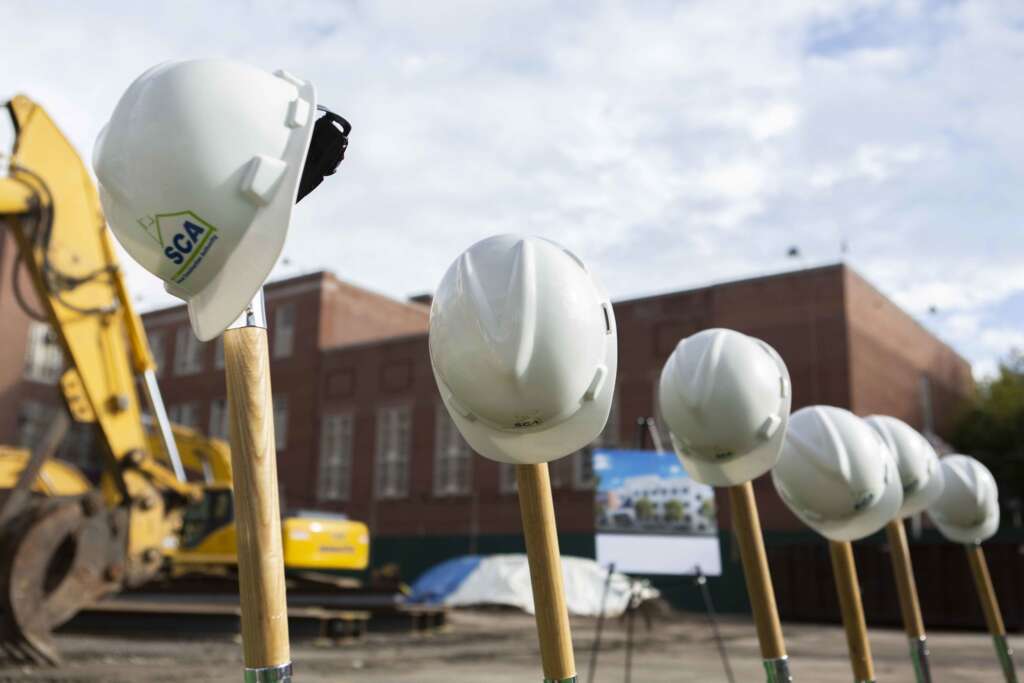
This was top of mind this year as we brought the first development to Elmhurst in decades. What was once a bank parking lot will now become housing that’s truly affordable to my neighbors, with more green space than legally required, and the first-ever neighborhood pool.
My experiences have shown me how community voices can strengthen development. Yet in today’s debate about housing, some argue that the only way to solve our worsening housing crisis is to give city planners even more power, limit community input, and focus almost entirely on the number of units built.
But pitting housing development against community-centered, holistic planning is a false conflict. When we shift power away from communities and into the hands of city planners and developers, we lose needed perspective. We can forget about all the resources a neighborhood needs to thrive and the infrastructure needed to support the new housing we build. And we often forget that every neighborhood is different, and that city government has a crucial responsibility to stop the displacement of communities as we develop.
I believe we can and must build more housing quickly. Communities also need a real voice in how we plan and develop their neighborhoods. When we build new housing, we must make sure it’s affordable. We must ensure tenant protections are being enforced to keep people in their homes, and we must create schools, hospitals, parks, and the necessary infrastructure for healthy, livable communities. Otherwise, we risk worsening displacement and making our city even less affordable.
Without this holistic vision for housing in New York City, we risk losing what makes it so special. New York is a city of neighborhoods. We are hundreds of distinct communities, each with its own history, needs, architecture, culture, and institutions. Jackson Heights is different from Williamsburg. And what each of those communities need, and what is affordable to them, is different from Glen Oaks or Harlem. A community struggling with overcrowded schools, too little open space, and packed subway platforms should not be planned the same way as a neighborhood with lower density, different transit options, and different infrastructure needs.
I understand the impulse behind calls to reduce community engagement, and I agree that New York’s land-use process can be unnecessarily bureaucratic. Still, there is a profound difference between eliminating bureaucracy and eliminating democracy.
Community review emerged from hard lessons of the Robert Moses era. Moses built the Cross Bronx Expressway and the BQE by bulldozing communities of color, displacing many, and leaving scars that remain today. His pursuit of “progress and efficiency” shows what happens when concentrated power suppresses local concerns.
We need to safeguard a community process while preventing NIMBYists or those who want to veto development from manipulating that process. The answer is not to choose between a top-down development approach that silences communities, or one that allows neighborhoods to block needed growth. We have to create a coherent vision for New York that preserves meaningful community power and strong protections against displacement, while enabling us to build the housing, infrastructure, and climate resilience our future demands.
Planning cannot be something government does to communities instead of with them. Local residents carry valuable knowledge that can’t be matched by planners sitting in a central office. They know best which streets flood, which schools are overcrowded, and which institutions hold the community together. Government must do the hard work of engaging them rather than taking shortcuts to impose a vision of development on them. Efficiency cannot become uniformity. Good planning begins by understanding these differences, not pretending they don’t exist.
Ultimately, this is why the leadership of the Board of Standards and Appeals matters so much. It’s a key component of the larger approach we decide to take in solving this city’s housing problem. At Tuesday’s hearing, the Council has an obligation to carefully examine not only the qualifications of the mayor’s nominee, but their philosophy and beliefs about community participation, neighborhood planning, and displacement.
The challenge before us isn’t simply to build more. It is to build while preserving what makes New York, New York—thriving, vibrant communities. We can reform our land-use process without sidelining community input. And we can address our housing crisis while requiring developers and government to earn the trust of neighborhoods before construction starts. That’s how we build a brighter and more affordable future for our city.
Shekar Krishnan is a member of the City Council for District 25 covering Jackson Heights, Elmhurst and Woodside, Queens.
5 Comments
AQ
A lot of hand-wringing about the need to build a better process without any of the vision to actually do it. This is the type of op-ed that might have sounded l novel in 2008, but sounds increasingly tone-deaf in an era of some of the worst housing costs in the world. If CM Krishnan wants to offer platitudes about community inclusion instead of a vision of how to not have much-needed housing development be held hostage by unrepresentative busybodies who attend community board meetings on random Tuesday evenings then he may as well have called this op-ed “I support the status quo.” Disappointing!
Dolores
Agree with everything you said, except the meetings are on Thursdays.