


Share This Article
Advocates say they intend to fight implementation of the U.S. Department of Housing and Urban Development (HUD) rule, which they say could force some 2,500 New York households to give up their federal housing assistance or separate from family.
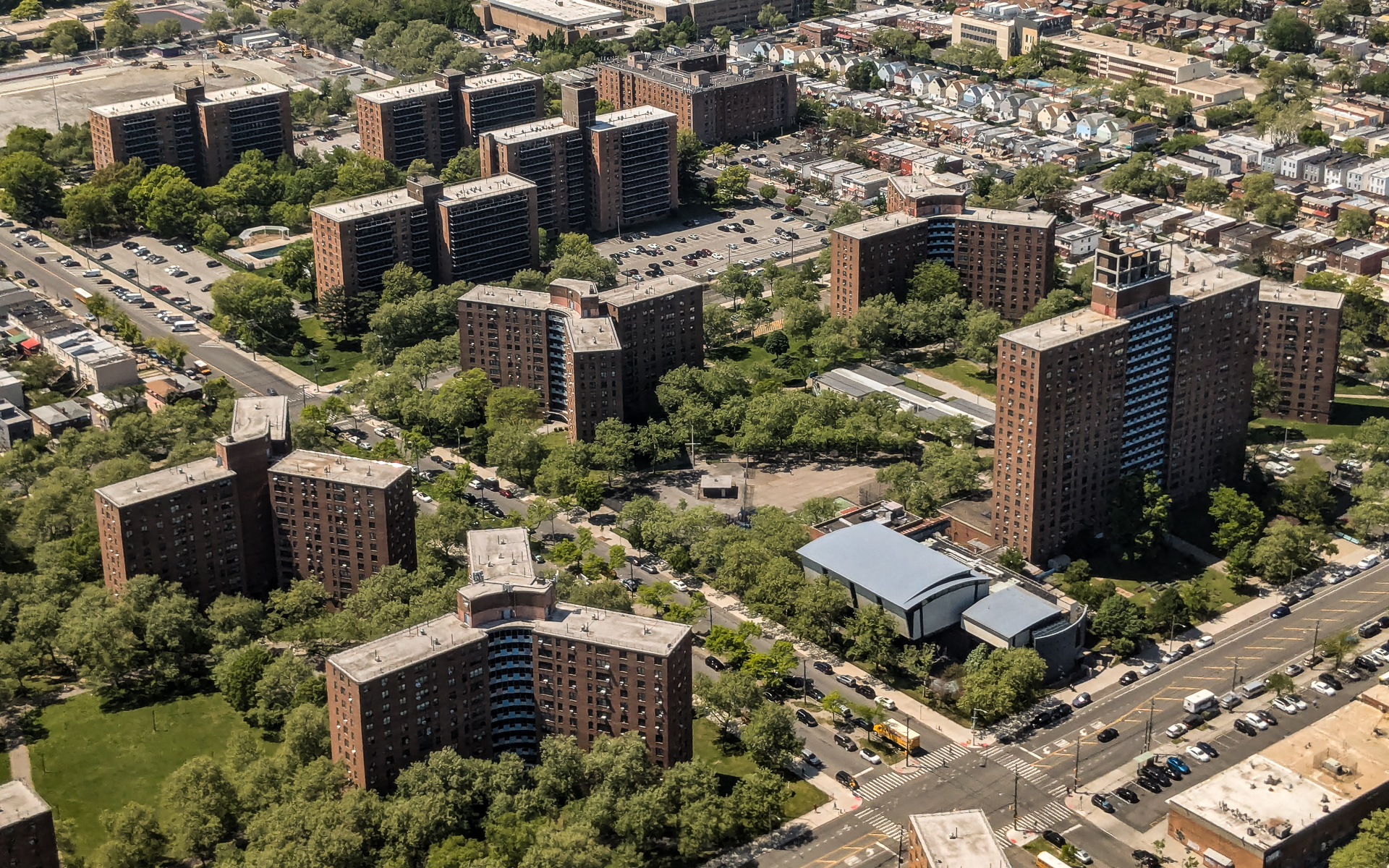
On Nov. 10, the U.S. Department of Housing and Urban Development (HUD) issued a final rule requiring households in federally funded public housing to verify citizenship, potentially affecting thousands of families with mixed immigration statuses.
The new rule, which was proposed earlier this year and would go into effect on Dec. 14, tightens eligibility requirements for federal rental assistance for immigrants especially.
Currently, undocumented immigrants are not eligible for federal housing subsidies. But they are allowed to live in federally subsidized properties—like New York City Housing Authority (NYCHA) buildings—with other qualifying family members in what’s called “mixed-status” households.
Those households pay a higher percentage of the rent to account for the ineligible family member, receiving what’s known as “a prorated rate.”
Under the new rule, every member of a household that receives federal rental assistance—including those with Section 8 vouchers, or who live in Section 9 public housing—will be required to provide proof of their citizenship or an immigration status that’s eligible for federal subsidies, as outlined in federal regulations called Section 214.
Even immigrants who are in the United States legally could be at risk under that requirement, experts said.
“People can be in the United States lawfully, but they are not necessarily eligible for rental assistance under Section 214,” explained Lucy Newman, the supervising attorney of Legal Aid Society’s public housing unit, adding, “that’s a really significant part of this.”
Immigration statuses that are eligible for federal housing assistance include green card holders, asylees or refugees, survivors of human trafficking, self petitioners under the Violence Against Women Act, immigrants admitted for lawful temporary assistance, amongst others.
Non-eligible immigration statuses include U visa holders, DACA recipients, TPS holders, and undocumented immigrants.
Newman explained that on average, three out of four members of New York City’s mixed-status households have an immigration status that’s eligible for federal assistance, and warns that the new rule could trigger those eligible members to move, or force them to separate from loved ones.
A coalition of 22 state attorneys general, including New York’s, wrote a letter to HUD Secretary Scott Turner in April opposing the rule change, which would impact 2,500 mixed-status households in New York.
“We and other activists are working on delaying or stopping the implementation of this, including considering legal action,” Newman said.
Public comments submitted in opposition of the rule argued that it’s unnecessary because non-eligible household members don’t receive federal subsidies, and that it would displace households without freeing up assistance for others.
“It is actually more expensive to fund fully eligible households, because the subsidy has to cover all of the people in that household,” Newman explained. “If this rule goes into effect, the overall situation is they end up helping fewer people because the program will cost more.”
According to the Center for Budget and Policy Priorities, a nonpartisan policy group, nearly 80,000 people in 20,000 households nationwide could be at risk of losing their homes; 96 percent are people of color, including 86 percent who are Latino.
After California and Texas, New York State has the third-highest number of mixed-status households in public housing.

NYCHA, which administers a Section 8 program as well Section 9 public housing developments, did not immediately reply to a request for comment about the rule change. The city’s Department of Housing Preservation and Development, which also administers Section 8 locally, referred questions to the mayor’s office.
In a statement to City Limits, Mayor Zohran Mamdani expressed his opposition to the rule, while reassuring New Yorkers receiving federal housing assistance that last week’s announcement will not result in an immediate change to their subsidy.
“In New York City, we believe everyone deserves a safe, affordable place to call home, regardless of where they were born or their immigration status,” Mamdani said. “The City is evaluating every available option to defend New Yorkers and protect their access to housing. Because no one should live in fear of losing their home because of where they come from.”
The Division of Housing and Community Renewal (DHCR), which is part of the New York State Homes and Community Renewal and oversees some Section 8 programs, said it will “continue to analyze the potential impact of these proposed changes.”
HUD didn’t reply to City Limits’ request for comment. In an interview with FOX, HUD Secretary Turner referred to the rule as closing a “decades-old loophole that allowed mixed-status roommates, so you may have one [tenant] that is eligible or legal, and then others living inside the house that are not legal, so we’re closing this loophole.”
But housing advocates note that no subsidies are currently offered to people who are not eligible for the program.
“Mixed-status families subsidize HUD housing for everyone else,” said Marie Claire Tran-Leung, director of the Evictions Initiative Project and managing attorney at the National Housing Law Project.
“If these families are forced to leave, there will be less funding available for HUD-assisted housing, which reduces the housing supply and worsens the housing crisis for everyone,” Tran-Leung added. “This is especially important in a place like New York, where there is definitely a shortage of housing, and especially a shortage of affordable housing.”
Still, she and other housing advocates are urging people to be patient and remain calm.
“There is a danger of families self-evicting right now, even though they have the right to stay where they are,” Tran-Leung emphasized. “They don’t yet have to leave until this rule goes into effect, and advocates are trying to think or trying to push different avenues for potentially blocking or delaying that effective date.”
Housing attorneys explained that after Dec. 14, should the rule take effect, tenants would have 90 days to prove their eligible immigration status. Even if a housing authority decides that someone doesn’t qualify, advocates emphasized, residents still have due process rights.
“That’s another thing we want to stress: there is supposed to be a process that happens, so it should not be just something that happens overnight,” Tran-Leung explained.
Advocates linked the rule change to the Trump administration’s aggressive crackdown on immigration. HUD attempted to advance a similar policy in 2019, during President Donald Trump’s first term, but President Joe Biden later withdrew it.
“What we see is Trump and HUD exploiting economic crises to destroy the federal housing programs by sowing division and scapegoating immigrants,” Tran-Leung said.
Another implication of the rule, Newman explained, is less stability for immigrant New Yorkers who are on the brink of obtaining legal status.
“We’ve had clients who over the span of 18 months are now green card holders,” she said. “There are many people who are living in those households who may be able to adjust to an eligible immigration status in the near future.”
For now, however, Newman said, “people need to know that until it goes into effect, nothing has changed. They should not move, or evict out of fear.”
To reach the reporters behind this story, contact [email protected] and [email protected]. To reach the editor, contact [email protected]
Want to republish this story? Find City Limits’ reprint policy here.