


Share This Article
The 36-year-old Democratic nominee couch surfed for a year, and lived in NYCHA for over a decade. He says his housing history shaped his plans for public office, as he runs unopposed in the November general election for State Assembly District 34 in Western Queens.
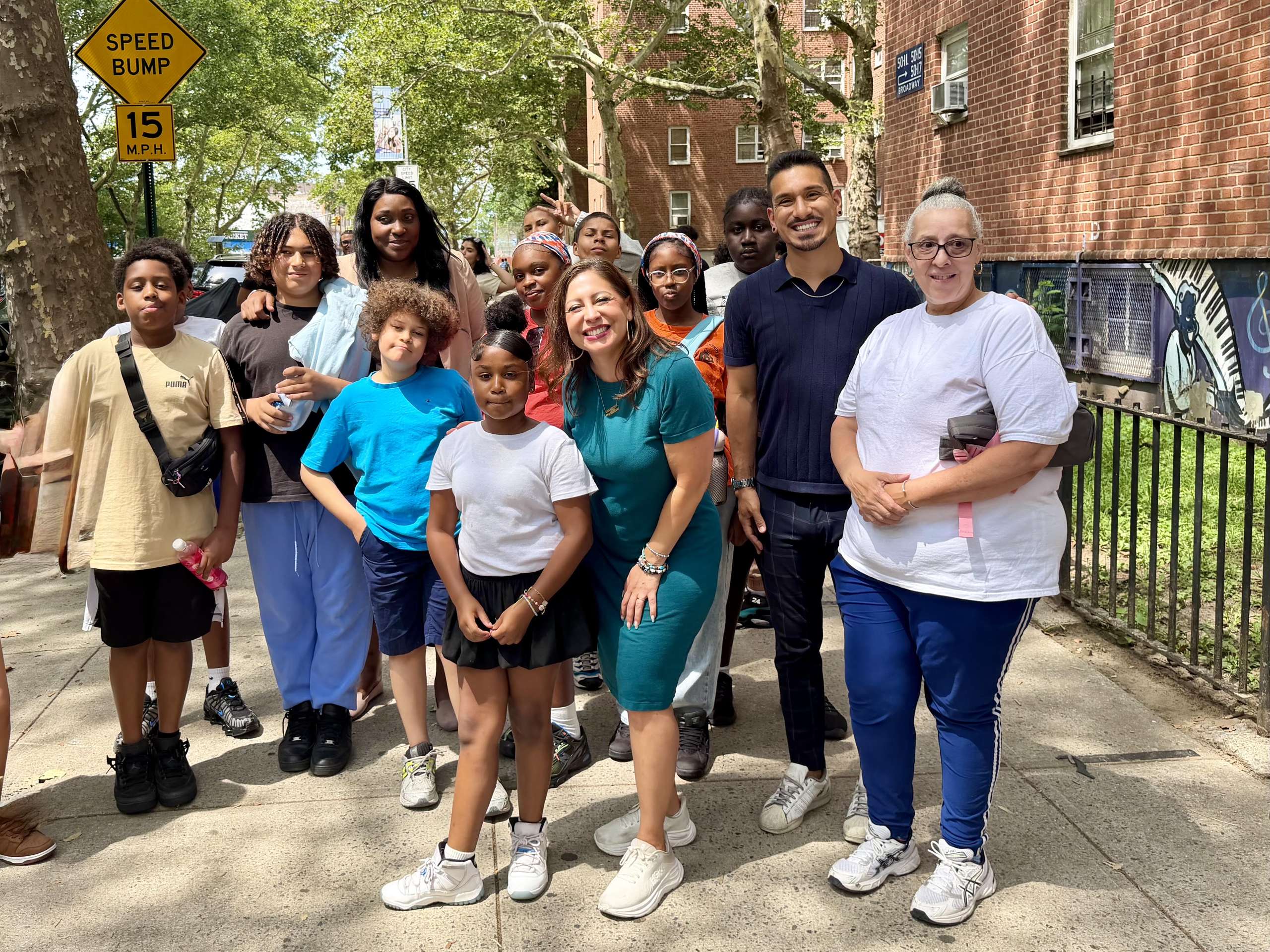
After winning the primary election in June, 36-year-old Democratic nominee Brian Romero will advance this fall to an open seat in Assembly District 34, which includes Western Queens neighborhoods like Jackson Heights, East Elmhurst, and Woodside.
He told City Limits that his housing history—which includes stints in a basement apartment in East Elmhurst and about a decade in Ravenswood Houses, a public housing development between Astoria and Long Island City—influenced his priorities and ideas for public office.
Namely, he wants to make the district more affordable, address dangerous basement apartments, and expand housing options for those living with HIV and AIDS. He also plans to push for the development of more “social housing”—a term for permanently affordable homes developed to serve people, not profits.
“There are models across the world where they don’t think of housing as a commodity, but rather a public good and a public necessity,” Romero told City Limits.
“If we continue to have conversations on land use from an unequal playing field where developers have so much power, we’re always going to be having conversations about lack of affordable housing—and low income folks and people of color are going to suffer the worst of it,” he added.
Romero served as chief of staff to the district’s current Assemblymember Jessica González-Rojas for about four and a half years, before his most recent term as chief of staff and legislative aide to State Sen. Kristen Gonzalez.
He left that role in March, as the state’s ethics rules restrict legislative staff members from holding full-time state employment while running for office (a Democrat Socialist endorsed by Mayor Zohran Mamdani, Romero recently caught flack from the New York Post for briefly launching, and then deleting, an online fundraiser to help cover expenses between jobs, money he told the paper he didn’t keep).
As his former boss González-Rojas advances in her bid for State Senate, she leaves behind an open seat—which Romero is now expected to snatch after beating another Democratic challenger, Rosa Sanchez, in June.
Romero recently spoke with City Limits about his ideas for the district, and how his past experiences with homelessness and as a NYCHA tenant shaped them.
This conversation has been edited and condensed for clarity.
City Limits: We can start off with a little bit about yourself.
Romero: I was born and raised in East Elmhurst, which is a neighborhood in the district, and at about seven years of age, my family and I became homeless because my parents separated, and we could no longer keep up with costs.
And so for a year, we couch surfed. I lived in an aunt’s house, my siblings lived in another aunt’s house, and my mom lived somewhere else. The reality that some New Yorkers face—which is that they’re one crisis away from being displaced, homeless—is something very real for me.
Later on in my life, I went to go live in NYCHA with my family at NYCHA Ravenswood. I lived there for over a decade, and I faced very much the same things that many NYCHA residents do, whether it’s rodents, lead, elevators breaking, doors not working, you name it. All those things are part of what makes up my housing history.
CL: What compelled you to be involved in activism and the state legislature for as long as you have?
Romero: I practiced as a social worker for several years doing psychotherapy, but I became very frustrated with what often felt like Band-Aids to systemic issues.
It wasn’t unusual for me to lose a patient in the process, in terms of them dropping out because of housing issues. The population that I worked with specifically were LGBTQ folks, people living with HIV or AIDS, who often found themselves at the intersections of housing instability, lack of healthcare access, etc.
Shortly after doing that, I took on a policy job at the same organization, Gay Men’s Health Crisis, and I ended up doing advocacy at the city, state, and federal level. One of the things that we advocated for in the state policy agenda was housing for people living with HIV or AIDS in upstate New York. In New York City, we have HASA, of course, which is great and really helpful. But outside of New York City, that’s not something that has really existed.
I started engaging in electoral work, and I supported Jessica González-Rojas. When she won, she asked me to be her chief of staff because she wanted somebody who knew politics, knew Albany and the legislative process, but also knew the community and had done state-level work. After working with J.G.R. for four and a half years, I went to work in the State Senate for a year.
I announced my race for the Assembly in October, and then I transitioned to a senior advisor role in the new year, and I left the State Senate at the end of March.
CL: Let’s move on to how your experience shaped your ideas for public housing as an assemblyman.
Romero: The East Elmhurst apartment, my first apartment, was a basement apartment that flooded really often. Still today, East Elmhurst and Woodside are heavily impacted by flooding in Western Queens. When Hurricane Ida hit, we saw that because basement apartments are not up to code, people lost their lives. Basement apartments have been really important in the larger housing conversation, especially to this district.
Woodside Houses is in the assembly district, because the maps were redrawn in 2022. We became aware of issues with the boiler, people did not have hot water or heat, and we had to do a press conference with neighboring elected officials to really call attention to it.
I want to fight for more funding for NYCHA, and there’s a larger need to understand what is getting in the way of building more public housing and moving towards the model of social housing.
CL: Federal funding is difficult to acquire for public housing, historically. There’s a push to convert NYCHA apartments to Section 8 as part of the PACT and Trust programs. How do you feel about the conversions?
Romero: I don’t support the privatization of NYCHA or PACT. That’s my personal stance as a former NYCHA tenant, but I haven’t had those conversations, since I’m still a Dem nominee, with the Woodside Houses Tenant Association. I hope to organize a people’s assembly in the fall to solicit feedback I need from the residents. I want to understand if this is something that they support, don’t support, by how much.
CL: Is there anything that you’d like to add?
Romero: At the end of the day, NYCHA tenants don’t really care who’s in leadership. They just know that either their hot water is not working, their heat isn’t working or electricity’s not working. There are rodents, there are pests, and there’s lead.
I’m hoping that we have an ally in the House and in the Senate and the White House, but I’m also not under any illusion. I will be sure to work with all of the other state representatives who have NYCHA complexes to make sure that we are advocating for the necessary reinvestment, but also long-term strategy on public housing.
To reach the reporter behind this story, contact [email protected]. To reach the editor, contact [email protected]
Want to republish this story? Find City Limits’ reprint policy here.