


Share This Article
“When affordability is treated as a real, immediate need, these policies can do more than just manage displacement. They can help communities stay rooted in places like Washington Heights.”
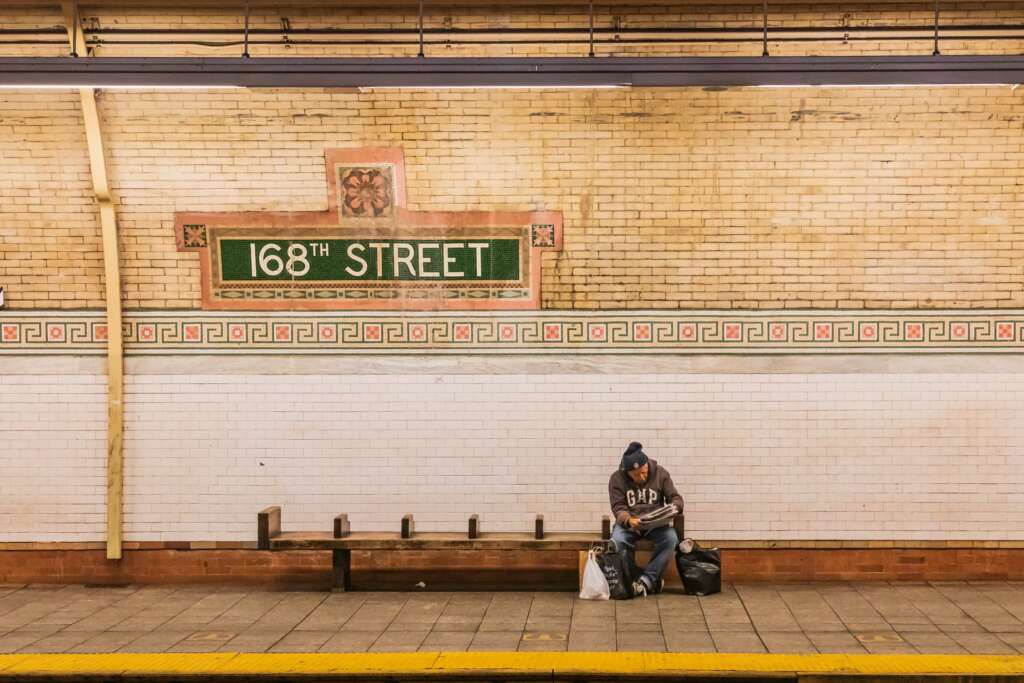

“My 30-plus years of living here [Washington Heights], I have never felt like an outsider…My community is no longer feeling like my own.” -Jennifer Rodriguez, The Lexington Line.
Imagine beginning your day with freshly made empanadas from a local shop, steps away from colorful murals that embrace New York City’s infamous high-rise buildings. Here, you can enter the historic Audubon Ballroom before making your way to a free bilingual performance in J. Hood Wright Park, with a view of the George Washington Bridge standing proudly in the background. This is Washington Heights, home to a vibrant Latin and African American community that has had roots here since the 1950s.
Today, this community is facing root shock, as the changing landscape and rising unaffordability makes staying here increasingly difficult.
In New York City, actively gentrified neighborhoods are concentrated in or near Manhattan, but mostly northward. Out of the top 20 most gentrified zip codes in the country, one out of the two from Manhattan is Washington Heights.
While state and local governments are major drivers of gentrification, universities, too, act as urban developers, expanding onto existing structures that can displace residents. Columbia University in particular has acquired property in Washington Heights, shutting down local businesses and replacing displaced residents with students from wealthier backgrounds, of which the median family income is more than double that of Washington Heights.
When wealthier residents move in, the sharpest changes are seen in the most community-facing areas: grocery stores. Called the “Whole Foods Effect,” a typical home near a Whole Foods or a Trader Joe’s costs more and appreciates faster than the median U.S. home.
These high-end supermarket chains are strategically planted in neighborhoods that are on the verge of gentrifying—or, in other words, have profit potential. These stores decrease access to affordable food options and cultural havens, a trend described as supermarket greenlining, uprooting the small family-owned businesses that keep the neighborhood and culture alive.
In Washington Heights, 16.6 percent of residents face food insecurity—a percentage higher than all residents of New York City. While various fruit and vegetable stands line the streets, they are limited in their ability to sell refrigerated, fresh produce consistently. Local delis sell some staple groceries, but at high, unsustainable prices, potentially signaling the rise of costs driven by gentrification.
This leaves residents to the neighborhood’s chain grocery store: Key Food Fresh Supermarket. Although not branded as a luxury grocer, Key Food maintains high prices for basic necessities, but remains comparatively less expensive and more reliable than local delis or stands. Its prices, however, still remain out of reach for long-time residents, some of whom are often seen asking for money right outside the store. Thus, food deserts are not just about distance, but about how a neighborhood’s support system gets eroded, and eventually weeded out.
Here’s where Mayor Mamdani comes in.
Mayor Mamdani has proposed implementing city-owned grocery stores, with the goal of keeping goods at wholesale prices. If done in tandem with existing shops and placed in neighborhoods that need it most, these municipal-run grocery stores would be a supplement, rather than a replacement, to increase the community’s access to affordable goods. By planting these stores strategically, the immediate effects of gentrification can be mitigated, starting with the rising costs of essentials.
But is this really feasible? The success rate of this model has been mixed in the U.S., and something like this has never been implemented in a city as big as New York. Moreover, grocery stores and supermarket greenlining are just one part of the gentrification process. If the mayor is serious about protecting New Yorkers from root shock—not just addressing the aftermath—his policies must consider gentrification as multidimensional, focusing on both environmental and social justice.
He has promised a great deal during his campaign that aligns with this, but whether these promises are implemented at the speed and scale that this city (including Washington Heights) needs remains to be seen, and is something communities will be holding him accountable for.
There is always the fear that this will not work in a big city like New York. But, there is also hope that it will.
When affordability is treated as a real, immediate need, these policies can do more than just manage displacement. They can help communities stay rooted in places like Washington Heights and continue calling it home.
Nabiha Subzwari is a Master of Public Health candidate in epidemiology at Columbia Mailman with a certificate in social determinants of health. Born and raised in New York, she has been engaged in grassroots organizing for peace and justice, aiming to amplify local voices to the national level. Dr. Robert Fullilove is a professor of sociomedical sciences and the associate dean for community and minority affairs at Columbia University’s Mailman School of Public Health.