


Share This Article
“We need homes available to New Yorkers, not pretexts for giving landlords higher rents.”
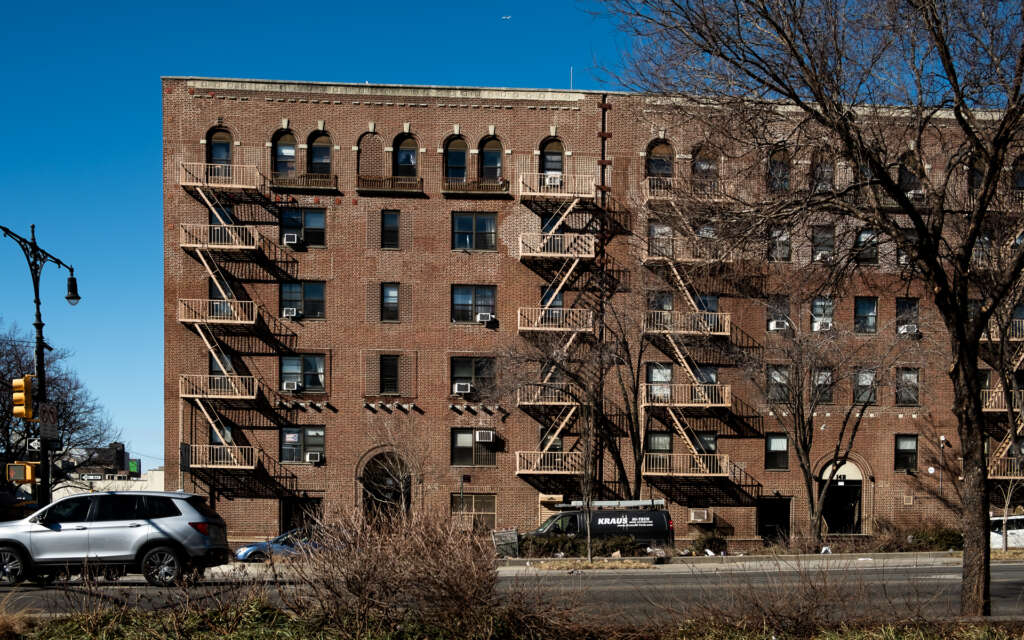

In New York City right now, landlords say it costs too much to bring some 26,000 to 50,000 empty rent-stabilized apartments back on the market. These units are being warehoused during a city housing emergency, with a vacancy rate of only 1.4 percent.
But not all apartments need a lot of work. Finding 26,000 warehoused apartments in March 2024, the New York City Comptroller reported only 3,000 were too dilapidated to be habitable. That’s 11.5 percent of the total. The remaining 88.5 percent of apartments don’t need much to be rented out. In a recent example, some 60 warehoused apartments at Park West Village in Manhattan were readied for renting by groups of day laborers working for a few days for each apartment.
So the steep costs cited in pro-landlord articles ($10,000 for an architect, $50,000 for kitchen and bathroom materials, $25,000 in electricians’ fees, for example) can be scratched for 88.5 percent of those apartments. Architects and permits are not required for painting and plastering, installing new cabinets, plumbing fixture replacement, resurfacing floors, and other non-structural repairs. New kitchen fixtures can easily come to under $2,000, and bathrooms to $3,000. Electricians need not rewire entire apartments. See the “Supplement: Study in Costs” report just released by the Coalition to End Apartment Warehousing.
In addition, landlords claim to spend over $84,000 on lead abatement in older apartments. As the landlord lobby well knows because it asked for this, New York City’s lead laws don’t require total abatement of all lead, just maintenance of old paint, fixing lead hazards like chipped or peeling paint, and abatement of lead on friction surfaces like windows and doors. (In these fairly simple duties, they routinely fail, with thousands of New York City’s children lead-poisoned in privately owned buildings every year.)
Even if the claimed high costs were accurate, owners of rent-stabilized apartments do not seem to be hurting for money. Not a single landlord took up the city program for owners in real distress. That may be because, as a July 2025 Community Service Society analysis of city data shows, landlord profit has increased 47 percent since 1990 and the NYC Rent Guidelines Board just reported that the net operating incomes of owners of rent stabilized buildings increased another 2.2 percent after inflation in the most recent period.
This has allowed landlord organizations to spend nearly $14 million to lobby Albany between 2019 and 2023, leading the state legislature in 2024 to quadruple and make permanent the rent hikes for individual apartment improvements. Further, the fact that many landlords prefer to forgo the rental income on tens of thousands of warehoused apartments belies their cry of poverty.
Our legislators should investigate actual, reasonable costs for the 88.5 percent. We need homes available to New Yorkers, not pretexts for giving landlords higher rents.
The 60 habitable and nice-looking apartments at Park West Village? They’re still being warehoused.
Sue Susman is president of the Central Park Gardens Tenants’ Association and a member of Stellar Tenants for Affordable Housing, which is part of the Coalition to End Apartment Warehousing.
3 Comments
John
It may look like landlords don’t need much to rehab or prepare an old vacant unit for the next tenant. Wait until you send in the company to xrf the unit and find a ron of lead that needs to be remediated. Then all the other necessary upgrades that come along with this. Your most likely in the 20k to 30k price range. Where is the benefit for these landlords. Im personally trying to get in the real estate industry in nyc. But, I don’t see any benefit.
Stryker Summit
When the apt becomes empty and the legal rent was $235/month, warehousing is the only rational option available. Don’t kid yourself, there are thousands of newly vacant and warehoused apts who legal rents are this insanely low.