


Share This Article
“Housing must be treated as a community resource, not a commodity that necessitates profit. Our communities are stronger and safer when everyone has access to decent, stable housing.”
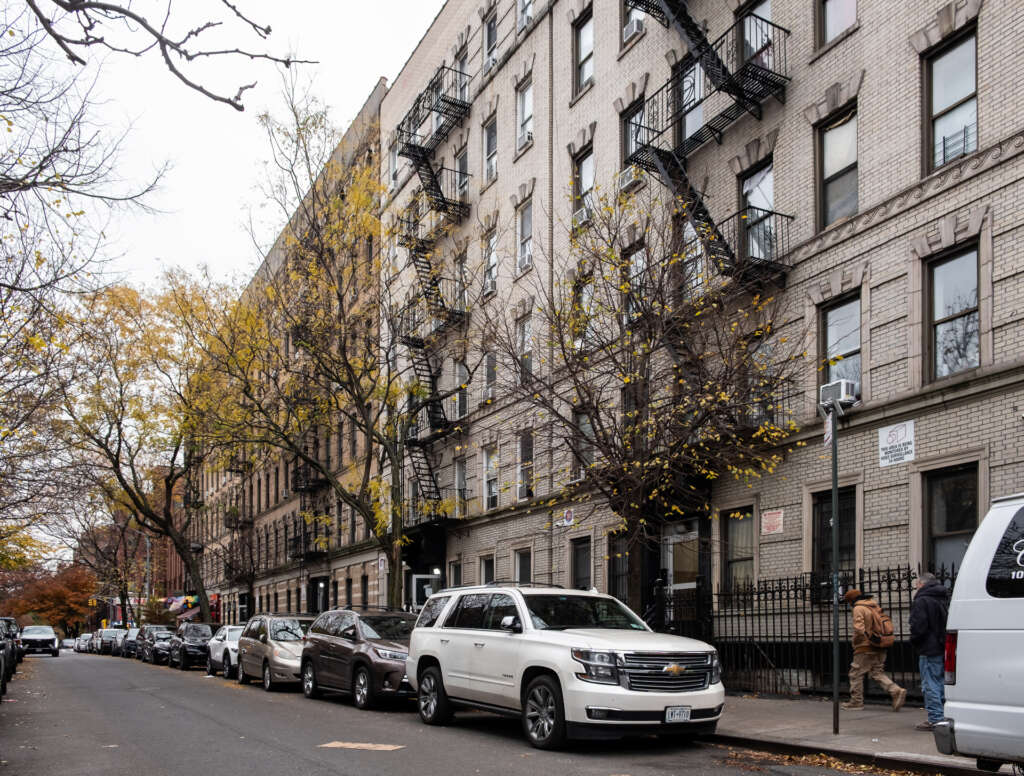

Most renters know the feeling of waking up one morning to find that something has gone horribly wrong in their building. For my neighbors and me, this past February, a retaining wall behind our East Harlem building collapsed. It’s June, and it still hasn’t been fixed. Why? Because we don’t have a landlord, and no one wants to take responsibility.
Here’s the thing: the tenants do. We have a rare opportunity to stop the sale of our building to yet another slumlord and put control in our hands, but the clock is ticking.
It seems the near-universal experience of tenants, from public housing to rent-regulated to the ever-expanding “crappy luxury,” is to navigate a litany of housing-related issues— often without resolution. One way we’ve pushed back in East Harlem is by organizing towards permanent change. Tenant organizing can be as simple as hosting regular lobby meetings and creating a building-wide group chat to discuss living conditions. This has created a space for me to not just become friendly with my neighbors, but to forge actual friendships.
Tenant organizing has also created a space for us to grow our political power within profoundly unequal institutions and markets. I am one of the lead organizers for the tenant association (TA) that encompasses my building and those of my neighbors in East Harlem. Two years ago, my neighbors and I launched a rent strike that lasted over a year. The strike followed decades of disrepair, landlord neglect, and hazardous living conditions: leaks, mold, pest infestations, broken plumbing and electric systems, blocked emergency exits, and a lack of heat and hot water.
During our rent strike, the building foreclosed, and the court appointed a receiver to manage our buildings. Our previous landlord, Isaac Kassirer, who was named on the Public Advocate’s 100 worst landlords list, was replaced by the court with another “landlord” (our receiver) listed higher on this same list. Shortly after, we collectively won over $500,000 in a settlement providing six months of rent credit and repayment for stolen security deposits. But the fallen wall and other major issues still have not been fixed.
I often hear that New York’s 2019 Housing Stability and Tenant Protection Act destroyed the city’s rent stabilization market by leaving landlords with no choice but to neglect their buildings since they cannot charge enough in rent. It’s important to acknowledge that this issue is cyclical—tenants can enjoy some semblance of financial liberty with regulated rent increases, but landlords say rents cannot cover expenses, and subsequently choose to limit maintenance and repair investments.
This places tenants in a position without agency or choice: rent stabilization allows for tenants to pay predictable long-term rents while the building crumbles around them, or they can try to afford market-rate spaces. However, there is no guarantee that those units will be properly maintained, either.
The “poor landlord” narrative asks us to sympathize with real estate holding companies, private equity firms, and LLCs whose portfolios span continents. There is no accountability mechanism in place to ensure that my rent check is going to the building I live in. The 2019 law didn’t break a functioning, fair system.
Before the 2019 law, landlords’ playbook was straightforward, and our former landlord, Issac Kassirer, was known for it. Landlords would create unique LLCs for each building in their portfolio, ignore demands for repairs, renovate newly vacant units, and deregulate them to rent out at market rate, which effectively ensures the displacement of long-term residents. Meanwhile, these same companies still benefit from billions in public subsidies all while claiming they can’t afford to make repairs.
The landlords are not wrong that rent stabilization constrains profit. That is, quite literally, the point. Housing isn’t a regular discretionary market; it is a necessity market. Basic human needs were never meant to be commodified. Our wall may have collapsed, but so has the pretense that the market, if left alone, will house everyone. We’ve tried that. It’s time to do something different.
With our buildings in foreclosure and heading to the auction block this summer, we’re now in a unique position to finally stop the cycle of predatory landlords—and the city has a rare opportunity to help us secure community ownership.
My neighbors and I aspire to turn our strip of buildings into permanently affordable apartments with support from a community land trust (CLT). Our TA has been working closely with East Harlem El Barrio Community Land Trust and Community Voices Heard to turn our aspirations into a reality. CLTs are a type of social housing expanding in cities across the United States, like Boston and Minneapolis, as a way to combat the housing crisis and maintain permanently affordable housing in working-class neighborhoods.
Housing must be treated as a community resource, not a commodity that necessitates profit. Our communities are stronger and safer when everyone has access to decent, stable housing. CLTs provide tenants with actual decision-making power in their buildings, creating democracy within housing. Tenant organizing empowers us to advocate for decisions we want to see made by our landlord. CLTs provide us with the decision making power, giving control to those impacted. This is one effort to put power in the hands of residents—and to shift housing from an object of precarity to one of stability.
It is imperative that we create a path forward for tenants to enact meaningful change in their living conditions by organizing and democratizing both their livelihoods and neighborhoods. One way forward is through legislation like the Community Opportunity to Purchase Act (COPA). Under COPA, property owners would be required to provide tenants with advance notice of intent to sell, along with the first opportunity to purchase from qualified nonprofit organizations. This legislation promotes housing stability, preserves affordability, and ensures that our communities have a seat at the table when enacting change that directly impacts their lives.
Cara Polte is a leader with the East 103rd Street Tenant Association and co-founder of the East Harlem Tenant Union.