


Share This Article
“Naysayers argue that transitioning to a zero-carbon economy will hurt our wallets, worsening our affordability crisis in exchange for progress on our climate crisis. Don’t believe them. Battery energy storage systems (BESS), including the nearly 30 operating right now across New York City, are the perfect example why.”
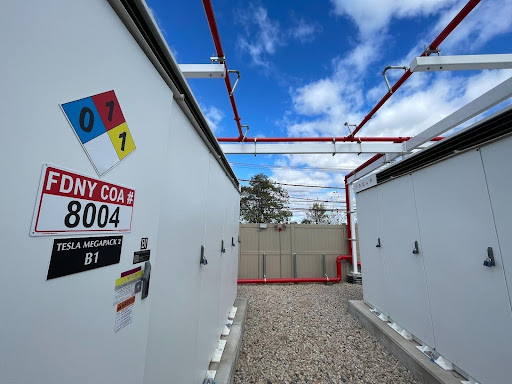

In New York and across the country, climate action and affordability are being pitted against each other. Naysayers argue that transitioning to a zero-carbon economy will hurt our wallets, worsening our affordability crisis in exchange for progress on our climate crisis.
Don’t believe them. Battery energy storage systems (BESS), including the nearly 30 operating right now across New York City, are the perfect example why.
The first thing to know about the power grid is that the entire system is designed to deal with “the peak of the peak”—that is, the highest-demand moment of the year, which in the city typically comes on a late afternoon during a brutal heat wave (scenarios that are becoming more frequent and intense thanks to climate change). At this moment, there is a serious strain on both the larger transmission system and on the city’s local power distribution networks, threatening blackouts and brownouts.
Right now in New York, we deal with this threat in two ways. First, we increase the supply of energy through the use of “peaker” plants. These facilities, used only on a select number of days throughout the year, are extraordinarily expensive to operate: an estimated $4.5 billion of ratepayer dollars flowed to owners of peakers over the last decade. They’re also extraordinarily high-polluting, emitting not only nearly 3 million metric tons of CO2 per year, but also particulate matter and dangerous chemicals like NOx and SOx which cause respiratory illness. And not surprisingly, given our history of environmental injustice, peakers are located disproportionately in disadvantaged communities.
The second way we deal with the peak of the peak is through a massive, ratepayer-funded build-out of traditional grid infrastructure, such as substations and wires that allow the delivery of spikes of power to our homes and businesses—again, designed for the peak of the peak. Con Edison has proposed at least $12 billion in spending on new utility infrastructure in the city, all in service of protecting against blackouts or brownouts on the peak hour, triggering requested rate hikes to pay for this construction.
Yet citywide, according to data from Con Edison and the New York Independent System Operator (NYISO), on average throughout the year, our local grid is used at less than 40 percent capacity. Yes, you read that correctly: on a typical day, the power actually required by homes and businesses is just over a third of what the utility’s substations, poles, and wires are built to handle.
There’s a better way. Beginning in 2019 with a Con Edison-owned system in Ozone Park, New York City deployed battery energy storage systems (BESS) to address both our climate and grid needs. Community-scale BESS, located close to homes and businesses, connect to the local power distribution network, closest to where power is needed. The systems charge up when energy is both cleaner and also in excess supply (typically overnight), making it more affordable. The batteries hold that energy until high-need windows (typically summer afternoons) and then discharge it back to the neighborhood power network.
By pushing power back onto the grid during peak hours, BESS can reduce and eventually replace the need for peaker plants. Under methodology developed by the city’s Department of Buildings, a single 4.9 megawatt (MW) BESS operating only during summer months would save 375 metric tons of CO2 per year, roughly equivalent to taking 90 gas-powered cars off the road for a year.
And by lowering the peak demand on Con Edison’s distribution network, BESS can defer or even obviate the need for that expensive build-out of traditional grid infrastructure. In addition to those savings, New York State’s Energy Research and Development Authority (NYSERDA) has projected nearly $2 billion in customer savings statewide if the state can meet its energy storage deployment goals. Another study by Synapse Energy Economics estimated nearly $500 million in savings per year in New York City alone through a reduction in required wholesale electricity demand with increased solar and BESS deployment.
Finally, energy storage operators like our company can participate in a groundbreaking state program that allocates bill savings directly to low-income households; our company alone estimates generating $60 million in these bill credits over the next decade.
For all these reasons, the state has set an ambitious target of deploying 6,000 MW of energy storage by 2030, more than one-third of which would be located in the city. In establishing its “energy storage roadmap,” NYSERDA pointed out the urgency of retiring downstate peaker plants while maintaining system reliability, and concluded, “The ability of energy storage to provide these services makes this one of the highest-value deployment opportunities in New York and can help accelerate decarbonization in a reliable way.”
But with only 529 MW deployed statewide, we are nowhere near the state’s goal. WIth forecasted energy needs far beyond what was predicted just several years ago—due locally to the electrification of cars, buildings, and more—what can New York policymakers do to accelerate deployment?
First, a citywide educational campaign is badly needed, to dispel the rampant misinformation spread by social media and bad-faith opportunists. A coordinated, multi-agency effort to dispel rumors, engage directly with community leaders and elected officials, and educate the broader public about BESS would go a long way toward calming fears, smoothing the way for broad deployment throughout the city.
The neighbors and business owners that we engage with prior to construction are hyperaware of the threats that lithium-ion batteries pose, given the scourge of e-bike fires throughout the city. What community members are far less aware of is the nation-leading BESS fire code enforced by the FDNY, requiring layers upon layers of testing, permitting, and inspection prior to operation.
Among the nearly 30 BESS operating citywide, there has never been a single fire safety incident; and even among the miniscule portion of systems elsewhere in the state which have seen fires, no one was injured in any of those incidents, no property was damaged, and multiple studies confirmed no air quality, groundwater, or soil impacts hazardous to human health.
Second, state energy tariffs and other regulations need updating. The complex revenue and cost schedules for charging and discharging BESS rely on formulas created more than a decade ago before energy storage was commercially scalable. These frameworks, while novel when they were designed, should be updated to encourage BESS to operate more precisely at the times and locations that most benefit the grid.
In addition, utilities have little incentive to facilitate community BESS deployment; currently, they earn a guaranteed rate of return on their own capital investments, which encourages only traditional infrastructure solutions. Finally, speculative energy storage developers are flooding the interconnection queue with scores of proposed projects that will never get built, creating critical bottlenecks for Con Edison and blocking legitimate projects from advancing. NineDot Energy has proposed a new tariff mechanism that seeks to address these and other issues.
Third, there are a variety of smaller quick wins the city can achieve on energy storage. Though the state has established its 6,000 MW goal statewide, the city does not have its own formal goal, relying only on an outdated 500 MW target set in one report issued by the de Blasio administration nearly a decade ago. Advocates have urged the mayor or City Council to establish a 2,000 MW goal by 2030 to align with the state’s.
Other proposals are also on the table, thanks to climate and affordability champions in our legislatures. In Albany, Senator Kevin Parker, Chair of the Energy and Telecommunications Committee, has sponsored legislation providing the same sales tax exemption for BESS equipment that is currently afforded to solar and even fossil fuel facilities.
And at the City level, Councilmember Sandy Nurse has introduced a bill requiring the City to maximize the use of city-owned land for BESS development, a strategy also promoted by the Center for an Urban Future as a revenue-raiser. Environmental Protection Committee Chair James Gennaro has also introduced legislation to accelerate deployment of smaller indoor BESS which are commonly seen in the suburbs but not currently permitted by the FDNY.
In sum, it is not surprising that BESS is increasingly embraced across interest groups, connecting environmental justice champions to consumer advocates to organized labor. We are closer than ever to solving some of our key climate challenges, and our key affordability challenges.
Sam Brill is the vice president of strategic development at NineDot Energy, a Brooklyn-based clean energy company operating seven community-scale BESS projects in New York City, with more than 60 additional BESS projects in construction or development across all five boroughs.