


Share This Article
A new exhibit at the Museum of Bronx History explores the life of the Puerto Rican poet, storyteller and educator who dedicated nearly four decades to preserving Indigenous culture and challenging stereotypes about the South Bronx.
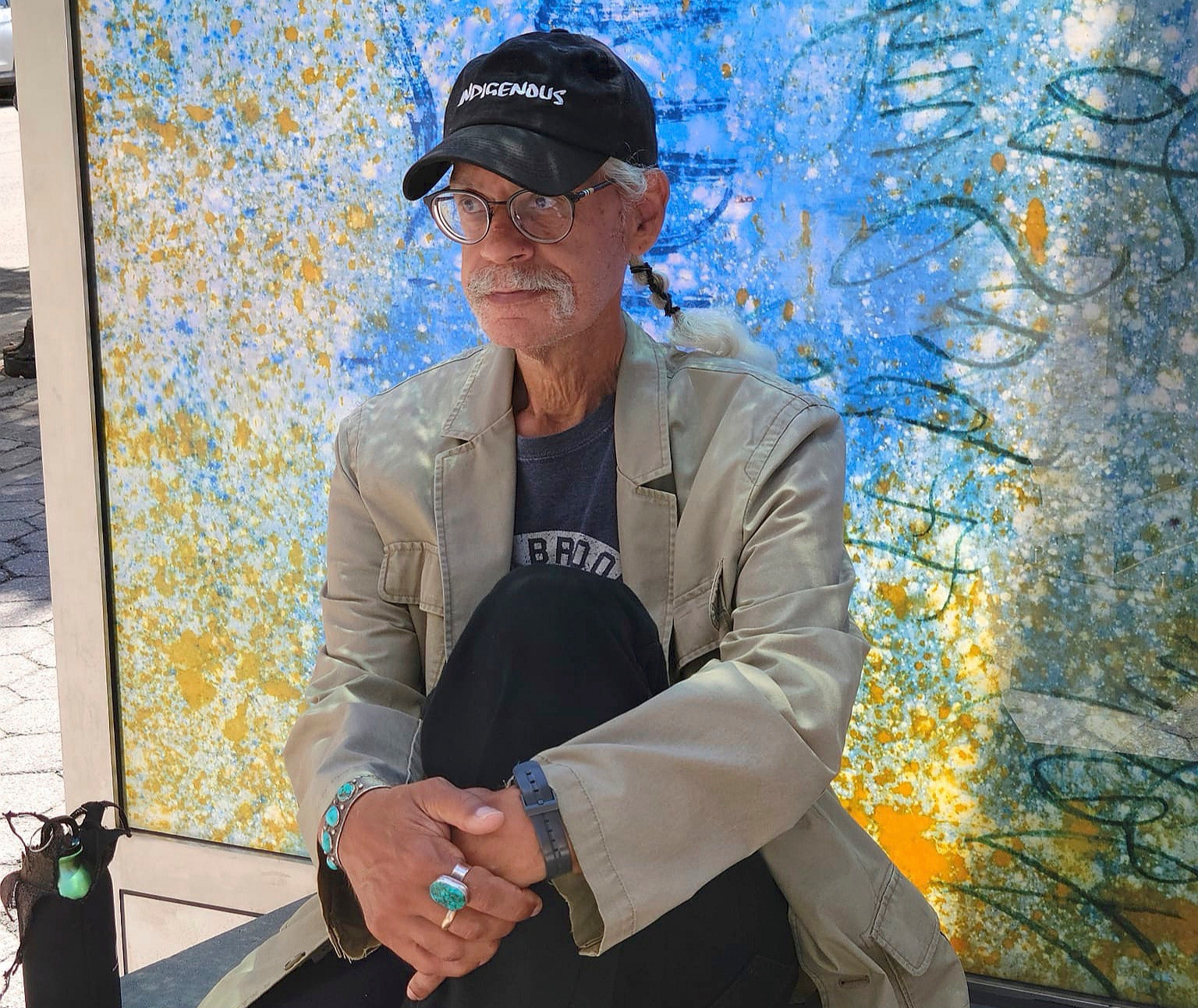
For Bobby González, preserving Indigenous history began close to home: inside his family’s bodega in the South Bronx.
Growing up near the Melrose Houses, González encountered people from different Indigenous backgrounds who visited the neighborhood store owned by his parents. Those conversations helped shape his understanding of his own Taíno heritage and inspired a lifelong commitment to educating others about Indigenous history.
Now, three years after his death, his work is being remembered through a new exhibition at the Museum of Bronx History.
“From the South Bronx Reservation: Bobby González, Taíno Indian,” which opened Oct. 8 and runs through March 2027, explores the life of the Puerto Rican poet, storyteller and educator who dedicated nearly four decades to preserving Indigenous culture and challenging stereotypes about the South Bronx.
Born in 1951, González grew up in a Puerto Rican family whose parents migrated to New York after World War II. His father worked as a short order cook before opening a bodega in the 1970s, where González and his brothers helped run the family business.
According to Stephen Payne, director of the Bronx County Historical Society, the bodega played an important role in shaping González’s identity.
Visitors included people with Cherokee, Quechua, Lenape and other Indigenous backgrounds. Their conversations encouraged González to learn more about Indigenous communities across the Americas and explore his own ancestry.
That experience later influenced the phrase “South Bronx Reservation,” which González used to describe the neighborhood’s Indigenous presence.
Payne explained that the phrase also reflected similarities between the South Bronx and some Native American reservations, including struggles with pollution and limited resources.
For González, the neighborhood was more than a place where he grew up. It became the foundation of his writing, poetry and cultural activism.
His widow, Maria Aponte González, remembered him as someone who remained deeply connected to his community.
“He was a very gentle spirit,” she said. “Never yelled, never raised his voice.”
She described her late husband as approachable, calm and someone to whom community members frequently turned for advice.
González co-founded the cultural organization Taíno del Norte, organized the annual Bronx Native American Festival and wrote several books, including “The Last Puerto Rican Indian.” He also traveled across the country, speaking at schools, colleges and museums about Indigenous history.

Some of González’s belongings, via the Bronx History Museum.
His mission was to challenge the belief that Taíno people—a native group that originally inhabited the Caribbean, including Puerto Rico—had disappeared centuries ago.
“We are Taíno, we are still here,” Payne said, recalling a phrase used by the organization González helped establish.
Payne explained that the exhibition highlights how Indigenous identity continues to shape Puerto Rican communities, particularly in the Bronx, where González became an important figure in the Taíno cultural revival movement.
The exhibition also arrives at a time when the Bronx is experiencing demographic changes. Payne said rising living costs have contributed to Puerto Rican residents leaving the borough or city, making it increasingly important for community members to share their stories now.
“It’s very important to preserve that part of the history while there still are people in the community who can speak to it,” he said.
The exhibition brings together personal belongings, writings and other materials preserved by González throughout his lifetime.
Aponte González, who co-curated the exhibition alongside documentary filmmaker Edwin Pagán, selected the objects from their home.
“Everything that you’re going to see in the exhibit is Bobby’s work,” she said.
Rather than focusing on how others described her husband, she wanted visitors to experience his legacy through the materials he created himself.
Among his contributions were poetry workshops, including a spoken word series that helped emerging poets develop their voices. He also used puppetry and storytelling to introduce children to Indigenous history and cultural traditions.
Aponte González launched the Bobby González Legacy Project in 2024, following conversations she had with her husband about preserving his work before he became seriously ill.
She described the exhibition as a project that took two years to develop, with support from Pagán and the Bronx County Historical Society.
For Payne, the exhibition also reflects a larger challenge facing historical institutions: preserving the experiences of working class communities whose personal records and belongings are often lost because of housing instability or limited financial resources.
He explained that families who have experienced eviction or frequent moves may no longer have access to photographs, documents and other materials that help tell their histories. In those cases, institutions often rely on oral histories and archival research to recover stories that might otherwise disappear.
González’s collection offered a different opportunity because he had preserved much of his own work, which his widow has made available through the Legacy Project.
Beyond celebrating his accomplishments, both Aponte González and Payne hope the exhibition encourages younger generations to learn about their cultural backgrounds.
“Young people need to make space in their heads. And be open to learn things,” Aponte González said.
For Payne, the larger message is that Indigenous history should not be understood only as something belonging to the distant past.
He hopes visitors recognize that Native American communities continue to preserve, reclaim and develop their cultural traditions today.
Through González’s writing, storytelling and activism, the exhibition offers visitors an opportunity to explore that living history through the experiences of a man who dedicated his life to sharing it.
The exhibition is on display at the Museum of Bronx History, located at 3266 Bainbridge Ave. in the Bronx, through March 2027.
To reach the reporter behind this story, contact [email protected]. To reach the editor, contact [email protected]
Want to republish this story? Find City Limits’ reprint policy here.