


Share This Article
Though student homelessness declined by 10 percent from the previous school year, advocates warn that tens of thousands of children continue to face housing instability, transportation barriers and educational challenges.
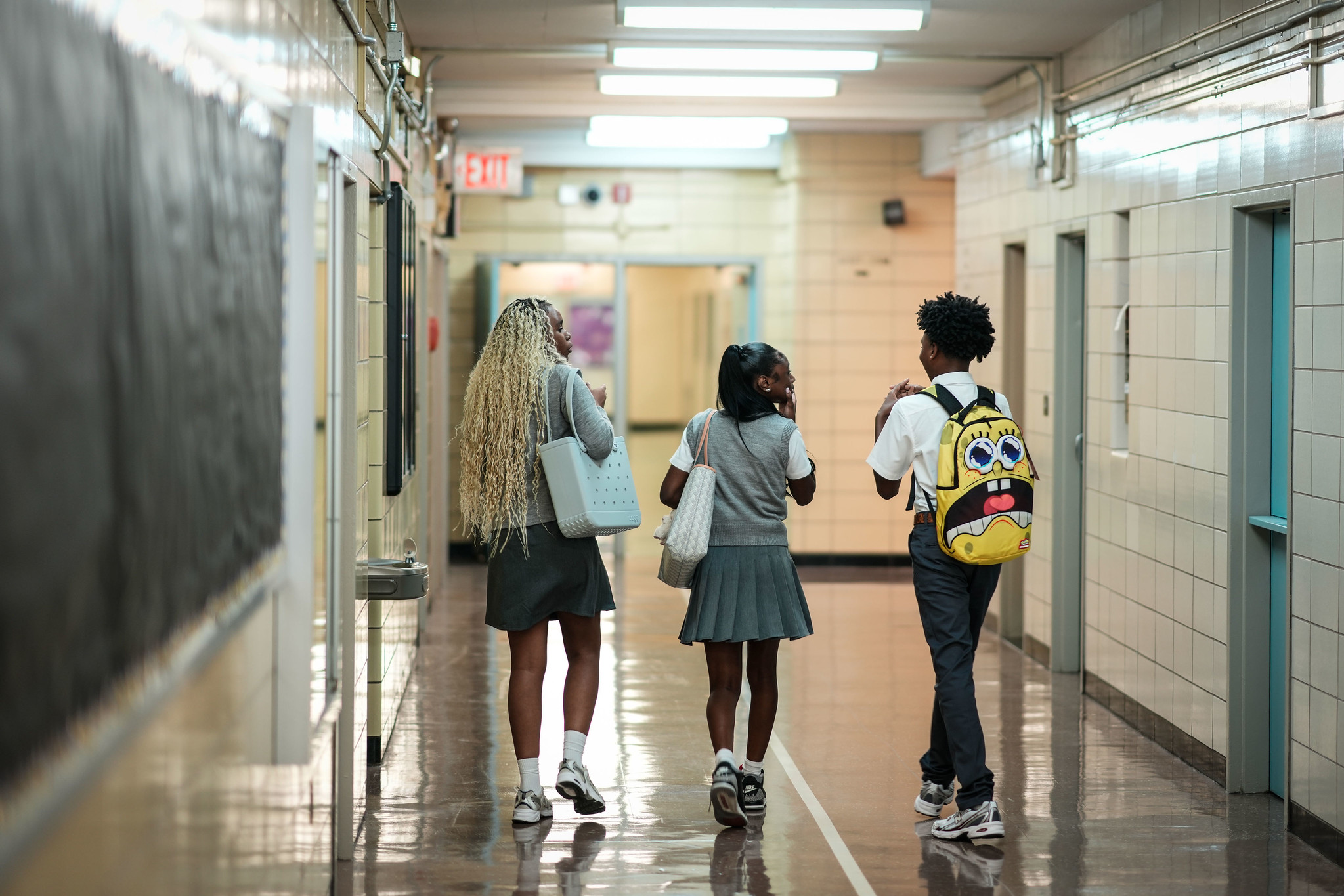
More than 138,000 New York City public school students experienced homelessness during the 2025-26 school year, roughly one in every eight students, according to data released Tuesday by Advocates for Children of New York (AFC).
The figure represents a 10 percent decline from the previous school year, when student homelessness surpassed 150,000 for the first time. Still, it marks the 11th consecutive year that more than 100,000 city students lacked permanent housing.
Of those students, more than 50,700, or 37 percent, spent time in shelters, while approximately 81,100, or 58 percent, were “doubled up”—temporarily sharing housing with relatives, friends or others because of housing loss or economic hardship, according to the report.
The decline was largely driven by a 22 percent decrease in the number of students living in shelters, though that population remained 41 percent higher than a decade ago.
“While it’s encouraging to see that student homelessness is declining after reaching historic highs in 2024-25, today’s data is no cause for celebration,” said Maria Odom, executive director of AFC, in a statement Tuesday.
The Bronx recorded the highest student homelessness rate among the five boroughs at 16.4 percent, followed by Manhattan at 14.1 percent, Queens at 11.9 percent, Brooklyn at 11.6 percent and Staten Island at 5 percent.
Rates varied significantly across the city’s 32 school districts. More than one in five students attending schools in District 9, covering Highbridge and Grand Concourse in the Bronx, District 23 in Brownsville, and District 32 in Bushwick experienced homelessness.
In Brownsville, more than one in eight students spent time in shelters, approximately three times the citywide rate.
Housing instability also creates challenges for students trying to attend school regularly and succeed academically.
According to AFC, nearly half of students living in temporary housing and 63 percent of those in shelters were chronically absent during the 2024–25 school year, accounting for at least 1.1 million missed days of instruction.
In 2025, only 27 percent of third through eighth grade students living in shelters demonstrated reading proficiency on state tests, less than half the rate of their permanently housed peers. Just 59 percent of students in shelters graduated high school on time, while 14 percent dropped out.
Transportation remains another obstacle. During the 2025-26 school year, 37 percent of families were initially placed in shelters in a different borough from their youngest child’s school. Additionally, 1,775 students living in shelters ended the school year waiting for bus service.
Jennifer Pringle, director of AFC’s Learners in Temporary Housing Project, called for improvements to school transportation and greater coordination among city agencies to address shelter placements far from students’ schools.
Nearly 40 percent of homeless families with children are placed in shelters outside the borough of their child’s school, forcing long commutes, early mornings, and strained community ties, as City Limits previously reported.
Christine C. Quinn, president and CEO of Win, a nonprofit providing shelter and supportive housing to homeless families, also urged city officials to address the crisis.
“Students experiencing homelessness are fighting an uphill battle, battling chronic absenteeism while routinely struggling to reach the benchmarks achieved by their housed peers,” Quinn said in a statement Tuesday. “In the wealthiest city in the world, we cannot accept this as normal.”
Quinn called for expanding affordable housing, strengthening rental assistance programs such as CityFHEPS and improving educational support for students experiencing homelessness.
“It’s time for our leaders to be bold and bring forward innovative solutions that put families in permanent homes and bring this crisis to an end,” Quinn said.
To reach the reporter behind this story, contact [email protected]. To reach the editor, contact [email protected]
Want to republish this story? Find City Limits’ reprint policy here.