


Share This Article
After voters passed measures that could compel Bay Ridge to permit more housing, Councilmember Kayla Santosuosso decided to advance her own rezoning—and get the district out of the affordable housing basement.
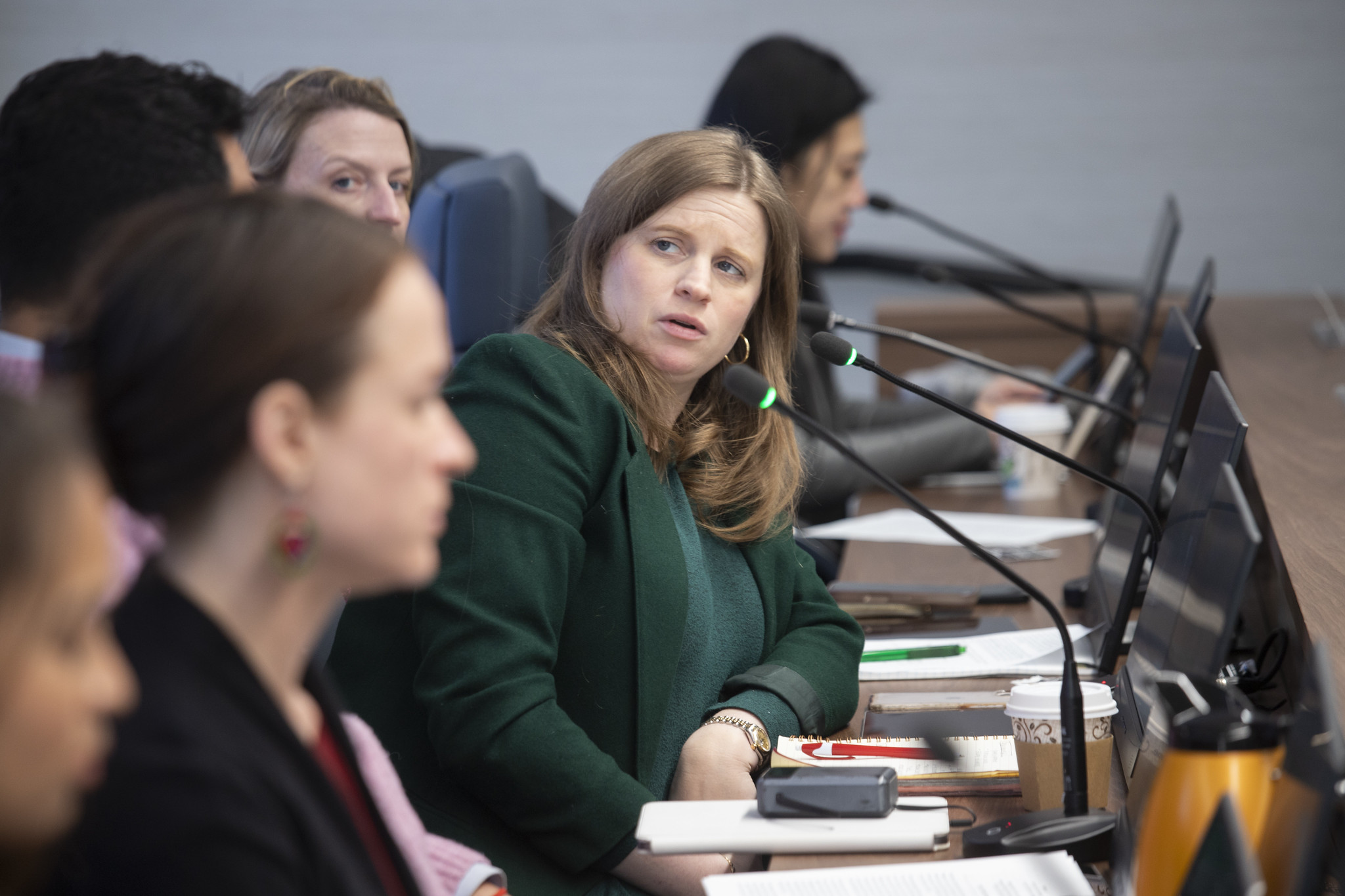
It looks like Bay Ridge is going to be on the affordable housing naughty list.
Thanks to ballot measures passed by voters in November, the 12 community districts in New York City that have seen the least affordable housing growth over the past five years will be required to speed up new building permitting.
Once on the list, new Councilmember Kayla Santosuosso wouldn’t get to vote on new affordable housing projects in her district, with proposals going to the local community board and borough president for review before a final vote at the City Planning Commission instead of the City Council.
To avoid getting skipped over in the future, Santosuosso is calling for her own plan for Bay Ridge to build its way out. “We’re losing our ability to make those projects better, it seems to me that the appropriate thing to try to do is to do a rezoning so that we could have a say,” she said.
The plan, which Santosuoso called a “win-win,” would upzone several blocks of largely industrial land in southern Bay Ridge between 86th and 95th streets for housing.
Bay Ridge will, in all likelihood, still be subject to an affordable housing “fast track” starting next year, which would enable developers applying for a rezoning that includes affordable housing to accelerate community review processes. It leaves the final vote up to the City Planning Commission, rather than Santosuosso and the Council, where according to a longstanding practice called “member deference,” lawmakers only advances rezonings when the local rep approves.
The new rules were controversial among City Councilmembers, who said it would hurt their negotiating leverage in rezoning deals, where they sometimes push for more affordable housing or other community benefits. But voters comfortably passed the measures, with supporters arguing that it would help get some neighborhoods which have traditionally blocked new housing to start doing their fair share amidst a citywide shortage.
The rezoning won’t prevent Bay Ridge from being on the list. Developers building in the area will still be able to skirt City Council and “fast track” zoning changes for specific housing projects that include affordable housing throughout Community District 12
But, “hopefully [the rezoning] would encourage development in one area and kind of discourage it in the areas where people want to keep Bay Ridge preserved as it is,” said Santosuosoo. She hopes “proactive” planning for housing will ensure the community can still shape a vision for the area.
Dubbed the “Bay Ridge Triangle,” the rezoning targets 86th to 95th streets between Fourth and Fifth avenues, adjacent to the final two Brooklyn stops of the R train. The stretch is mostly auto shops and parking lots.
“The hope is that we could come out of this not just with housing on those blocks, but with pleasant blocks that people would want to come and spend time in, and small businesses they would want to spend money at, and places they would want to live,” said Santosuosso.
While the councilmember concedes that she would not have pursued the rezoning were it not for the ballot measures, she’s also giving the YIMBYs who pushed for those policies what they want.
Land use changes in New York City are often controversial, particularly in lower density neighborhoods like Bay Ridge. Santosuosso’s name was on the ballot in November, when the district was one of just 10 out of 59 City Council districts where voters disapproved of the “fast track.”
And Bay Ridge is a long way from building its way out, ranking dead last on the list as of last year. Just a few districts built most of the city’s housing over the last decade. The bottom 12 will get recalculated every five years.
With the city forcing a locally-unpopular mandate, Santosuosso sees an opportunity.
“There’s an excitement about the idea that this could maybe be a model for similar bottom 12 neighborhoods where we get our mandate. We have to end up building. What are some ways that we can do this that involve the community?” said Santosuosso.
Here’s what else happened this week—
ICYMI, from City Limits:
- Meet NYCHA’s “Furniture Queen”: 39-year-old Morris Houses tenant Regina Carter, who just won a $200,000 prize for her work connecting New Yorkers with free furniture and home goods otherwise destined for a landfill.
- A new pilot program for public restrooms requires tap access with a phone or key card. Homeless advocates say it could be another barrier for unhoused New Yorkers being able to access them.
- Tenants at five apartment complexes in Harlem and on Roosevelt Island say the switch to submetering has led to sky-high electricity bills, despite their efforts to conserve. “We don’t even use the microwave,” said Corazon Grajales, who said her monthly bill remains close to $400. “It barely makes any difference.”
- The Community Opportunity to Purchase Act (COPA), which would give some tenants and community groups pathways to bid early on certain buildings that go up for sale, finally has support of the Council, city housing officials, and the mayor. Will it finally make it into law?
ICYMI, from other local newsrooms:
- The Mamdani administration must share any communications between City Hall and the Rent Guidelines Board with the courts, a judge ruled this week—the latest in a lawsuit filed by landlords seeking to overturn the recent rent freeze for rent stabilized apartments, according to the New York Times.
- A NYCHA resident in Brooklyn said she lost several important belongings, including her late mother’s ashes, when she and her three children temporarily moved during renovations at the Gowanus Houses, The City Reporter reports.
- New York City is getting to closer to establishing a public land bank, according to Gothamist.
- New York City Comptroller Mark Levine’s office is investing $300 million investment to fund the construction and preservation of 10,000 homes in the city, NY1 reports.
To reach the reporter behind this story, contact [email protected]. To reach the editor, contact [email protected]
Want to republish this story? Find City Limits’ reprint policy here.