


Share This Article
“People with disabilities deserve the same opportunity as everyone else to choose where they live, build relationships, participate in their communities, and remain connected to the places they call home throughout their lives.”
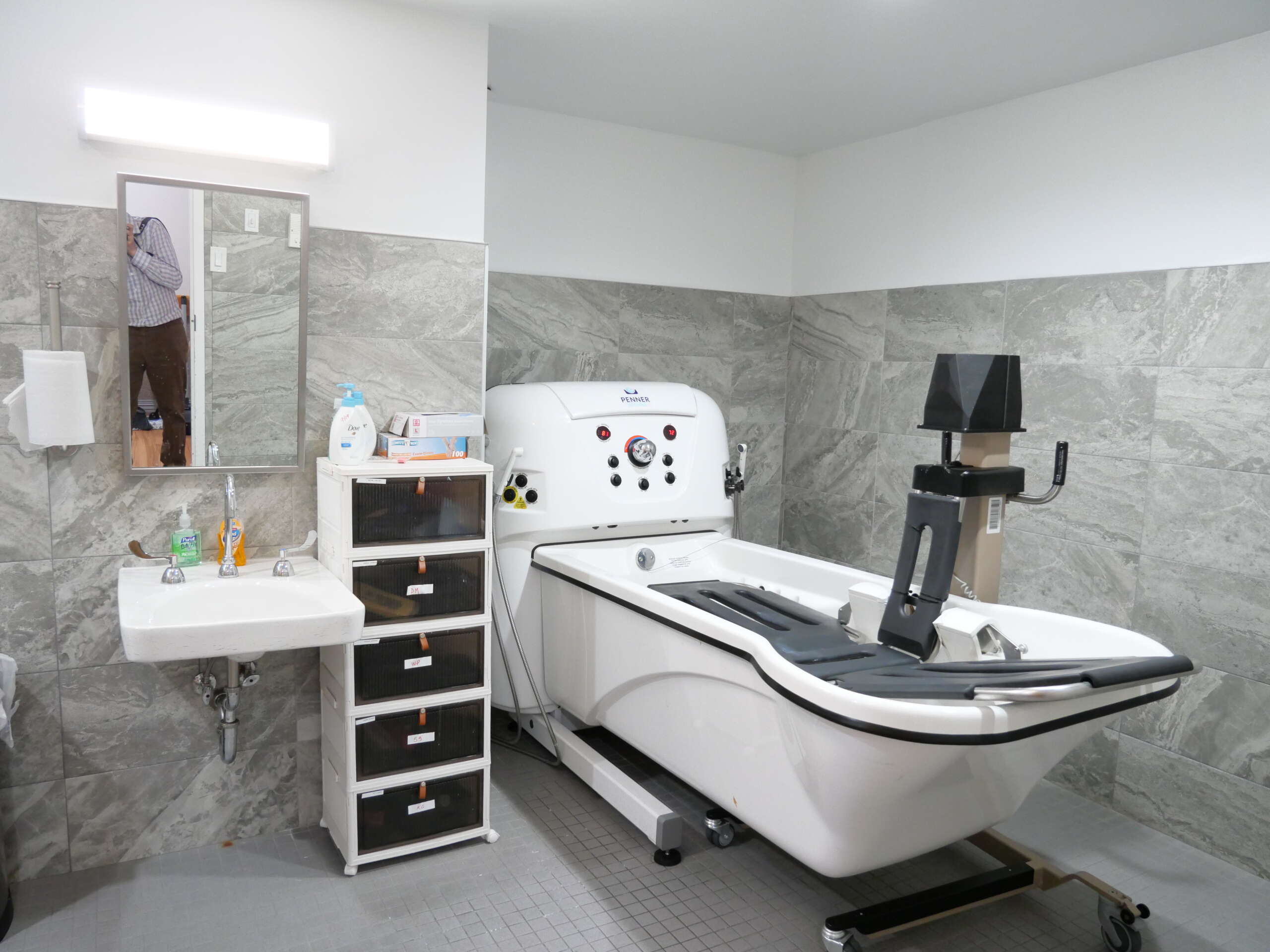

Housing has become one of the most prominent issues facing Americans in recent years and in New York, concerns about affordability, accessibility, and community representation have taken center stage. Although among all the chatter, proposals, and programs, the important needs of people with disabilities have yet to take focus and they require more attention and consideration.
Consider this all too typical scenario: An individual with a disability lives in their community for decades but when their disability progresses, they require the use of a wheelchair. Despite their building having an elevator and an entrance ramp, the apartment now needs a roll-shower, lower cabinets, and a kitchen space accessible from a seated position. The landlord, unwilling to make those changes, doesn’t renew their lease.
This individual now needs to find a new residence, but there is a dearth of barrier-free options in New York, so most often it will be in a community far outside of their original one. They are uprooted and must negotiate a new life for themselves while also managing their worsening disability. The community suffers too.
Where New York City can play a role in mitigating these consequences is, thankfully, comprehensive. Drawing on our work as a provider of more than 200 housing sites across the five boroughs and Hudson Valley, we have identified the solutions that increased partnership, collaboration, and investment can generate.
The major challenges include the high cost of development, the limited availability of accessible housing projects, and the lack of dedicated funding sources to support the planning, construction or renovation, and long-term sustainability of these developments. Addressing these barriers is essential to increasing the supply of accessible housing and meeting the growing demand within communities.
First and foremost is the change in perspective needed around accessibility; it is not a one-time checklist but an ongoing commitment to ensuring that people with disabilities can continue to live safely, independently, and with dignity in their communities. The goal should not simply be to provide housing, but to create true forever homes.
Concretely, this looks like construction—and more of it. Specifically, barrier-free homes that promote residential longevity with cross-functional tools, accessibility technology, and proven aging-in-place strategies, subsidized, zoned, and incentivized by city and state agencies working in tandem to address the current shortage that shows no sign of abatement as more Americans and New Yorkers grow older.
According to the Centers for Disease Control and Prevention, 14 percent of Americans experience mobility limitations and approximately 7 percent require assistance with independent living. In addition, roughly 40 percent of adults aged 65 and older have a disability, and the numbers are only going up. This can be everything from loss of vision to more severe conditions like cerebral palsy.
We can choose to build now or wait until the issue gets worse. Currently, if a provider wants to open a new certified residence in New York City, they need to identify a suitable property from a limited pool. Under New York’s separate site-selection process for certain state-licensed community residences, the local Community Board is treated as the municipality and may approve the proposed site, suggest an alternative or object on limited grounds. If the board objects or the parties cannot agree on a site, the provider may request a hearing before the commissioner at the State Office for People With Developmental Disabilities. In practice, providers may experience a four to six month process, during which the property is often no longer available, forcing them to begin the search again.
For CP Unlimited, it means maintaining a waitlist for the barrier-free homes we have and are building. As a result, many individuals and families spend years in limbo or remain in living situations that no longer meet their needs. It also means losing people on the waitlist to nursing homes and other long-term facilities where they may not receive the same level of care and where staff may not be fully trained to recognize and respond to people with disabilities.
Providers can make further outreach to work with landlords, seek out tax credits and other grants that can offset costs to make projects more feasible, and sometimes the improvements can be as simple as adding basic technology tools to help create a “home sweet accessible home.”
Talk to people with disabilities and their families and they will tell you their number one concern is growing older and ensuring enduring treatment. However, the discussion tends not to happen between advocates and representatives, hindering meaningful progress that requires accountability, ongoing collaboration, and a commitment to making housing accessibility a priority.
Unfortunately, people with Intellectual and Developmental Disabilities (I/DD) are frequently overlooked in housing policy discussions. While supportive housing has expanded for other populations, including individuals with substance use disorders and serious mental illness, the availability of housing specifically designed to support people with I/DD remains extremely limited.
Disability access must be central to the city’s housing strategy because accessible housing is the foundation of independence and community inclusion. People with disabilities deserve the same opportunity as everyone else to choose where they live, build relationships, participate in their communities, and remain connected to the places they call home throughout their lives.
The result is a more diverse, desegregated society that truly reflects everyone in it. By increasing understanding of accessible housing and its benefits, policymakers and the public can better support housing solutions that are inclusive, functional, and responsive to the diverse needs of individuals with disabilities and able to accommodate them through all life stages.
Joseph M. Pancari is the president and CEO of CP Unlimited.
2 Comments
Jeremy W
An important and timely piece. Thank you for sharing.
Marcelo Roisman
Long-term accessibility needs a clear maintenance plan as well as an adaptable floor plan. Residents should know who is responsible when an elevator stops working, how an adaptation can be requested, and how temporary support will be arranged without taking decisions out of their hands. Evaluating these arrangements after people move in would reveal barriers that a design review alone can miss, including whether residents can still get out to work, appointments and ordinary neighborhood life.