


Share This Article
“We don’t do a parade just to be festive. From the beginning this has been a community-led effort to keep ourselves safe in a neighborhood with a long history of over-policing Puerto Ricans,” said Dennis Flores, founder of El Grito’s Sunset Park Puerto Rican Parade and Festival, which returns this weekend.
Lea la versión en español aquí.
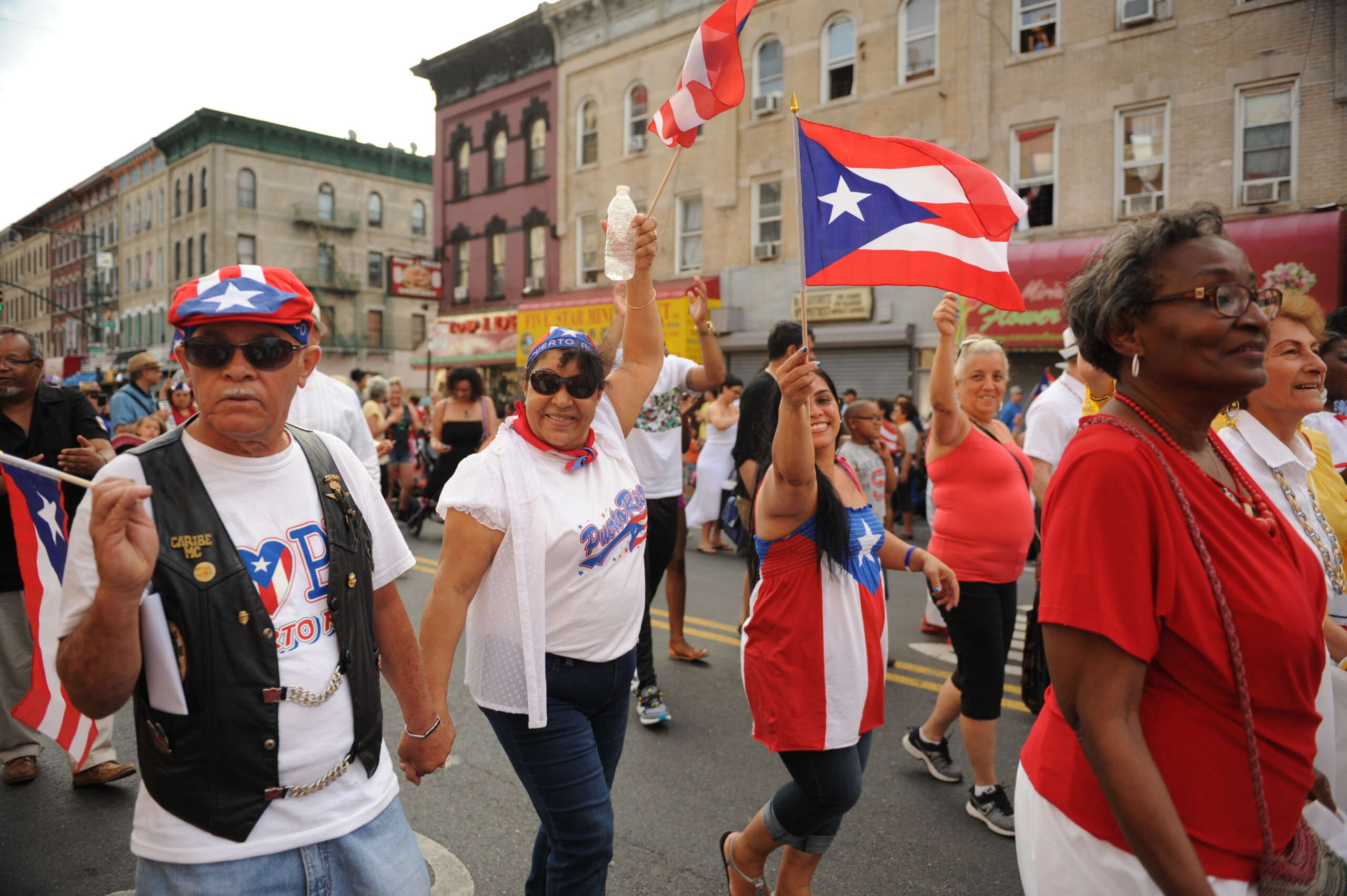
Organizers, dancers, and musicians are preparing this week for the annual Sunset Park Puerto Rican Parade and Festival, which will take place Sunday, starting at 5 p.m. on Brooklyn’s Fifth Avenue and 59th Street.
First launched in 2015—although suspended for two years during the pandemic—the parade began as a safe cultural after-party for the Annual National Puerto Rican Day Parade in Manhattan. When local attendees would return to Sunset Park and gather together in the evening, they often clashed with police in tense post-parade crackdowns.
“We don’t do a parade just to be festive. From the beginning, this has been a community-led effort to keep ourselves safe in a neighborhood with a long history of over-policing Puerto Ricans,” said Dennis Flores, founder of El Grito’s Sunset Park Puerto Rican Parade and Festival and an activist who recorded those local clashes with the NYPD.
The theme of this year’s parade is “gatherings of a community for a cause,” said Flores.
“This year’s parade is about celebrating our culture for a cause—affirming that we are still here, this is our community, and we refuse to be displaced,” Flores added.
As in previous years, organizers will honor the contributions of Latino New Yorkers such as Sunset Park graffiti artist Luis “Inca” Ramos, who also designed this year’s parade poster, and Brooklyn artist María Domínguez.
City Limits caught up with Flores to talk about the parade and its history.
This conversation has been edited for length and clarity.

Parade and Festival in 2015. (Credit: Claudio Gaete)
City Limits: For people who have never been to the Sunset Park Puerto Rican Parade, what is it?
Flores: In the 1990s and 2000s, on the day of the Puerto Rican Day Parade in Manhattan, Puerto Rican neighborhoods in every borough were flooded with police officers from multiple precincts. Long before smartphones or YouTube, we started cop watch efforts, to document, observe, and witness how cops would—without explanation—poke their nightsticks into you, and threaten you with arrest if you don’t move fast enough to clear the streets.
It became a rite of passage for many of us growing up in this, where this is a night where the cops are going to come out in numbers.
Then we started organizing by picking a corner, lining up musicians, ensuring the sidewalks were clear, and asserting we have a right to be here, we have a right to film and exercise our First Amendment rights to assemble and record the police.
The parade grew out of that work. It’s a day where the community takes the streets on our own terms: traditional Afro-Puerto Rican bomba and plena, flags, playing dominoes, honking horns, art.
CL: How is the parade organized?
Flores: It’s just really five of us—a small committee on the board, all born and raised in Sunset Park, mostly Puerto Rican artists, activists, and organizers who have roots in the community. We share values and principles, that’s what brings us together.
We screen participants and sponsors, making sure that this is something that does not become just another consumer event, but more like an opportunity where everybody is contributing in some way. We’d rather have something small and simple than something big and fancy that doesn’t fit with our values.
So we reject big corporate sponsorships. For example, we turned down artists and groups who want a platform to push anti-LGBTQ rhetoric. That’s not what this is about.
We also have over 30 volunteers who help make the day happen.
CL: Looking back over the years, what stands out as a particularly powerful moment?
Flores: One of the most emotional memories is from 2017, when we held a memorial after Hurricane Maria.
Artist and board member Adrián “Viajero” Román created a memorial in the park with 4,645 candles—one for each death linked to the hurricane and the failed federal response, though the real number is likely higher.
It was a solemn night. The park became a place for collective mourning and healing—to grieve, to remember loved ones, to sing, to dance.
I think that our parade did something that a lot of these events don’t do: it allowed people to share their memories, talk about their feelings and honor the dead.
CL: How has the neighborhood itself changed over the years that you’ve been doing this?
Flores: You see more benches, more garbage cans, fancy shops, big new buildings—things people call “improvements.” But who were these improvements really for?
We’re being priced out: working class, middle, low income families cannot afford to be here any longer.
The immigrant groups that came after Puerto Ricans, who are also fighting to remain, have big families, have to group up to afford to pay these rents. Eventually, they’re no longer going to be here either.
There is no real affordable housing for low-income families to remain in these communities. Working-class families, immigrants, low-income people are being priced out.
It’s a sad state of what we’re up against and what is happening, so these are the reasons why we choose to be vocal in our art, in our messaging, and in our presence, and what we’re doing in the work. And that’s the underlying theme that will continue to exist.
To reach the reporter behind this story, contact [email protected]. To reach the editor, contact [email protected]
Want to republish this story? Find City Limits’ reprint policy here.