


Share This Article
“What we don’t need are more speculative investors and private equity firms converting much-needed apartments into a revolving door of short-term rentals for tourists with no stake in our city’s future.”
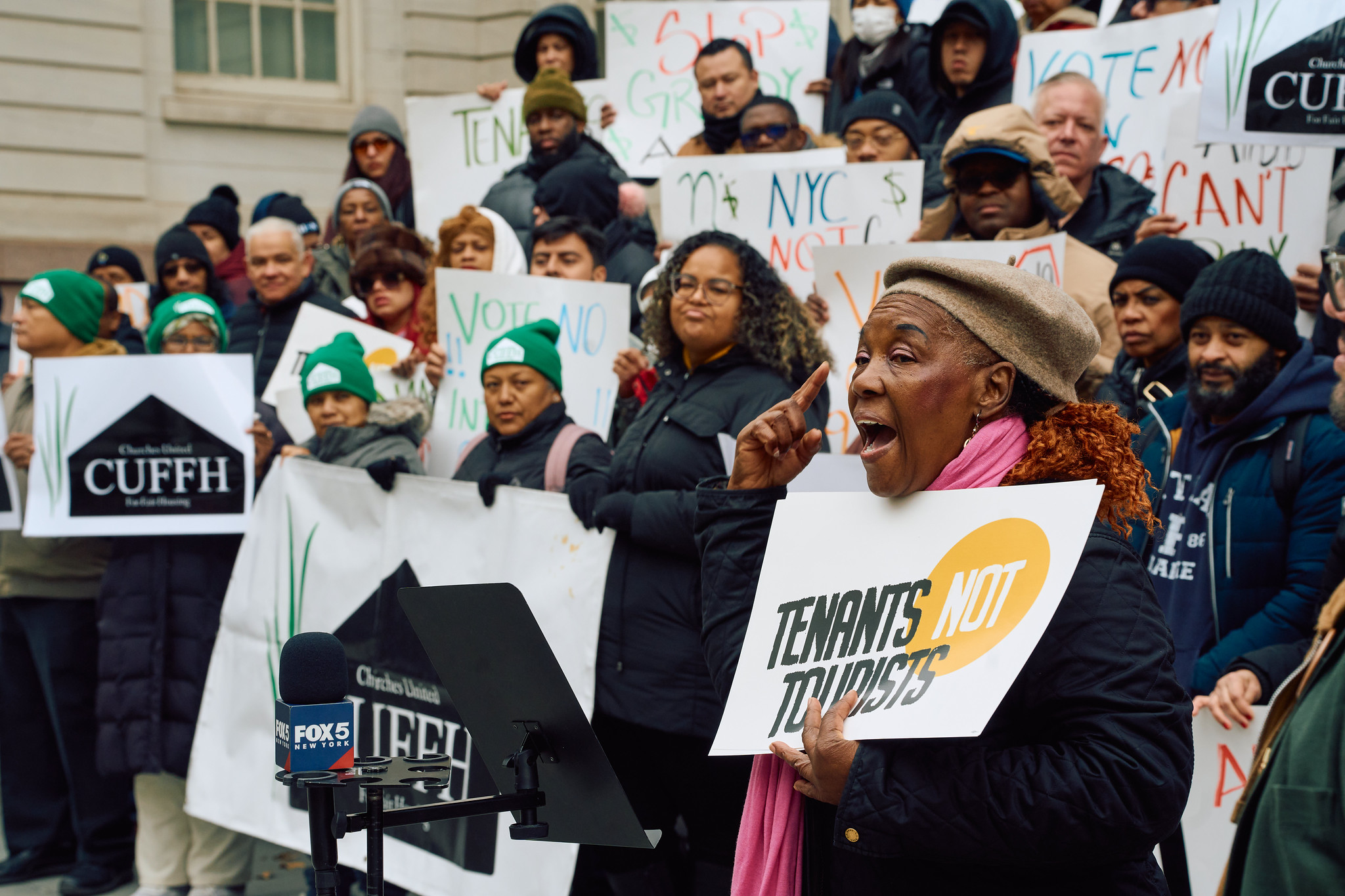

There is no question that New York is in a housing crisis. Rents are too high. Working-class New Yorkers are being pushed out of their neighborhoods. Black and brown homeowners, particularly in Brooklyn and Queens, are facing foreclosure and predatory deed theft. Far too many rent-stabilized units are sitting empty, and far too many New Yorkers are facing housing insecurity.
But none of these problems will be fixed by rolling back the critical protections for tenants and homeowners that New Yorkers won by passing the historic Local Law 18. In fact, it would only make things worse.
Local Law 18 was designed to prevent tens of thousands of apartments from being taken off the market and turned into de facto hotels, and to protect longtime homeowners from being bullied by private equity into selling their homes. It helped prevent New York’s housing crisis from worsening, but it was never supposed to single-handedly solve New York’s affordability crisis.
Solving New York City’s housing crisis will take continued action to strengthen protections and support homeowners. Foreclosures and deed theft remain a serious threat to generational wealth and neighborhood stability, particularly for Black and brown homeowners in historically Black and brown neighborhoods who are the primary targets of predatory investors. That’s why Met Council supports policy changes that will actually protect at-risk homeowners, including significant investments in legal assistance programs.
But weakening Local Law 18 does nothing to address either problem. It will simply create another incentive for investors to extract more value from New York’s housing stock by pushing homeowners and their tenants out, including the long-term tenants in one-and two-unit residences paying a lower median rent than other market-rate renters—26 percent of whom are Black and brown. And it will raise rents for everyone else.
Then there is the headline-grabbing 57,000 vacant rent-stabilized apartments. Everyone agrees that 57,000 vacant apartments in a city with a severe housing shortage should demand our attention. But the appropriate response is not to gut the housing protections that we have in place in the name of “reform.”
Unfortunately, multi-billion-dollar companies like Airbnb are using baseless arguments to exploit the situation to overhaul our short-term rental regulations and profit from our housing crisis. The company has already poured $10 million into a PAC in a shameless attempt to buy off local elected officials, and tried to chip away at our city’s historic Local Law 18 with failed legislation.
Airbnb even tried to use the World Cup to temporarily suspend short-term rental restrictions after making a $1 million contribution to the New York/New Jersey FIFA host committee. But as several Council Members warned earlier this year, even temporarily suspending our short-term rental laws would throw the housing market into disarray and drive up prices for everyone.
New Yorkers don’t want Airbnb here. We don’t want Airbnb to continue concocting new ways to circumvent city law so they can drive up profits at the expense of tenants, homeowners, and our city. We don’t want Airbnb to make money off of our housing crisis under the guise of caring about those disproportionately impacted by the gaps in our housing policy.
We need to build more affordable housing, preserve rent-stabilized apartments and make sure they’re occupied; protect homeowners from foreclosure and deed theft; bring vacant apartments back into productive use; and protect tenants. These are real and urgent issues that Met Council, housing advocates, and our partners in government are working every day to address.
What we don’t need are more speculative investors and private equity firms converting much-needed apartments into a revolving door of short-term rentals for tourists with no stake in our city’s future.
Darius Khalil Gordon is the executive director at Met Council on Housing.