


Share This Article
“On Wednesday night, a man held at Rikers Island died—the fifth death in city custody in the last two weeks, and the 12th this year alone. These are not isolated incidents; they are symptoms of a system in collapse.”
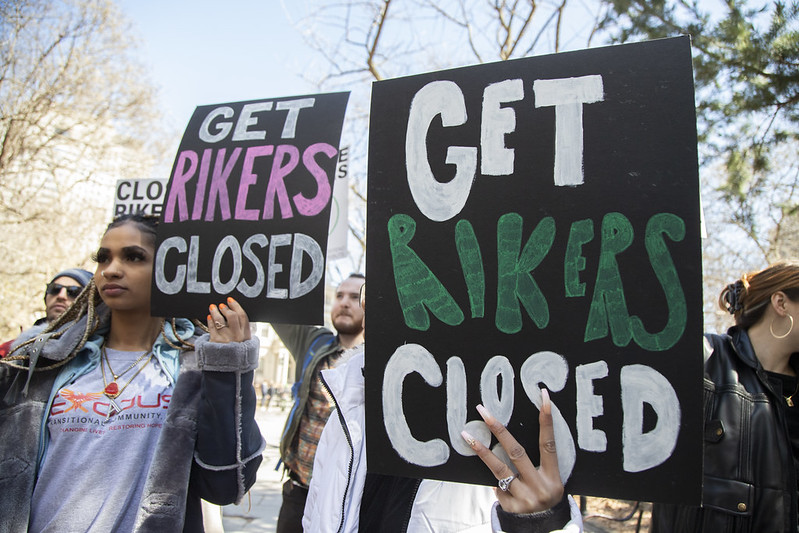

On Wednesday night, a man held at Rikers Island died—the fifth death in city custody in the last two weeks, and the 12th this year alone.
These are not isolated incidents; they are symptoms of a system in collapse. For decades, New York City has been trapped in a cycle of failure at Rikers. The sprawling, decaying jail complex isn’t just a humanitarian disaster—it’s a direct threat to public safety.
A commission tasked with evaluating the closure of Rikers recently made clear what so many of us have long known: the current system is broken, dangerous, and unsustainable.
Rikers doesn’t rehabilitate. It destabilizes. According to the Blueprint to Close Rikers report released by the Independent Rikers Commission earlier this year, 84 percent of people in Rikers are held pre-trial, waiting for their court date, presumed innocent under the law. This number includes over 500 people who have been held in Rikers for over two years. And yet, whether detained pre-trial or serving a sentence, people leave Rikers worse off than when they entered. That alone makes our city less safe.
Rather than preparing people to return to their communities and live successful lives, Rikers breeds trauma, violence, and despair. It’s a place where brutality is routine, committed by and against staff and detainees alike. Court delays are rampant, and many are forced to languish behind bars for months or even years without a conviction.
Rikers has also become a de facto mental health facility—one that catastrophically fails at providing care. Nearly half of those incarcerated at Rikers live with mental illness, yet the facility only exacerbates these conditions. That’s not just inhumane. It’s counterproductive. Every day spent at Rikers can worsen serious mental illness, turning an already difficult situation into a crisis.
These missed opportunities for care represent missed chances to break the cycle of incarceration—and to connect people with support in their home communities.
And the cost? Staggering. As of 2021, it costs over $500,000 per year to jail one person at Rikers, many times more than it would cost to provide housing, health care, and treatment. We’re paying a premium to perpetuate harm.
Even corrections officers are suffering. They’re burned out, working excessive overtime in unsafe, chaotic conditions that lead to trauma and absenteeism. This system doesn’t work for anyone—not for the people jailed, not for the people working there, and not for the people of New York City.
Rikers’ remote location, an island in the East River, only deepens the dysfunction. It isolates those inside from the communities to which they will return. It limits access to attorneys, delays court appearances, and makes family visits difficult or impossible. That separation reinforces the worst tendencies of our justice system: neglect, abandonment, and indifference.
The answer isn’t to pour more money into a failed institution. It’s to build a system that actually works.
That’s why, in 2019, the City Council voted to close Rikers and replace it with four borough-based jails—smaller, safer, and more humane facilities in the Bronx, Queens, Brooklyn, and Manhattan. These new jails will be located near courthouses to facilitate legal access, reduce delays, and make it easier for families to stay connected—critical for rehabilitation and due process.
These new facilities must not replicate the culture of Rikers. They must represent a reset. That means training staff to address mental health needs with care and professionalism. It means building a culture rooted in dignity, not punishment.
One looming challenge is capacity. The new borough-based jails are designed to hold significantly fewer people than Rikers does today. If the number of people in pre-trial detention exceeds that limit, the Department of Correction may be forced to send detainees to facilities even farther away—undermining the very goals that the borough-based model is meant to achieve.
This is a serious concern that must be addressed with honesty and urgency. One key strategy lies in addressing the large portion of the current Rikers population made up of individuals with serious mental illness—people who should be receiving care in clinical settings, not languishing in jail. Expanding access to mental health treatment must be a cornerstone of the new system. But keeping Rikers open to solve a capacity problem is not an option. It is the problem.
The 2027 deadline to close Rikers is rapidly approaching—and we’re behind schedule. Construction delays threaten to push completion into the next decade. But the Lippman Commission’s latest report shows it doesn’t have to be this way. With urgency and leadership, we can accelerate the timeline and save lives in the process.
Every year we delay is another year of unnecessary suffering. Another year of preventable death, untreated mental illness, and wasted taxpayer dollars. Another year of injustice.
We have a once-in-a-generation opportunity to break this cycle, and we must seize it.
Let’s close Rikers. Let’s build a system rooted in dignity, rehabilitation, and justice. Not only because it’s the moral thing to do—but because our safety and our humanity depend on it.
Erik Bottcher is the City Council Member representing District 3, which includes the neighborhoods of West Village, Chelsea, Hell’s Kitchen and Time Square.
3 Comments
Nagar
As the victim I really didn’t appreciate your article that only thinks of the safety of dangerous or potentially dangerous people, Let me know if you want people out there raping, robbing and killing you and your loved ones because I don’t and if you close places like rikers you are asking for that with what happened during pandemic all over again only worse.
Dominick Romeo
Council Member Erik Bottcher and his colleagues have defunded Rikers Island, caused it to decay, and caused a drop in correctional officers who they have demonize for doing their job – then they claim that the “current system is broken, dangerous, and unsustainable,” the same system that they are in charge of managing. Erik Bottcher and City Council helped cause this decay at Rikers Island. He wants to sell this land to his developer friends for more luxury high-rise building that average people cannot afford. Thats what this is about – we have seen this before! Instead of using this land as a beacon of hope and a gold standard for rehabilitation and drug recovery centers, they letting Rikers decay in hopes that there is no return – just like what they have doing to NYCHA Housing Projects – both of which they want to privatize. This is what’s going on here! This is yet another land grab by Erik Bottcher and his crony developer friends in disguise. We have seen this before time and time again… They rather release more criminals from jail only for them to assault our family members, our friends, and our neighbors later. Erik Bottcher cares more for criminals then his constituents.
Nancy Sheran
We must address this with urgency. We must look at separating people with mental illnesses from other people in the correction system and providing appropriate care and restraint for violent people with mental illness. Look at having different facilities for each. Should non-violent recidivists awaiting trial be in different facilities than convicted criminals? Maybe it would be better for some people to be removed from their neighborhoods while they learn to live better lives. What about women with young children? Let’s keep open minds and seriously address the concerns of communities, prison staff and incarcerated people in a way we would all want to be treated. Would smaller more specialized facilities be better? We should listen to the experts. It’s a serious step to take away someone’s freedom. But communities also need to be safe.