


Share This Article
“Storms are not waiting for regulators. New York can use community batteries on ordinary days without sacrificing the people who depend on them during the worst ones.”
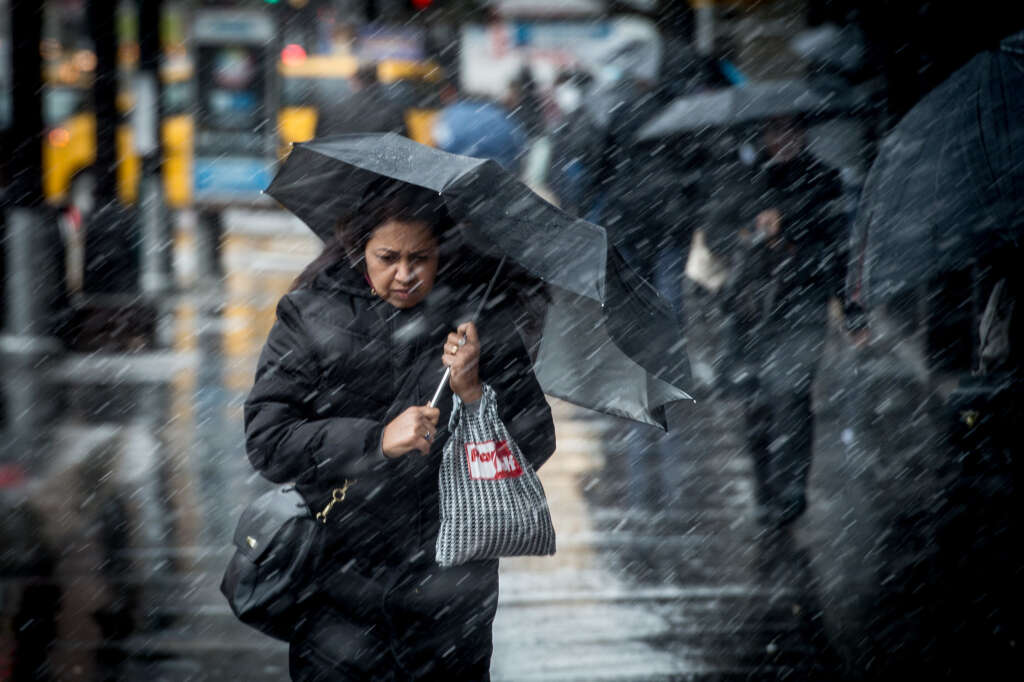

Earlier this fall, a slow-moving nor’easter flooded New York’s coast, toppled hundreds of trees on Long Island and in the Rockaways and knocked out power to tens of thousands of homes across the Northeast. In July, record heat and holiday storms interrupted service to about 173,700 Con Edison customers. Westchester communities suffered the most storm-related outages.
When the lights go out, many New Yorkers turn to community centers, shelters and senior centers. More of those buildings now have batteries, often paired with rooftop solar, that can keep fans, phones and medicine refrigerators running. After Hurricane Sandy, the city’s RISE:NYC program built eight solar-and-battery microgrids in Staten Island, Brooklyn and the Rockaways for that purpose.
These batteries could also help the grid on hot afternoons, when electricity demand spikes. Utilities and private companies already pay some battery owners to release stored power. Connect enough batteries and they can work together as a virtual power plant.
But a shelter cannot sell the same electricity it needs for an emergency. If a utility drains its battery during an evening peak and a storm arrives the next morning, the shelter may have nothing left. New York’s utility rules provide no common way to protect backup power while selling the remainder. Facilities that serve medically vulnerable residents, older adults and families without money for generators have the most to lose.
That is an energy justice problem. Residents of historically excluded communities often face greater exposure to extreme heat and outages while having fewer resources to leave, replace spoiled food or power medical equipment. Publicly funded batteries should protect those residents first. They should also earn revenue that can support maintenance and community services when no emergency exists.
Community organizing taught me that resilience plans fail when institutions design them around equipment instead of the people who will depend on it.
New York has 528.7 megawatts of installed storage, including 268.2 megawatts in smaller local projects, according to the Department of Public Service. Yet utility peak-demand programs enrolled only about 68 megawatts of battery relief in 2025. Con Edison held dispatch rights to 185 megawatts; the other major utilities held none.
Not every unenrolled battery can participate, but the disparity shows that New Yorkers do not have equal access to the benefits of shared storage. The Public Service Commission should require every major utility to offer one set of terms for batteries that serve two purposes. Eligible sites should include hospitals, shelters, cooling centers, senior facilities, schools, houses of worship and community organizations that provide essential services during outages.
First, each site should keep a protected reserve that utilities cannot use. Small facilities could use a standard reserve set by facility type, while hospitals and other complex sites could document their needs through a detailed study. Utilities could buy only the energy above that floor.
Second, routine dispatch should pause when the National Weather Service warns of hazards the Commission determines pose a significant local outage risk, such as hurricanes, coastal flooding or damaging winds, giving batteries time to recharge. Third, a hospital, shelter or cooling center should be able to leave a grid event without penalty when safety requires it. Utilities should report each override so regulators can deter abuse.
Utility companies and ratepayer advocates may object that these protections reduce the power available to the grid and add verification costs. They are right about the tradeoff. A battery with a protected reserve offers less capacity than an unrestricted one. But reliable capacity is worth more than capacity a facility will not enroll because the contract threatens its emergency mission. Standard rules also cost less to negotiate and audit than a different agreement for every building.
The timing matters. New York aims to reach 6,000 megawatts of storage by 2030, and state law promises disadvantaged communities a fair share of clean-energy benefits. Every project signed under different terms makes a statewide standard harder to adopt later. Residents should ask the Public Service Commission and their utilities to protect community reserves, publish participation data and include frontline organizations when writing the rules.
Storms are not waiting for regulators. New York can use community batteries on ordinary days without sacrificing the people who depend on them during the worst ones. The Commission should set that bargain now.
Jessica A. Campbell is a community organizer and clean-energy policy student in Yale’s Financing and Deploying Clean Energy certificate program.