


Share This Article
“While other issues, such as aging infrastructure, further compound the problem, the very design of cooling towers allows for the atomization of particles that can wreak havoc when inhaled.”

Cooling towers are ubiquitous in New York City, where roughly 5,000 of them are used to circulate water so that air conditioning systems do not overheat, emitting mist or water vapor. Similarly ever-present is bacteria itself, which has been around long before, and certainly will outlive, the human race.
In the summer heat, stagnant water inside can become infected with the Legionella bacteria, turning the vapor emitted by the towers into a potential contagion across the city.
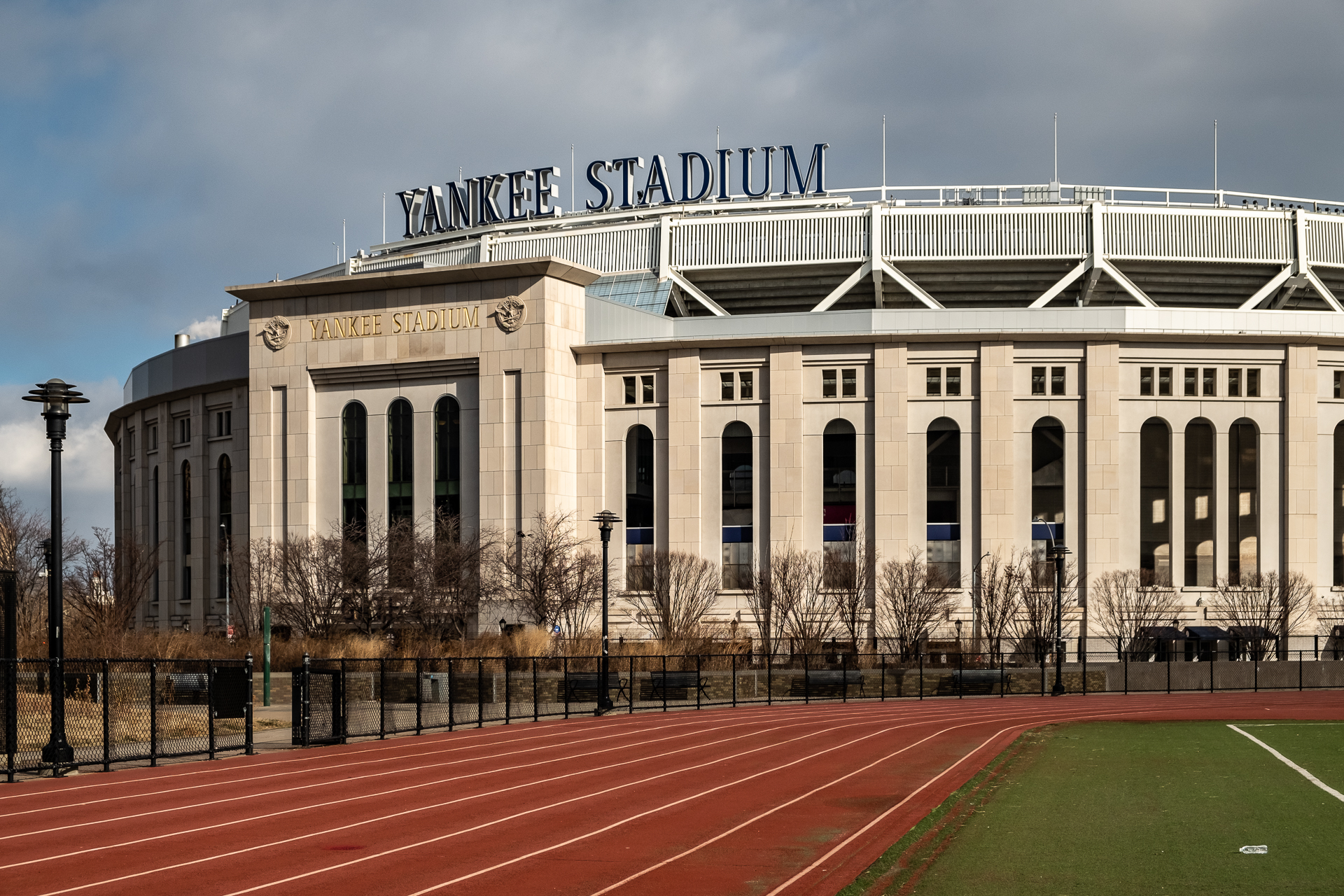
In September, along the Grand Concourse and even in the House that Ruth Built, 23 people have been diagnosed with Legionnaires’ and two have died, after Legionella bacteria was found in 10 cooling towers across the South Bronx, including one at Yankee Stadium.
The definition of insanity is repeating the same action over and over again, while expecting a different result, which accurately describes New York City’s approach to policing Legionnaires’ outbreaks.
In August 2026, Legionella bacteria was found in Chelsea. This followed a month-long outbreak on the Upper East Side in July, resulting in 92 hospitalizations and 11 deaths. Almost a year ago, an outbreak in Harlem led to 90 hospitalizations and seven deaths. In 2022, an outbreak in Highbridge sent 24 people to the hospital and caused two deaths, while 2018 saw back-to-back outbreaks in Washington Heights and Central Harlem. An outbreak in the South Bronx in 2015 led to 138 cases and 16 deaths.
These outbreaks occur like clockwork during the summer months, as the Legionella bacteria that causes the infection thrives in warm environments.
While other issues, such as aging infrastructure, further compound the problem, the very design of cooling towers allows for the atomization of particles that can wreak havoc when inhaled.
While the New York City Department of Health and Mental Hygiene tries to maintain a testing and monitoring system, they remain critically understaffed. Gov. Kathy Hochul recently signed new regulations into law that mandate stricter testing standards and steeper financial penalties for violators, but this still does not address the core of the issue: the design of the towers themselves and the method by which they spread bacteria.
In an imperfect world, when things inevitably fall through the cracks, it becomes a cat and mouse game of trying to trace the outbreak to the correct cluster of cooling towers, followed by DNA testing to pinpoint specific genetic markers from one particular tower or other potential source of the bacteria. This is usually followed by lawsuits, filed against the city, the building owners, the contractors, or a combination of all three.
Such lawsuits—usually seeking damages for medical bills, lost income or causes of action sounding in wrongful death and conscious pain and suffering—can result in many verdicts or settlements, and are costly for all involved. After the 2025 outbreak, roughly 20 people filed claims notices against the city, with a staggering total potential liability of $210 million, stemming from that incident alone.
It does not have to be this way. The designers should improve these systems and the city must watch them more closely.
In 2024, when New York City suffered 257 Legionnaires’ cases, Chicago had 114. While there certainly are differences in the density and topography of these respective cities, Chicago’s downtown is cooled by a district-wide cooling system that circulates chilled water through a closed-loop system that eliminates the release of water vapor. There is a good idea.
Another solution may be to change how New York City disinfects its water supply. Currently, the city uses safe levels of chlorine, but a study conducted by the Society for Risk Analysis found that zip codes that use monochloramine, a chemical compound consisting of chlorine and ammonia that can be safely used to disinfect water, have lower instances of Legionnaires’ disease. That is another good idea worth further exploration and implementation.
New York City has long been at the forefront of technological advancement and innovation, but that cannot be maintained if it buckles under the weight of outdated infrastructure and insufficient agency manpower.
Legionnaires’ outbreaks cannot and should not be treated as a yearly ritual. The city must take more active steps to reduce the chance of outbreak and start with better ideas, better designs and implementation of those solutions that have worked in other cities in our nation.
There are multiple options available to New York City. Taking any of them can reduce the strain on our health system and save the city and its real estate businesses from future litigation, not to mention its citizens from this health crisis.
The city recently published a number of proposed reforms, some of which are promising, such as convening a panel to consider alternatives to cooling towers. The rest are largely the same playbook we have been following after prior outbreaks, simply repeated: increased enforcement, faster investigative response times, and the combining of agency databases. Again, the very definition of insanity.
Even with stricter compliance standards or an improved reporting system, we are still upholding the same broken system that relies on faulty technology and an understaffed municipal department. Instead of endlessly trying to treat the symptom, it is time we try to treat the cause.
Michael P. Mezzacappa is a partner and general counsel with leading defense litigation firm, Coffey Modica LLP. He represents insurers, property owners, managing agents and other professionals in major litigations.