


Share This Article
“Again and again, Bronx residents refused to accept other’s decisions about our communities, and that history has shaped much of how we think about governance today.”

This year, as the United States celebrates its 250th birthday, the ideas and ideals that have shaped and been debated in this country for centuries have likely been on some of our minds in the Bronx.
Like many other communities across the country, Bronxites have lived through a summer in which we were invited to celebrate the history and possibilities of this country while simultaneously reading headlines, day in and day out, about the real physical and symbolic violence directed at immigrants and Black communities that call the Bronx home.
The contradictions are difficult to reconcile. On the one hand, many millions of “American Dreams” have been born and nurtured by families from around the world raising children in the Bronx over the last century. On the other, the Bronx has for generations been deeply shaped by structural racism, organized abandonment and disinvestment, as well as predatory equity, speculative real estate, and gentrification. This year alone, the Bronx has shown at a local level that the meanings and interpretations of democracy remain very much contested and in formation today.
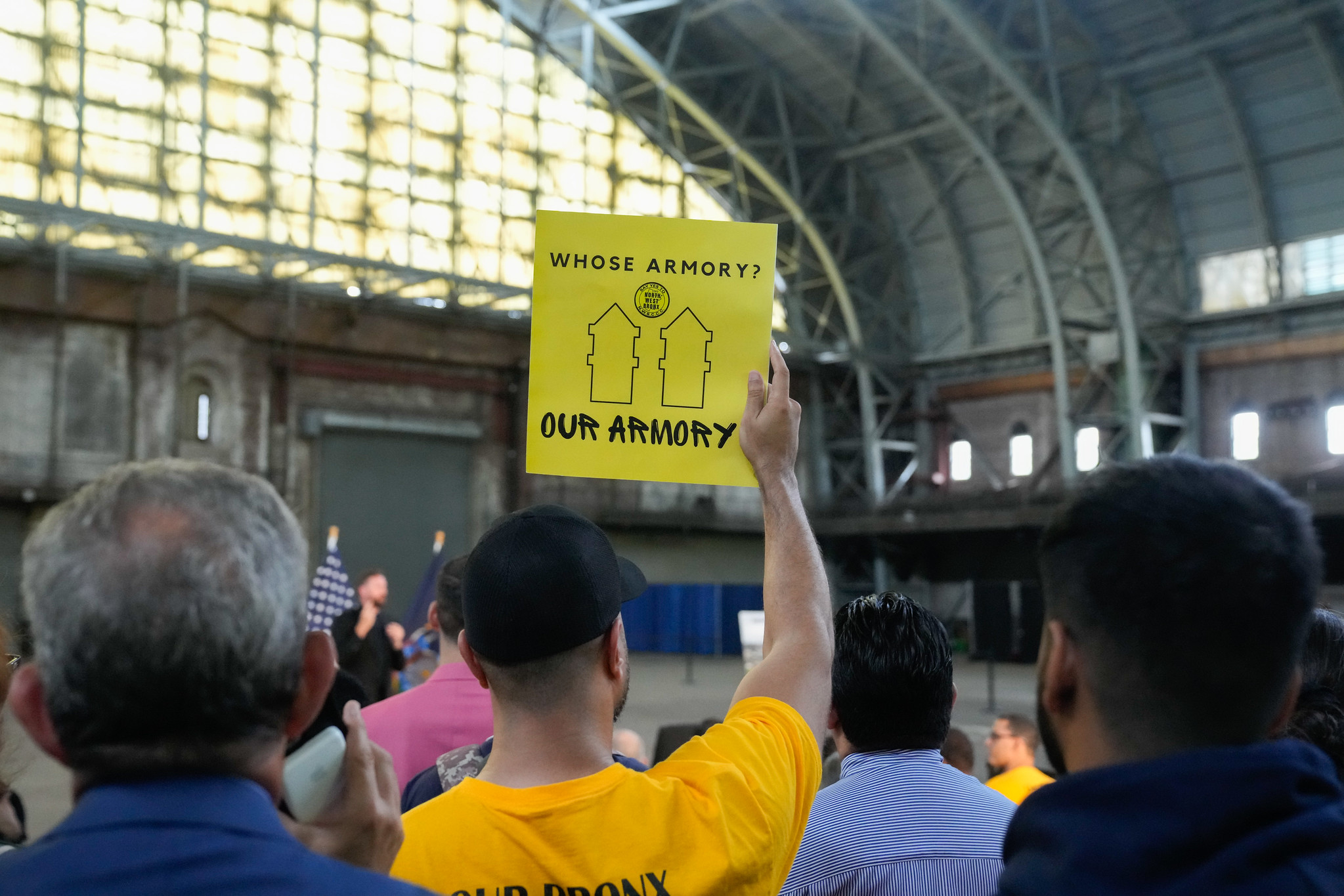
In the first few months of this year, we saw the approval of a Bronx casino at Ferry Point in Throggs Neck that faced significant community opposition. On the other side of the borough, we saw the advancement of a different model at the Kingsbridge Armory, where decades of community organizing shaped a vision that includes shared ownership, enforceable community benefits and a long-term role for Bronx residents in governing the project.
This vision for shared ownership and community-led development has both a history and a future in the Bronx. For decades, decisions about the Bronx were significantly made by people who did not live here and were not meaningfully accountable to the people who did. Those decisions shaped where investment went, where it did not, what happened to our housing and neighborhoods, and who had the ability to benefit when public and private investment returned. The Bronx has lived with the consequences for generations, but our history also includes the ways Bronx residents responded to private and public disinvestment and abandonment.
Bronxites organized. They built tenant associations, community organizations, block and neighborhood associations. They fought for housing, schools, jobs, parks, public investment and basic services. Residents reclaimed abandoned buildings, stayed when neighborhoods were written off, and helped rebuild communities that others had decided were no longer worth investing in.
Our own organization was founded more than 50 years ago out of that period, when residents, clergy and neighborhood leaders understood that unless people organized collectively, the future of their communities would continue to be determined somewhere else. Again and again, Bronx residents refused to accept other’s decisions about our communities, and that history has shaped much of how we think about governance today.
Governance is about who has power. It is about who gets to shape decisions, direct resources, and determine what happens in their community. Co-governance is one way of beginning to change the long history of decisions being made about our communities without us.
In many of the public processes we have participated in over the years, communities have been invited to provide input through public hearings, listening sessions, advisory committees and other forms of engagement, and those spaces are important. But we have also learned that there is a meaningful difference between being asked what you think and having a real role in what ultimately gets decided.
Too often, community engagement begins after the most consequential choices have already been made. Residents are then asked to respond to a proposal that someone else has developed, and while their experiences may be reflected in a report or presentation, they have little ability to change the fundamental direction of the work.
Our communities are often treated as sources of stories that help explain a problem while someone else remains responsible for developing the solution. Our experience has shown us that technical expertise is vital in planning, finance, development and public policy, but that expertise is incomplete without the people who are most impacted by the consequences.
Tenants understand how housing systems fail because they experience those failures directly. Workers understand what makes it possible or impossible to access and sustain a career. Small business owners understand the pressures facing commercial corridors, and young people understand what is missing in their neighborhoods. These are different forms of expertise, and effective governance has to create ways for them to exist together rather than assuming one is more legitimate than another.
Co-governance, as we have come to understand it through our work, requires civic infrastructure that places impacted communities at decision-making tables alongside experts, public officials and institutions. The role of communities at those tables can be to provide input, but also shape decisions, monitor implementation, review information, raise concerns, resolve disputes and make sure commitments are carried out.
Co-governance is a complement to, not a replacement for, elected officials and subject matter expertise, but it does require institutions to think differently about how power is shared and where consequential choices are actually being made.
We have also learned that simply bringing people together at the same table is not enough. Residents, community organizations, labor unions, faith institutions, businesses, government agencies and larger anchor institutions often come into these processes with very different levels of power, staffing, resources, expertise, relationships and political influence. Those differences do not disappear because everyone has been invited into the same room. If anything, without intentional structures, they can reproduce the same inequities that exist outside of the process.
Strong governance has to be built and invested in over time. People need opportunities to develop leadership, understand complicated issues, build relationships and remain accountable to a broader base. Community organizations need the resources to organize, communicate information back to their constituencies, hear concerns and return to decision-making spaces with something larger than an individual point of view.
Community members also need practical supports—including interpretation, childcare, accessible information, training and, at times, stipends—if we are serious about making sustained participation possible. Institutions, for their part, have to be willing to share power in the places where decisions are actually made, rather than creating community bodies whose primary role is to approve or react to decisions made somewhere else.
We have been learning many of these lessons through our work at the Kingsbridge Armory. For more than three decades, Bronx residents organized around the redevelopment of one of the largest armories in the world, situated at the heart of our community, and for much of that history the community was asked to respond to development proposals that had been created outside of the community.
Over time, residents, young people, workers, small businesses, faith organizations, community groups and labor unions worked together to develop our own priorities for what the Armory should become and who should benefit from its redevelopment. That vision was developed over many years of organizing, coalition building, negotiation and collective learning.
It ultimately included family-sustaining jobs, environmental sustainability, affordable space, community ownership and a long-term role for Bronx residents in governing the development. Today, those ideas are reflected in legally binding structures, including a Community Benefits Agreement, a 20 percent community ownership structure, and a Community Advisory Council that will help oversee implementation and accountability.
What is important to us now is to ensure these structures are sustainable. Long-term governance requires infrastructure that allows communities to monitor implementation, review information, raise concerns, resolve disputes and make sure commitments are carried out through changes in leadership, economic conditions and political administrations.
We do not see the Armory as a perfect or finished model. In many ways, we are only beginning to understand what it means to turn agreements into functioning governance structures that can hold up over time. We expect challenges and disagreements, and we also expect those experiences to continue teaching us what meaningful community governance actually requires in practice.
We are also exploring similar governance questions at a Bronx-wide scale through our economic development work. Since 2019, we have worked with residents, community organizations, labor unions, small businesses, faith institutions and others through the Bronxwide Coalition to develop a shared economic vision for our borough. This was, in part, an attempt to build across some of the lines of division that have kept us isolated, separate, and weaker than we need to be if we are going to address the scale of the challenges facing the Bronx.
In partnership with the Bronx Economic Development Corporation (BXEDC), Our Bronx and the Bronxwide Coalition began in 2024 to develop the borough’s first Comprehensive Economic Development Strategy, or CEDS. It is a federal tool that requires a baseline of collaboration and coordination across sectors to develop an economic development vision for a specific place.
Over the course of this two-year process, organizations that do not often work together, and do not always agree when we do sit at the same tables, have had to balance our own interests and navigate real differences in power. At the same time, we have tried to hold fast to a shared responsibility to the people of the Bronx who will ultimately be impacted by the work we are doing. This has meant working through competing priorities while also trying to build trust and relationships across organizations that have historically operated in very different ways.
We knew, however, that if we retreated back into our corners and our own sectors, we could not really make the kind of larger transformative change that many of us, in different ways, wanted to see. To put it plainly, nothing changes if nothing changes. We needed to build different kinds of relationships together and move beyond the transactional into something more durable for the long term.
In seeking out models and examples for what we were trying to accomplish, a broad, cross-sectoral governing body for long-term equitable economic development, we found very few examples we could look to in the United States. That has reinforced for us the need for more experimentation in governance and democracy, particularly at a moment when we are seeing the limitations and signs of age in institutions that have existed for decades, and in some cases, centuries.
Now, two years after beginning this unprecedented and sometimes uncomfortable partnership, the Bronx is completing its first federally-certified CEDS. This will not only open new funding opportunities, but will also allow us to continue stewarding the borough-wide civic and economic development infrastructure we have built through a CEDS Advisory Council.
This Council will need to reflect the shared values that led to the creation of the plan and the diverse types of organizations and institutions that will be needed if we are serious about building a Bronx economy rooted in shared ownership, community wealth, and broader prosperity.
This work has also reminded us that co-governance is more complex and can be slower than traditional top-down decision-making, and that it requires more resources to do well. Organizations come to the table with varying levels of capacity and power, conflict is inevitable, and community representatives have to remain connected and accountable to a broader base if they are going to represent something more than their own individual views.
We have also seen, however, that decisions made quickly and without meaningful community participation often create mistrust, resistance, delays and implementation challenges later. Investing more on the front end in relationships, leadership, organizing and shared decision-making can make the work more durable.
In the Bronx, just as in the United States as a whole, co-governance offers a framework for thinking about how we build more sustainable and legitimate democratic institutions in the 21st century. When communities have the authority and resources to co-govern, development is more accountable, more democratic, and more likely to create sustained and meaningful benefits.
For us, this is part of our long-term struggle for community determination, and why we work to build co-governance across different areas of our lives. We want people throughout the Bronx to have opportunities to shape the major decisions that impact them and to learn the critical skills of practicing day-to-day democracy with their neighbors.
Sandra Lobo is the executive director, and Evan Casper Futterman the education and planning director, at Our Bronx. This piece is part of a narrative series around co-governance and democracy led by Race Forward and Partners for Dignity and Rights.