


Share This Article
“As parents scramble to cover the costs of child care without financial assistance, family child care educators become the stopgap: the ones who keep the door open so that a parent can clock in and the child can stay in a stable routine.”
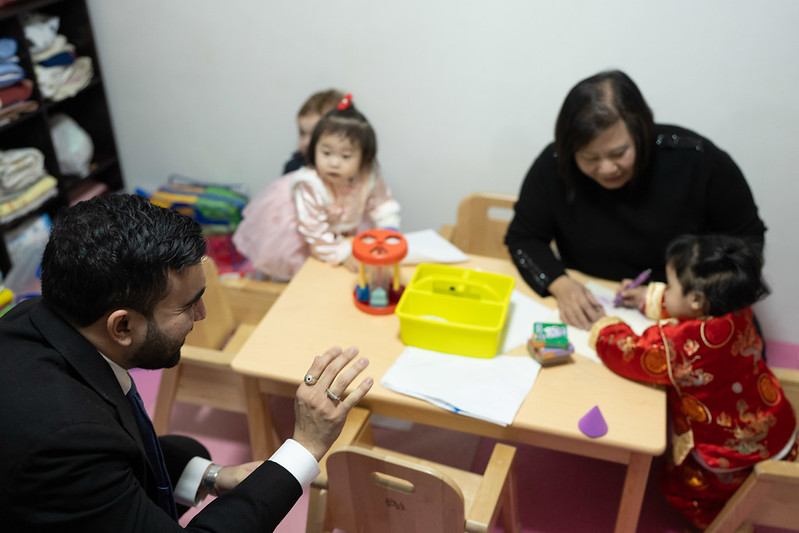

When the mother of a 2-year-old boy knocked on Irma’s apartment door, she was desperate. She couldn’t miss work, but she had no way to pay for care at the time. Her distress was palpable.
“Don’t worry,” Irma said. “I’ll take him.”
It wasn’t the first time she’d supported parents through their challenges while sacrificing income for herself. Irma is a family child care educator, and her commitment to her community often takes priority over the bottom line. She estimates that the vast majority of the time, she provides discounts to one or more families, so they don’t need to worry about their children as they work or attend classes.
Let’s dwell on that. If the same parent walked into the grocery store without cash or benefits, she would be turned away. If she went to the clothing store without money to buy a winter jacket for her child, she would walk out empty-handed. But day in and day out, home-based child care educators like Irma—who own and operate independent businesses where they provide quality, individualized care and education to small groups—are compelled to make heartfelt, challenging decisions to choose the needs of the children and parents in their communities over their own.
And for most, it comes at a significant cost. A report from the New School Center for NYC Affairs concluded that the average wage for family child care educators amounts to just $6.01 an hour. Even at 60 hours a week, that comes to roughly $18,750 a year—before you even account for the costs of running a program. That’s not just below New York City’s minimum wage of $17 an hour; it’s a fraction of what many other service workers earn.
Without profound change, Irma warns, “family child care will not survive.”
Thankfully, Gov. Kathy Hochul and Mayor Zohran Mamdani recognize this, and are showing a marked increase in their commitment to children, families, and child care workers alike. As the city focuses on system expansion, the city will launch the first 2,000 seats for free 2-K this fall, as well as additional seats for 3K in areas of high need.
Mayor Mamdani has also given unprecedented attention to family child care, hearing from educators themselves and recently announcing 500 emergency grants for family child care programs, making many advocates and providers feel a renewed optimism about the future of child care in New York City.
This commitment isn’t entirely new. In 2023, Gov. Hochul, recognizing the financial strain of child care costs, increased the family income level of eligibility for child care assistance. With a family income limit in New York City of almost $116,500 a year for a family of four, almost half of all New York families are now eligible for a voucher, and it shows. The number of families across the state who have taken advantage of this policy change has grown from 37,000 in 2022 to 113,000 as of September 2025.
Vouchers are intrinsic to the New York City landscape as well, especially with family child care. Last year, of the 7,263 licensed care providers in New York City who cared for children with vouchers, 82 percent of them were home-based programs.
However, the increased demand, coupled with changes at the federal level that affect how eligibility is prioritized, has created a perfect storm of statewide waitlists, as tens of thousands of children across the state who once received care with a voucher are now waitlisted, including more than 25,000 New York City children. As parents scramble to cover the costs of child care without financial assistance, family child care educators become the stopgap: the ones who keep the door open so that a parent can clock in and the child can stay in a stable routine.
“Because I bend and change my rate, I really have to play with my budget,” Irma said. “I can’t pay each assistant 40 hours. When there are few children, I stay on by myself to get extra hours. I start at 7 a.m. and don’t end until 7 or 7:30 p.m.”
High-quality early childhood education is linked to better long-term outcomes for children, including higher high school graduation rates and improved earnings. Furthermore, child care is essential for economic health. New York City estimates that in 2022, child care shortages led to $23 billion less in economic output and $2.2 billion less in tax revenue.
Our city and state leaders should be applauded for recognizing this, and taking concrete steps to address the cost of living and keep New Yorkers in New York. Once they show the same commitment to addressing the voucher crisis, they will cement their reputation as child care change-makers, and demonstrate that New York is on the cutting edge of putting children and families first.
Jessica Sager is the CEO of All Our Kin, a nonprofit that trains, supports and sustains family child care educators.