


Share This Article
Philadelphia’s City Council is debating a bill that would ban the City of Brotherly Love from exporting its trash for incineration, citing pollution and impact on human health. Should New York City follow suit? Doing so would require a major reduction of its trash output, experts say.
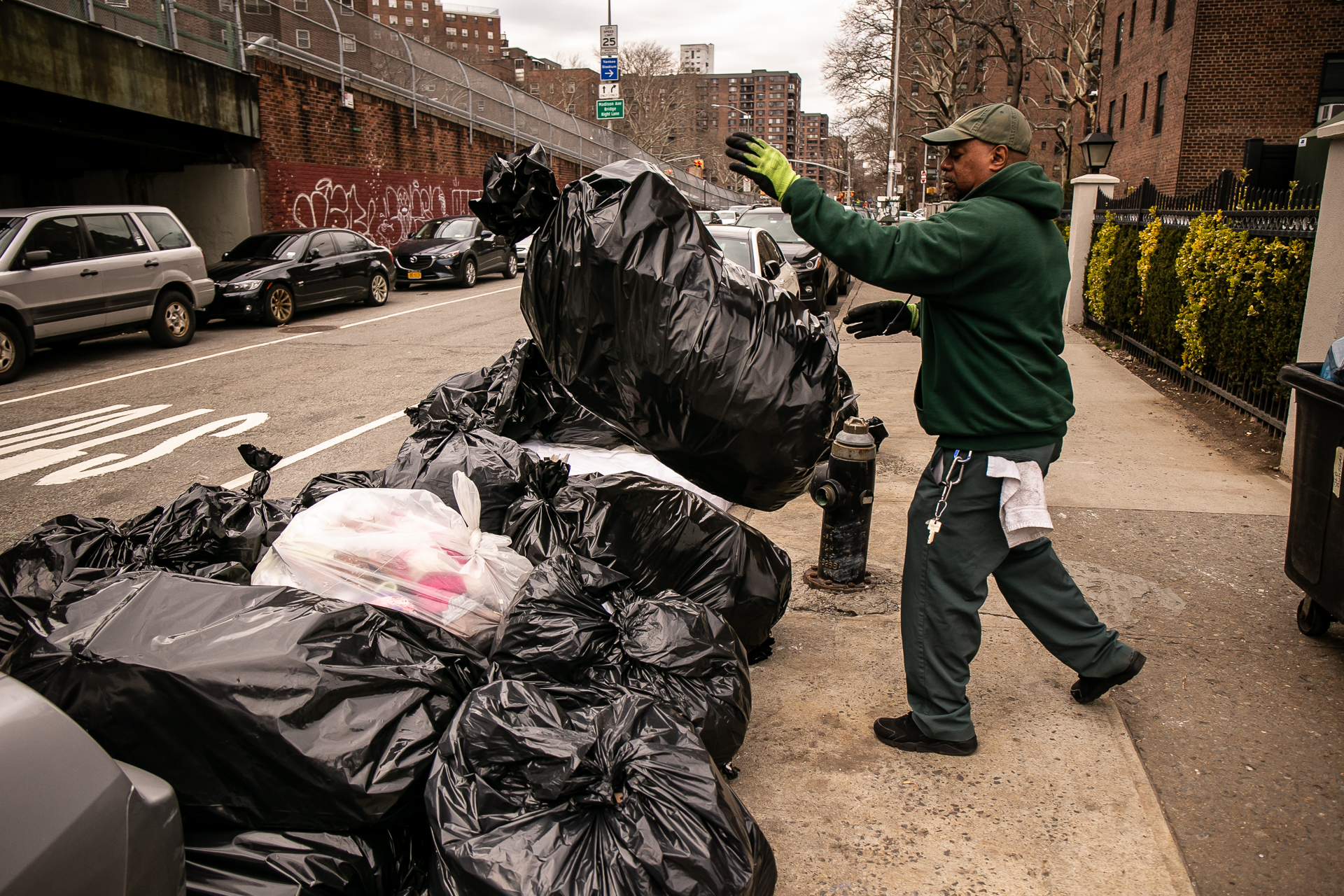
Over the last 35 years, New York City has sent more than 6 million tons of trash to be burned at an incineration plant in Pennsylvania’s Delaware Valley, according to that state’s Department of Environmental Protection records.
Over 33,000 people live within a few miles of the plant in Chester, PA. Respiratory problems are commonplace in the city, which is also home to a sewage treatment plant, a paper mill and other industrial sites.
“I was a kid in the 60s and 70s. We were outdoor kids. I don’t remember a single child having asthma or using a nebulizer,” said Chester’s Mayor Stefan Roots. “Now depending on where you look we may be the highest concentration of folks in the state with breathing issues. Kids struggle greatly which was never the case in the past.”
Roots has mixed feelings about the plant. On one hand he has a fiduciary responsibility to the city he presides over, and the Reworld facility employs some 130 people and brings in needed tax revenue. On the other hand, he knows human health must come first.
A proposed bill out of Philadelphia, which also exports its trash to Chester, would discontinue that practice—and ban the City of Brotherly Love from burning its waste altogether. The Stop Trashing Our Air Act passed an initial review by the Philadelphia City Council’s environmental committee last fall. Now it needs the support of a super majority, 12 of 17 council members, to bypass a potential mayoral veto.
“We don’t want the bill to come to a vote until we know council members will support it,” said environmental lawyer Mike Ewall, one of the key stakeholders who helped draft the act.
If New York City follows suit in pursuing an end to trash incineration, it could improve tens of thousands of lives and significantly reduce the city’s climate impact, he and other environmental advocates say.
“The bill was designed to stop us from perpetuating what I see and what many see as environmental racism in the city of Chester,” said Philadelphia Councilmember Jamie Gauthier, who sponsored the legislation.
Chester’s population is predominately Black, and around 29 percent of residents live in poverty, according to census data. The city’s childhood asthma hospitalization rates are three times higher than anywhere else in Pennsylvania according to the PA Department of Health, while the Philadelphia metro area—about 15 miles from Chester—has ranked in the top 10 asthma capitals of the United States since 2018, according to the Asthma and Allergy Foundation of America.
Gauthier spoke with City Limits late last year, shortly before current Mayor Zohran Mamdani took office, and was encouraged by his platform. “It seems like New York city is on the verge of leadership that would consider stopping sending trash to Chester,” the Philly lawmaker said.

The trash conundrum: burn or bury?
New York City’s residential waste—or the roughly 80 percent that isn’t diverted for recycling or compost—is primarily exported to states along the east coast, bound for either a landfill or an incineration plant. In recent months, environmental activists have ramped up calls to close the landfill in Seneca Meadows upstate, where a network of private waste haulers sends trash collected from New York City’s commercial businesses,* citing the potential health risks.
Reworld’s Chester site is what’s known as a waste-to-energy facility—meaning the byproduct of incinerating the waste it collects generates heat energy. A spokesperson for the NYC Department of Sanitation says it does not include a preference for either incineration or landfill in its waste disposal contracts, but noted that a majority of the city’s trash ends up in landfills “on the basis of cost alone.”
“Waste-to-energy facilities offer notable environmental benefits over landfills,” DSNY Press Secretary Vincent Gragnani told City Limits in an email. “They take up far less space, reduce most waste to ash, generate electricity, do not emit methane, and recover virtually all metals for recycling.”
But some scientific research has suggested that waste incineration can be worse for human health and air quality than burning coal for energy or a properly managed landfill, and that a significant portion of what ends up getting incinerated could have been recycled.
“Garbage incineration is an expensive and polluting waste management strategy,” said Judith Enck, a former administrator at the U.S. Environmental Protection Agency.
She hopes that New York City will consider a similar law to the one proposed in Philadelphia. “Especially with the new mayor being committed to addressing climate change and environmental justice,” she said.
Enck is also concerned about Ironbound, a neighborhood in Newark, New Jersey that’s one of the other two locations New York City sends its waste for incineration, which is also operated by Reworld.
“In the 1980s, Mayor David Dinkins wanted to build five new waste incinerators—one in each borough,” said Enck. “Intense community opposition ensured that they were never built. But decades later, sending waste to be burned in Newark, NJ, is also [an] abysmal failure.”
Mayor Mamdani’s official campaign website stated that decarbonization is one of his top climate priorities. But the mayor’s office did not respond to City Limits’ queries about the Philadelphia bill, or whether New York City would also reconsider its contract with Reworld, which doesn’t expire for another seven years.
New York City’s relationship with the trash disposal company dates back to when it was still called Covanta. The current 700-page contract, first struck in 2013, slates municipal waste refuse from Manhattan and Queens to be burnt at the company’s facilities, including the Chester site, until 2033.
Chester environmentalists argue that Reworld lacks basic pollution controls at its incineration plant, such as activated carbon injection, which reduces mercury and other harmful emissions.
Last year, New York’s Department of Environmental Conservation ordered Reworld to pay $378,500 in violations for mishandling waste ash at another of its plants in Hempstead, Long Island. The company—valued at $5.3 billion dollars in 2021—also had to allocate $500,000 to an “Environmental Benefit Fund” chosen by Hempstead’s community members.
In a statement to City Limits, Reworld said the Chester facility meets local emissions limits, which it says fall “well below permit limits established by the Pennsylvania Department of Environmental Protection.”
“There are no health-based restrictions on living, working, or recreating near the facility,” Linda Ribakusky, director of communications at Reworld, told City Limits via email, saying that waste-to-energy sites like the one in Chester “have been well studied, and are found to be protective of human health and the environment.”
In an email, DSNY Spokesman Gragnani said that all facilities the city contracts with must comply with a slew of local, state, and federal regulations, including around emissions.
“We acknowledge that local communities that host waste-to-energy facilities often oppose them,” he said.
“In fact, there is no truly sustainable or environmentally just way to dispose of trash,” Gragnani added. “Every disposal method imposes burdens on the local community that hosts it and on the environment more generally, and the Department has worked for decades to reduce the amount of trash New Yorkers throw away, in part to reduce these burdens overall.”
Shrinking the city’s trash footprint
New York City sends 32.4 percent of its total residential (municipal) waste to be incinerated. The remaining 67.6 percent ends up in landfills both within New York State and as distant as South Carolina. Trash is hauled to transfer stations and shipped to these locations either by barge or rail, according to data compiled by the Brooklyn and Manhattan Solid Waste Advisory Boards.
New York’s Department of Sanitation contracts directly with Reworld. New York City would need to pass legislation to undo its agreement with the privately held company, according to Linda Shaw, a New York-based environmental lawyer and the managing partner at Knauf & Shaw.
“Garbage used to be a public responsibility. It was government-run. Now if you look at the solid waste management plan, waste management is almost all run by the private sector,” said Shaw, who recently represented plaintiffs who suffered from noxious odors and methane gas leaks from a landfill operated by Waste Management near Rochester.
The problem with ending the practice, she and other experts say, is that there are currently few viable alternatives to landfills and incinerators. Until New York City significantly reduces the amount of waste it produces, all that trash has to go somewhere.
Currently, less than 20 percent of what the Sanitation Department collects gets diverted for recycling or composting, the most recent city data shows.
“We need to achieve the diversion goals and find responsible alternatives before doing away with incineration entirely. We can’t just make it go away,” said Matt Civello, chair of the fundraising committee of the Manhattan Solid Waste Advisory Board, a volunteer committee that advocates for the city’s waste reduction efforts.
Civello did note that at least some blame belongs with the producers of polluting material. Many of the same companies associated with oil production are also the biggest producers of single use plastic globally and in the United States.
“We have made recycling way too complicated. It is hard to blame the consumer,” said Civello. “We need to change policy, so incineration is on the bottom of the list of tools to handle waste.”
Eric Goldstein, a senior attorney at the National Resource Defense Council, agreed. “Producers of packaging and other materials need to find ways to use less materials,” he said.
Reducing New York City’s waste stream also involves bolstering its compost program, he said, “so that New Yorkers understand how to compost, where to compost and why it’s important to do so.”
“They need to step up reasonable enforcement measures,” Goldstein said.
“They also need to boost the city’s processing capacity because that is the most environmentally and economically sound way of dealing with food scraps,” he added, referring to roughly 40 percent of the collected organic waste that the city converts to fuel instead of compost.
Indeed, less than 3 percent of all residential waste collected in 2025 was diverted for composting, despite compostable materials—which the city classifies as “organics”—accounting for roughly 36 percent of the city’s garbage stream, according to a recent report from the New York City Independent Budget Office.
The report concluded that there is a direct correlation between the city’s enforcement of its new mandatory composting policy and the amount of organics collected.
New York City boasts the nation’s largest composting program, which substantially began during Mayor Eric Adams’ administration—though the former mayor largely paused enforcement last year, and the city only resumed issuing fines to buildings owners who fail to comply at the start of 2026.
Since then, DSNY has issued roughly 40,000 summonses to property owners who set out food and yard waste commingled with trash this calendar year, according to a spokesman.
Curbside composting “is diverting record amounts of compostable material from the waste stream, and as more and more New Yorkers become accustomed to separating their food and yard waste, this program offers a great opportunity for further increasing our diversion rates,” Gragnani said.
But according to Civello, city leadership needs to get behind that goal for it to actually happen.
“The real movement on sustainability needs to come from outside DSNY. We need a mayor to lead the way and take it seriously,” he said. “Out of sight out of mind doesn’t work for New York City trash. Where the trash ends up causes harm to those near it.”
*This story was updated after publication to clarify that New York City trash sent to Seneca Meadows is commercial garbage collected by private waste haulers, not residential.
To reach the editor, contact [email protected]. Want to republish this story? Find City Limits’ reprint policy here.