


Share This Article
Residents in a senior-only building in Chelsea allege they are being harassed by the public housing authority and its private management partners. It’s the latest legal challenge in a years-long battle to redevelop the housing complex.
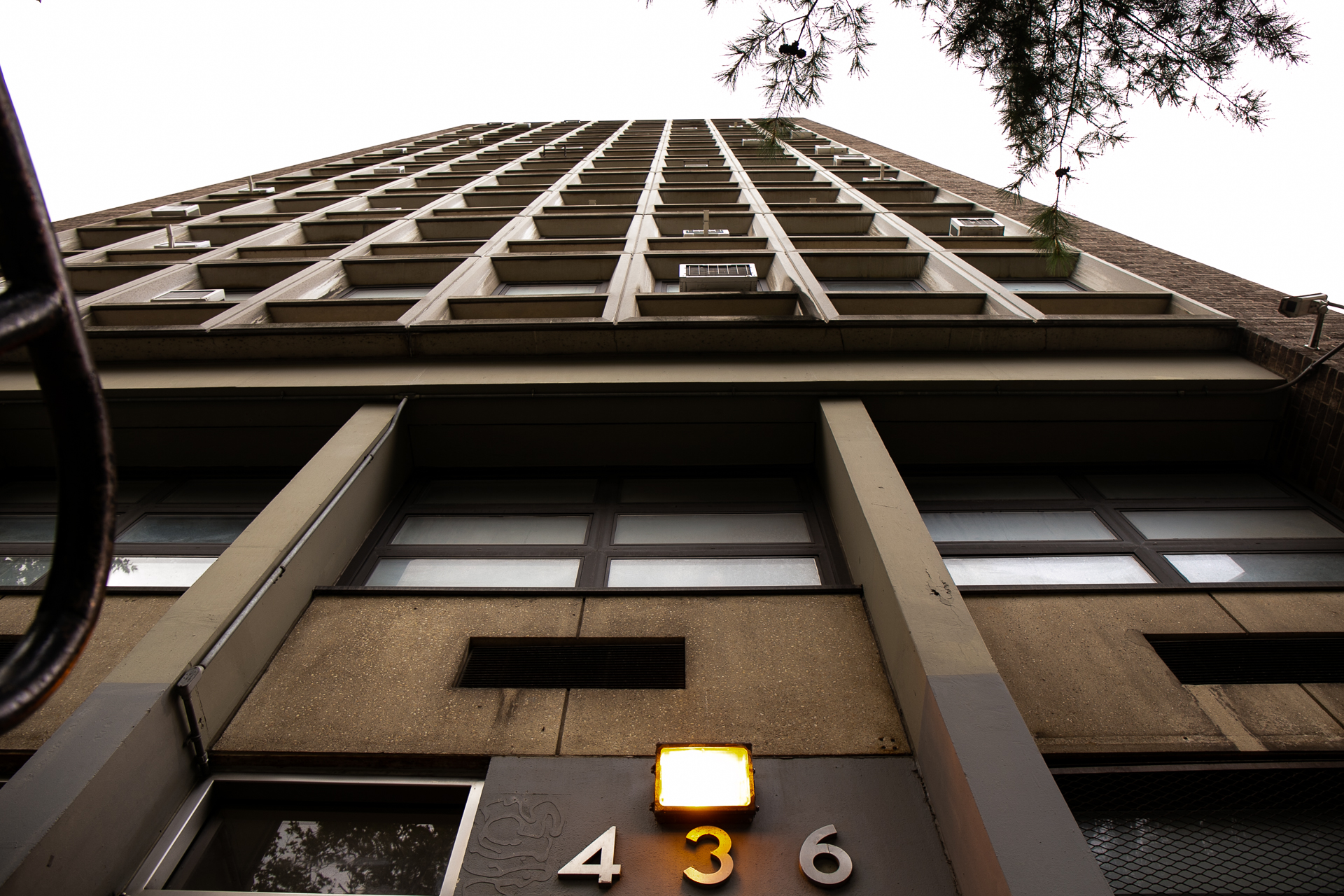
Cui Ping Sun is a 76-year-old resident of a senior-only public housing building in Chelsea that’s been slated for big redevelopment plans for years. Recently, she said she’s been afraid to come home amidst what she describes as “almost daily” pressure from officials asking her to leave her apartment.
She’s one of two dozen senior households that refuse to leave to make way for the project, in which the New York Housing Authority (NYCHA) is partnering with private management companies to demolish and rebuild 18 public housing properties that make up the Fulton and Elliott-Chelsea Houses.
Most of the new construction would be finished before old buildings are torn down, allowing the majority of residents to stay in their homes until new apartments are move-in ready. But residents in two buildings—including Chelsea Addition, where Sun lives—are being asked to temporarily relocate to make space for new construction.
All resident moves must be voluntary until NYCHA obtains a final approval for its private partnership project, called a RAD Conversion Commitment (RCC), under regulations set by the federal Department of Housing and Urban Development (HUD), which oversees the housing authority.
NYCHA acquired that approval in January. Still, the housing authority individually sued Sun and at least 12 other seniors between October and November last year for refusing to voluntarily leave their homes, before the RCC was issued.
Now Sun and 17 other seniors who are resisting the move—many of whom were among those sued by NYCHA late last year—filed a lawsuit of their own on July 13, claiming the housing authority and its private partners, Related Companies and Essence Development, are harassing them to get them out. In a statement issued by a group of the holdout tenants, Sun said officials warned her that “we would be sued if we did not move ‘voluntarily.’ Does that sound voluntary?”
The seniors’ new case cites the individual lawsuits NYCHA filed against the holdouts, and claims that in attempts to persuade reluctant tenants to leave, officials called them outside business hours, show up to their apartments uninvited, and have pressured them to accept temporary apartments without adequate consideration for some of their health needs.
A spokesperson for the housing authority told City Limits that it doesn’t comment on ongoing litigation. The seniors’ most recent legal effort comes just days after a court lifted a nearly four-month temporary pause on the project, stemming from a separate lawsuit seeking to stop the plans.
On Wednesday, the housing authority announced that the federal government’s approval of the project, or RCC, was extended to account for the court-ordered pause and is now reissued. The approval greenlights the redevelopment plan’s first phase.
In a statement, the city’s Deputy Housing Mayor Leila Bozorg said the approval brings the city “one step closer to beginning work on thousands of brand-new homes for NYCHA residents and even more much-needed housing for additional New Yorkers.”

NYCHA’s plan at Fulton and Elliott-Chelsea
As part of an initiative to funnel more federal dollars into public housing maintenance, NYCHA has been shifting management and operations of thousands of public housing units to private companies.
After those conversions, public housing developments qualify for larger federal subsidies. NYCHA has heralded the partnerships, which are formed under a program known locally as Permanent Affordability Commitment Together (PACT), as a crucial key to unlock urgently needed funding for its repairs backlog, estimated to be nearly $80 billion.
Under the partnerships, NYCHA retains ownership of the buildings, which are then slated for major redevelopments, including all new apartments, common areas, windows, and building systems. All public housing residents have a right to return to new or refurbished apartments in their development after construction is complete.
One of those conversions is unfolding at Fulton and Elliott-Chelsea. While most PACT projects are just renovations, the FEC plan is the first in many years that calls for the buildings to be torn down and rebuilt from scratch.
The redevelopment plan involves demolishing 18 public housing buildings, which include 2,056 apartments, and replacing them with six taller towers while also constructing 2,500 market-rate and 1,000 affordable apartments. The project requires 103 households in two of the current buildings to relocate during construction, into refreshed apartments in the same developments.
Several senior residents continue to oppose the plan and stay put in their homes, citing several earlier lawsuits brought to question the legality of the project—which have since been dismissed—and the stress they say elderly residents would face in relocating twice.
According to a NYCHA spokesperson, there are currently 30 households that have yet to move out of the buildings, 24 of which are in Chelsea Addition. More than 70 households have already relocated.
NYCHA’s spokesperson told City Limits that now that courts lifted the temporary pause, the housing authority is confident it can work with the remaining residents on a path forward. In cases where a household still refuses to leave, NYCHA will likely pursue legal action.
The latest lawsuit
This isn’t the first time seniors filed a lawsuit claiming harassment against NYCHA and its partners, but it’s the first time they are doing so in housing court.
The tenants filed their first harassment case in the state’s Supreme Court in March, a few months after NYCHA sued several of them individually in efforts to force their relocation while the plan endured legal challenges.
NYCHA argued the seniors were violating their leases in refusing to leave, while the seniors argued they were being asked to leave prematurely, before the project had cleared all required reviews and approvals. The housing authority withdrew the lawsuits after a judge refused to grant its request for an order to make the seniors move in December.
John Low-Beer, an attorney who’s represented the tenants in several cases, told City Limits that the court hasn’t yet made decisions on the merits of that earlier harassment case.
“We’re considering various avenues of appeal,” he told City Limits. “It’s not over yet.”
Attorney Thomas Hillgardner, who is representing the seniors in the new case, said in a statement that their petition calls for NYCHA and its partners “to be called to account for their heavy-handed tactics in attempting to compel tenants to relocate prematurely, and before full judicial review of the demolition project could be had.”
The perks of a senior-only home
In affidavits submitted to the court, residents describe the environment of the senior building as uniquely suited to older adults, with accessibility features like grab bars, elevators kept in good repair, and an informal network of neighbors who look out for each other.
One 78-year-old resident, Jin Gui Tan, who’s lived in the building since 2013, detailed what she believes are the benefits of the community. “We are not afraid to leave our apartment doors unlocked,” she wrote in the affidavit. “In a medical emergency, prompt first responder access can mean the difference between life and death.”
“Beyond the special physical amenities such as two elevators, grab bars, and wider doors, there is the intangible amenity of community which NYCHA is destroying,” she wrote. She called attention to how many of Chelsea Addition’s senior citizens are fluent only in Chinese and how a large community of native speakers is an asset.
Another resident of the senior building, 80-year-old Yu Zhen Story, is also part of a group of residents and community members who formed a coalition in protest of the project. In a statement following the most recent lawsuit, she said she believes “relocation destroys this community.”
A NYCHA spokesperson told City Limits that the new buildings will be more accessible than the existing ones, and that in the first replacement building, there will be senior-preference floors for the residents from Chelsea Addition. New construction will not include a building designated only for seniors.
NYCHA’s spokesperson also said that residents who need to relocate are being moved to buildings on the same campus to minimize disruptions, and that each temporary unit fits the needs of each household. Residents who relocate will pay the same rent, and all expenses, including professional moving services, will be free.
Residents ask HUD for help
The redevelopment plan has become a hot button issue in the community, as candidates for the neighborhood’s congressional district race present varying ideas on how to best mitigate the differing perspectives.
“Tenants have been bullied, pressured, and misinformed with horrific persistence,” said Layla Law Gisiko, a candidate for City Council District 3 who lives in the neighborhood and has been a vocal critic of NYCHA’s redevelopment plans.
Along with the most recent lawsuit, a group of tenants wrote a letter to the federal Department of Housing and Urban Development (HUD), the agency that oversees and administers funds to NYCHA, seeking its intervention.
In the letter, residents questioned how NYCHA determined the buildings were obsolete enough to be demolished. “Historically, demolition of public housing required substantial justification,” the residents wrote in the letter, “including evidence that buildings were obsolete and beyond reasonable rehabilitation.” Residents claim that evidence is absent.
A NYCHA spokesperson told City Limits that HUD no longer requires that specific evidence to prove that a public housing building is obsolete.
Residents also questioned how NYCHA arrived at its 2023 estimate that the buildings require a hefty $927 million in repairs, and that the cost is comparable to a full reconstruction.
“The public has not been provided with transparent, independent analyses that justify these claims,” the residents wrote.
NYCHA pointed to its 2023 assessment of physical needs, which documented conditions at several public housing complexes, including Fulton and Elliott-Chelsea Houses, and which is available on its website.
In the letter, residents request that HUD investigate NYCHA’s tenant outreach and lease-signing practices so far. Residents who’ve been told to relocate are being asked to sign documents including a new lease for their yet-to-be-built apartments, as well as relocation and right to return agreements.
But tenant leaders pushed back against the idea of being required to sign a lease for an apartment that doesn’t exist yet, and which they’ve yet to see.* In the letter, they request that HUD provide an exact timeline of when such documents must be signed.
A spokesperson for the housing authority told City Limits that in all conversion projects, residents are required to sign new leases when their current leases terminate. Now that the court-ordered stay has been lifted, NYCHA and its partners are working to establish a timeline for the financial closing and first phases of the redevelopment.
Tenants can also reach out to Convergent Law, a free legal resource for Fulton and Elliott-Chelsea residents to ask questions about their rights and protections under the conversion (though some residents told City Limits they are skeptical of the resource, since it was arranged by NYCHA).
A hearing for the harassment lawsuit is scheduled in August.
*This story was updated after initial publication to include additional responses from FEC resident leaders.
To reach the reporter behind this story, contact [email protected]. To reach the editor, contact [email protected]
Want to republish this story? Find City Limits’ reprint policy here