


Share This Article
The expanded requirements took effect June, leading to a 1.3 percent drop in the city’s SNAP cases. Single adults between 18 and 35, who are less likely to be eligible for exemptions, represent the majority (63 percent) of people losing benefits.
Lea la versión en español aquí.
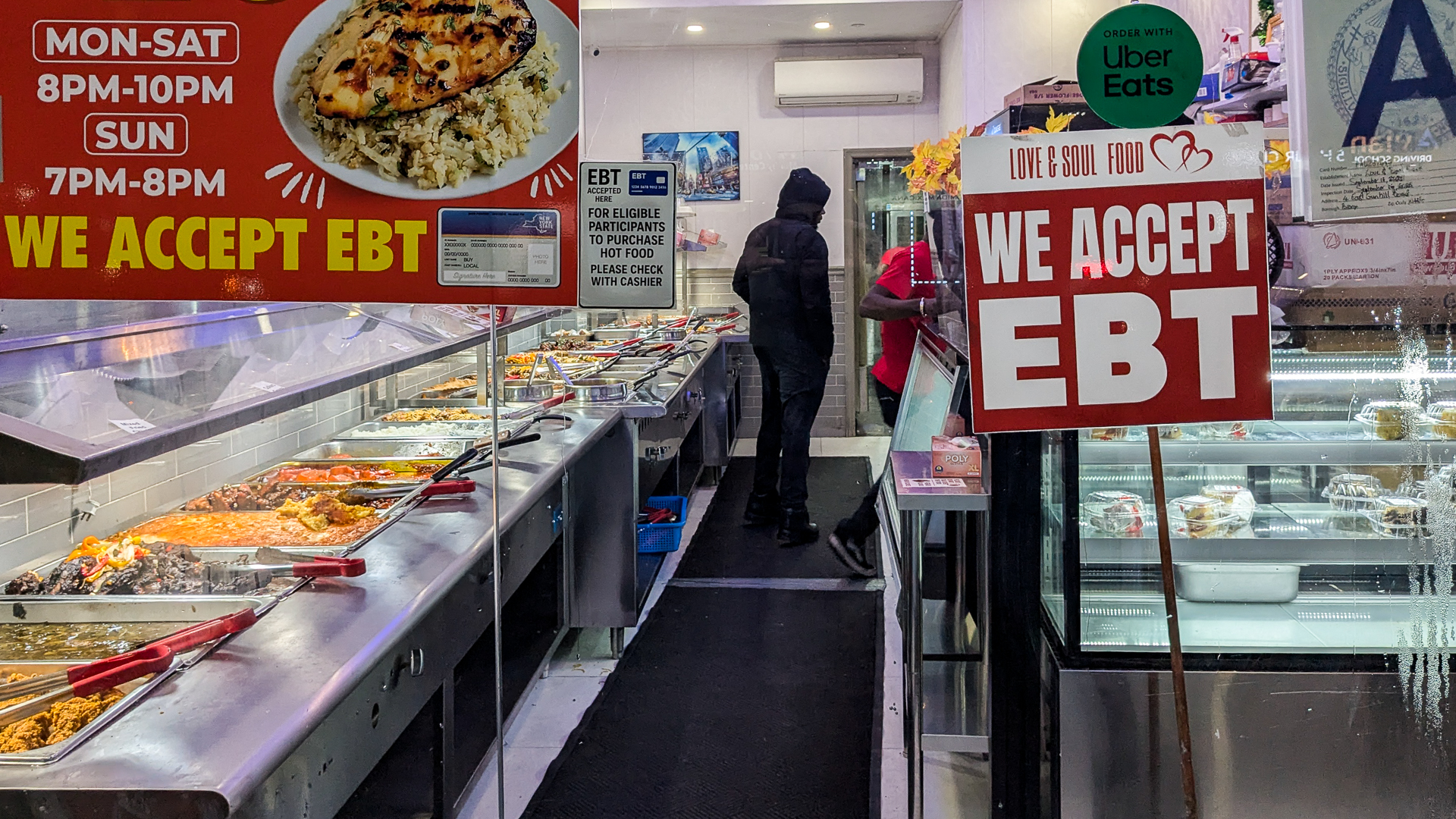
About 22,200 New Yorkers lost their food stamp benefits in June, when new work requirements imposed by the Trump administration took effect after a three-month grace period, city officials announced Monday.
The loss represents a 1.3 percent drop in the city’s caseload for the Supplemental Nutrition Assistance Program, also known as SNAP, which helps roughly 1.7 million low-income New York City residents afford groceries.
As of June 1, local SNAP recipients risked losing their benefits unless they showed their compliance with expanded work requirements, passed by Congress last year in the Trump administration’s Big, Beautiful Bill.
The changes require SNAP users identified as Able-Bodied Adults Without Dependents (ABAWDs)—which now include veterans, homeless people, youth aging out of foster care, and adults between 18 and 64—to spend at least 80 hours a month working, volunteering or taking part in employment training programs, and to document those hours to the government.
While the federal government says the changes “reflect the importance of work and responsibility,” anti-poverty advocates say they’ll do little to help boost employment and will instead force more people to go hungry.
“Access to food assistance should not depend on a person’s ability to navigate unnecessary administrative barriers,” said Erin Dalton, commissioner at the city’s Department of Social Services, which administers SNAP locally. “It amounts to more than $5 million in lost food assistance each month and has a significant impact on the individuals affected.”
As officials estimated, single adults between 18 and 35, who are less likely to be eligible for exemptions, represent the majority (63 percent) of people losing benefits.
When looking at family composition, single adults were the hardest hit—many of them men—representing 70 percent of the losses. The remaining 30 percent are families with multiple members receiving benefits in which one of the members lost access. Brooklyn saw the largest share (42 percent) of people who lost SNAP, followed by the Bronx (26 percent), according to DSS.
Compliance confusion, two ‘strikes’
While many New Yorkers have lost access to SNAP because they haven’t met the new work requirements, advocates and lawyers say they’ve seen multiple cases of people who are doing everything they can to keep their benefits but are running into problems.
In early July, a University Heights resident in the Bronx expected to receive her usual $298 in monthly food stamps, but instead received only $38—even though she’s been working as a personal care worker since December.
The woman, who preferred not to have her name published, received notice letters saying that her benefits will be terminated if she doesn’t comply with the new rules, despite the fact that she is working and filed her documentation paperwork, she said. At some point in June, her case was closed, but was reopened days later after advocates stepped in on her behalf.
In early July, she received only a small part of the benefits she expected. “I do my part by sending everything on time, so they have to do their part by delivering it to me because I’m counting on that,” the woman said in Spanish.
The city’s Human Resources Administration has been sending thousands of notification letters to people across the city identified as ABAWDs, warning them that if they miss three months—which officials call “strikes”—they could lose benefits.
But that’s not the end for many.
Advocates explained that if a person doesn’t comply with the SNAP rules for three months in a 36-month period, their case will be closed or their benefits reduced. However, people who think their case was incorrectly denied, reduced, or terminated can request a “Fair Hearing” within 10 days of the date on the notice about the case closing, and their benefits shouldn’t be affected.
If someone misses that 10-day window, their benefits will end, but they can still request a hearing for up to 90 days after the final notice for a chance at getting them restored.
Marcus Moore, 54, has been volunteering for the Safety Net Activists NYC to fulfill his monthly requirements, but still received notices alerting him—incorrectly, he says—that he was at risk of losing his SNAP.
“Even though I’ve been volunteering… we filled out the forms with a paid staff person, and I received my second strike,” Moore said. “I would have received my third strike if we didn’t have a meeting with HRA, some of the advocates and myself.”
Advocates from Food Bank For New York City and Safety Net Project said that more people are showing up with situations similar to those outlined above: being told they’re at risk of losing their SNAP despite their efforts to comply with the news rules.
DSS didn’t provide data on how many SNAP beneficiaries have reported issues with their compliance paperwork.
“I was able to do something at the skin of my teeth,” Moore said.
DSS recommends that people who have lost their benefits call 718-SNAP-NOW for assistance.
To reach the reporter behind this story, contact [email protected]. To reach the editor, contact [email protected]
Want to republish this story? Find City Limits’ reprint policy here.
1 Comment
beanzie
This article is ridiculous. Yes , able bodied people should work. It has become a way of life for generations after generations to receive assistance and everything for free.Maybe if they helped homeless get a job and a home they can then provide for themselves. veterans should always be taken care of for all ! But there is way too much fraud and entitlement today. Why should a 60 year old man or woman who worked their whole life and cannot afford to retire have to buy their own food with pennies then see a young able bodied person receiving triple what they can afford to buy for free. It need to change !!!