


Share This Article
“Many have claimed they can subvert the profit-seeking instincts of the development industry,” the author writes. “Once private financial interests are invited into public spaces, sooner or later, their basic instincts kick in.”
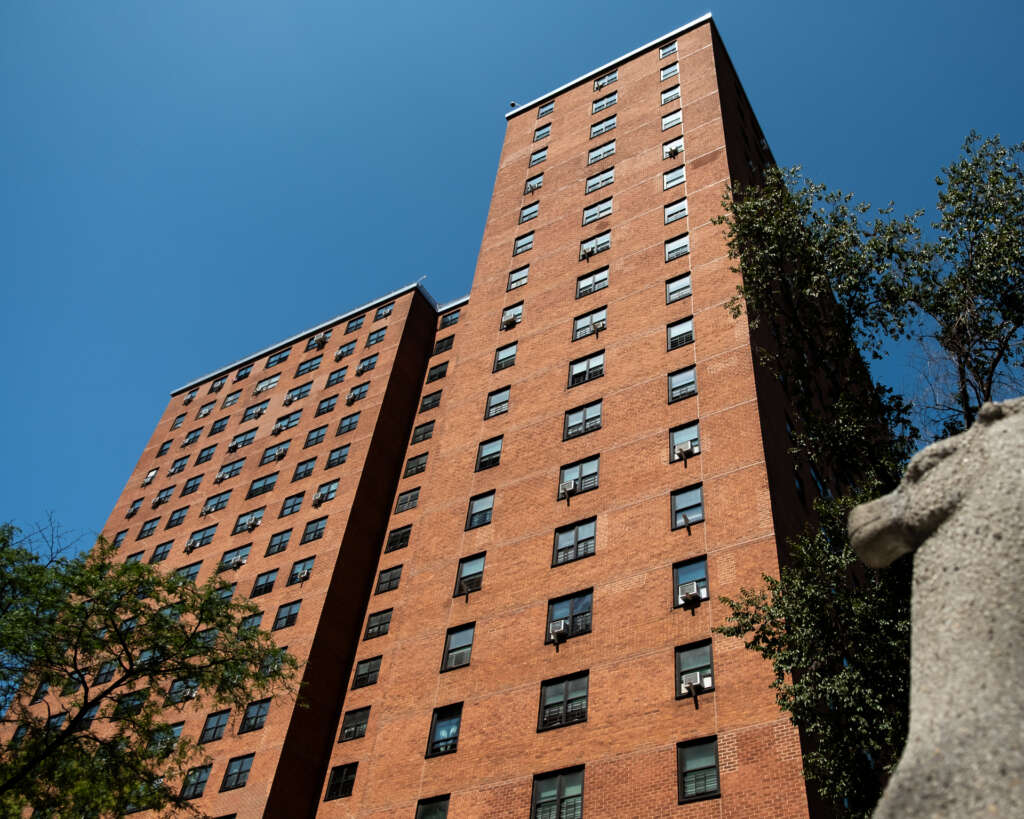

Tareq Saghie’s April article in City Limits about NYCHA’s Permanent Affordability Commitment Together (PACT) project sounded several echoes with experience in the U.K. Over here, similar policies have been used in an effort to bring much-needed investment to neglected public housing (we call it council housing). Sadly, it appears NYCHA, like their U.K. equivalents, are failing to recognise, or honestly acknowledge, the long-term implications for tenants of a Faustian pact with the private sector.
Alarm bells ring when I read about an “opaque process” for selecting PACT sites. Having worked in the housing sector for many years (including some time with a U.S. public housing authority when the notorious HOPE VI was in its infancy), I am very conscious of the potential for private interests to manipulate a situation in which they are presented as saviors. Like Red Hook West Tenant Association President Karen Blondel, many have claimed they can subvert the profit-seeking instincts of the development industry.
Sadly, the evidence shows such optimism is misplaced. In the U.K., policies like PACT and others encouraging private companies to get involved in public housing, have had invariable adverse consequences. They lead to displacement, higher rents, fewer truly affordable homes, weaker tenant rights, destruction of communities and services that are often inferior to the ones they replaced, made worse by having a less accountable landlord.
Technical surveys, usually telling the sponsoring agency what they want to hear, are used as camouflage for the hidden truth that, in most cases, direct investment to refurbish deteriorating buildings is better long-term value for public money. Tareq Saghie’s piece suggests some of these dangers are already emerging with PACT.
Examples from the U.K. are legion. But the starkest is in the Elephant and Castle neighborhood of south-east London, a tale of woe meticulously chronicled by the 35 percent resident campaign group. It records broken promises, financial incompetence and political compromise, leading to wholesale social and physical transformation and the erasure of a multi-ethnic working class community.
One of the organisations involved in what’s happened at the Elephant and Castle is Notting Hill Genesis, reputedly a “non-profit” housing provider, but in fact, often replicating some of the worse practices of private developers. So, it should be a real concern to NYCHA tenants that Notting Hill Genesis has been directly influencing NYC housing policy: in October 2019, it contributed to a report produced by the Citizens Housing and Planning Council (CHPC) entitled “Public Housing Revolution: Lessons from London.”
CHPC followed this up in April 2022 in a report specifically linking PACT to “a tookit from the U.K.” It prompted the grassroots British campaign Defend Council Housing (DCH) to write an open letter to NYCHA tenants listing the dangers of “converting” from public ownership. DCH cited examples where a Trojan Horse of apparently benign “social landlords” had led to a culture of land grabbing, speculation, gentrification and inflated salaries for executives. One case involved a social landlord that, shortly after acquiring thousands of former council homes, planned to demolish them all!
Another common feature of this privatization by stealth has been the shift from secure, permanent tenancies, with controlled rents, to increasing reliance on private landlords, often meaning higher rents that tenants can only access and afford through vouchers and welfare payments.
U.K. council tenants have also expressed anger about so-called “infill projects” where open land around (and sometimes above) public housing developments is used to build more homes. The council estate I managed for a decade faced precisely this type of project. But tenants successfully resisted it when they discovered that few of the new homes would be affordable to them and their families and that, at the end of a highly disruptive building program, they would have lost important recreational space and play-areas.
District 38 City Councilmember Alexa Avilés is absolutely right when she calls for NYCHA tenants to be given “honest information.” They should not be presented with a false choice between appalling living conditions and a step into the unknown. They should not be blackmailed to get the standards of housing we are all entitled to, but particularly people living in the richest city, in the richest country on earth.
As in New York, U.K. council tenants have been tempted by a variety of policy devices to get much needed improvements. Like PACT, the Public Housing Preservation Trust has U.K. cousins. The Trust purports to provide guarantees of a right to return and control of rents and developer excesses. Time will tell. But another lesson from the U.K. is that there is a critical difference between what is said on day one of such initiatives, and how they play out by year 10. Such concerns become even more pronounced when they are focussed on what some regard as lucrative development sites, like Fulton and Chelsea-Elliott Homes.
For too long, NYCHA tenants have been treated as second-class citizens. Current efforts to improve their homes may be well intentioned, but they ignore the realities of the capitalist real estate industry. When Harry Hopkins opened New York City’s first public housing development in 1935, he said: “Private capital has never spent a dime to build a house for a poor person.” That’s as true today as it was then. The money needed to invest in NYCHA’s long-term future is a fraction of the federal or state budget, or the tax breaks enjoyed by wealthy homeowners and corporations.
Many U.K. council tenants have learned the hard way that, as with pregnancy, you cannot be a little bit privatized. Once private financial interests are invited into public spaces, sooner or later, their basic instincts kick in.
NYCHA is too important to New York City to take that risk, and it goes against the spirit that propelled Mayor Zohran Mamdani to victory. He offered hope, where huge wealth would be fairly distributed and the promise of a city for all. NYCHA tenants should not have their future mortgaged to be part of it.
Glyn Robbins is a UK-based housing campaigner, academic and writer. He has spent several extended periods in New York City, including twice as a Fulbright scholar. His book about the history of New York City union-sponsored housing cooperatives is due for publication in 2027.