


Share This Article
The Mamdani administration will announce a series of reforms Tuesday to improve how the city enforces building violations, part of its broader plan to build and preserve new housing across the five boroughs.
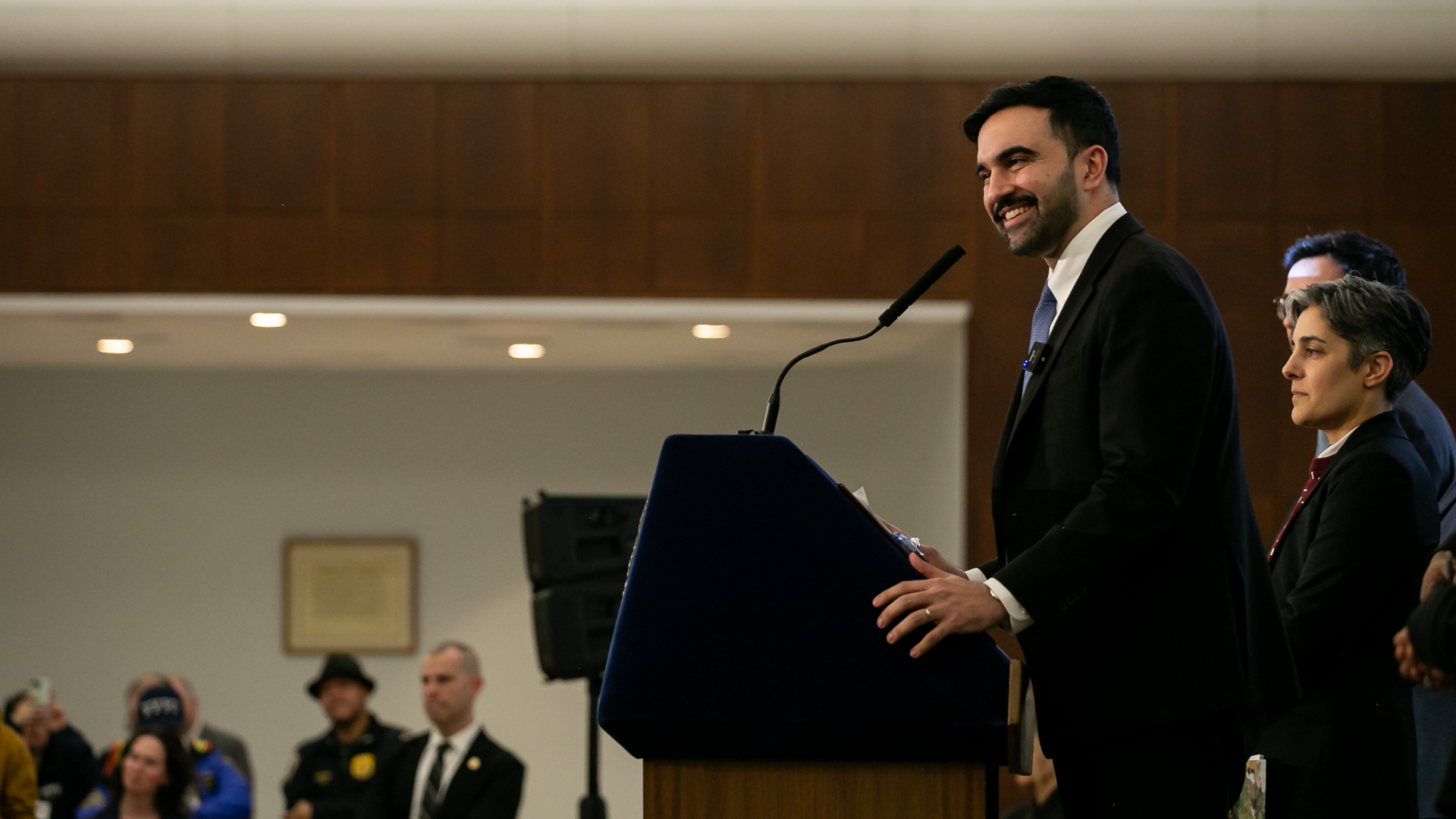
Mayor Zohran Mamdani will release his administration’s housing plan Tuesday morning as the city faces an persistent cost of living crisis.
In addition to cementing a campaign promise to build 200,000 affordable apartments over the next 10 years, the mayor will take several steps aimed at improving the city’s response to housing quality issues.
That includes overhauling the way it responds to complaints of no heat from tenants—a major issue during the city’s record cold spell in January and February of this year, when it received more 311 calls about lack of heat and hot water than any other month on record.
The city will also take on comprehensive reform to its housing maintenance code enforcement, convening with City Council members, building owners, and lenders to explore changes to processes and programs.
Many of the steps outlined in the housing plan, the administration says, came out of tenant testimony at the city’s Rental Ripoff hearings this spring.
City Hall is also launching new initiatives to expand affordable homeownership opportunities, rezonings to increase housing production near transit, and promising deeper investment in affordable housing for low income New Yorkers.
“At a moment when working people are being pushed out of the city they built, New York cannot afford half-measures or delays,” said Mayor Mamdani in a statement. “This plan meets the housing crisis with the urgency it demands.”
The mayor can only do so much on housing on their own. Making some plans into reality may be challenging, requiring the consent of the City Council and its Speaker, Julie Menin, who operates in a more moderate lane than Mamdani. And reaching some of his larger goals may also require more support from Albany, where lawmakers just navigated a testy budget season and where the mayor asked for the governor’s support in filling a $7 billion gap in the city’s own budget.
How will the city respond to complaints of ‘no heat’ in the future?
In early April, a City Limits investigation revealed how tens of thousands of heat complaints during the city’s record winter cold spell went unanswered, due to a policy that tags multiple heat complaints in the same building as duplicates.
As a result, inspectors close out reports of “no heat” based on information about only one apartment, even if multiple tenants in the building reported problems.
The Department of Housing Preservation and Development (HPD) said doing so helps them manage a huge volume of heat complaints. But the mayor’s housing plan calls that system “inadequate.”
“The distrust that it causes with tenants when they get a heat complaint closed four minutes after it’s been open just really undoes a lot of the good work that we all do,” said Cea Weaver, head of the Mayor’s Office to Protect Tenants.

Starting on Oct. 1 of this year (the beginning of next winter’s “heat season”), HPD will begin investigating every complaint as an individual case, as it does with other types of housing maintenance complaints, the plan says.
“With roughly 35 percent of housing complaints involving heat, and fires doubling over the last three years, housing quality must be treated as a matter of public safety,” said Councilmember Pierina Sanchez, who chairs the City Council’s Housing and Building Committee.
Other changes to housing code enforcement
The mayor’s plan also outlines a number of legislative priorities when it comes to revamping the housing and maintenance code, convening a legislative task force with the City Council to recommend reforms.
Weaver called it “an opportunity to clear out some of the stuff that isn’t working and make the system overall a little bit more efficient.”
But the mayor will need the cooperation of the City Council—a body he has sometimes butted heads with—in order to make good on some of those promises.
“Since becoming Chair of the Housing and Buildings Committee, I have called for New York to confront the housing crisis in its full complexity—not only as a crisis of affordability, but as one of housing quality, safety, and survival. Mayor Mamdani’s first housing plan reflects that reality,” said Councilmember Sanchez, in a statement to City Limits.
Mamdani is in the midst of negotiating his first budget with the Council, who is also suing him over his failure to implement a Council-passed expansion of CityFHEPS, the city’s rental assistance program, which he left out of his executive budget proposal.
The mayor actually cut spending from the CityFHEPS in his budget, citing cost saving measures after pressure from Albany to control the program’s spiraling costs.
“The Council is ready to collaborate with urgency, because New Yorkers cannot wait. That must also include settling the CityFHEPS expansion lawsuit immediately, so we can focus on keeping people safely housed,” said Sanchez.
Other priorities will include working with city agencies and building owners to upgrade the property registration process, improving two programs at buildings with persistent health-impairing repair issues, and tweaks to pest control requirements.
The administration is also planning changes to the owner self-certification process, where landlords are required to tell the city when they remedy code violations. The process has often drawn criticism from tenants who say some landlords certify repairs without actually fixing them. Last year, the city started a certification watchlist program to track landlords who falsely certify repairs as done.
Weaver hopes the legislative task force will be “giving the watchlist some teeth, whether that’s like financial fines or fees… [and ] thinking a lot about the ways that tenants can actually more easily report to the city when owners misrepresent what’s actually going on in the building.”
Some of the moves will also be sure to draw the ire of landlords, some of whom were previously rankled by the mayor’s attacks on “bad landlords” at his rental ripoff hearings, and wary of a rent freeze promise that they say cuts off funding needed to do repairs.
Landlord groups have maintained that rent stabilized owners are already struggling to keep up with repairs because of rising operating costs and deferred maintenance from rent increases they say haven’t kept pace.
Homeownership, rezonings, and more money for affordable housing
Mamdani is setting new housing production and preservation targets, including a pledge to build 200,000 affordable units over the next 10 years.
Previous mayors have taken different approaches to affordable housing targets. The de Blasio administration pledged to build and preserve a combined 300,000. The Adams administration did not set hard targets for affordable housing but set a “moonshot” goal (including market rate housing) of 500,000 units over 10 years.
The Mamdani administration said their affordable production and preservation total would exceed that of both prior administrations.
“We are setting the most ambitious housing production and preservation targets in the city’s modern history—and backing them up with investments to match—while also protecting tenants and homeowners,” said Mayor Mamdani in a statement.
After a rocky start with homeowners—some of whom he alienated with a threat to raise property taxes to close a budget deficit this spring—the administration is also taking steps to expand homeownership opportunities.
The plan calls for doubling those created through the city’s Open Door program, and launching a new initiative to convert 300 rental units into resident-controlled cooperatives.
The city will also expand down payment assistance to 300 low- and moderate-income prospective homebuyers a year, increase loan amounts for home repairs through the HomeFix program, fund 100 no-interest loans to help low-income homeowners with mortgage debt, and expand tax abatement programs for senior and disabled homeowners.
Like previous administrations, the plan aims to spur housing production through zoning reforms, particularly around transit stops—a strategy called “transit oriented development” that seeks to pair housing and transit infrastructure investments.
That includes a proposal announced last week to rezone portions of Brooklyn below Prospect Park. The South of Prospect rezoning follows two existing rail corridors—the B/Q and F/G lines—and intersects with the proposed route of Gov. Kathy Hochul’s Interborough Express rapid transit between Brooklyn and Queens.
The administration’s other rezoning priority is an East Bronx corridor where the MTA is adding four new Metro North stops as part of its Penn Station Access Project.
The mayor also calls for “micro” rezonings of smaller areas as well as a citywide proposal to increase the amount of housing permitted near transit, in the spirit of former Mayor Eric Adams’ “City of Yes.”
New ballot measures, passed by voters last year, will also enable the city to move faster on building denser housing in some areas—like using a new “fast-track” approval process for affordable developments—and hit neighborhood-level housing production targets to be set by the City Council.
Release of the plan comes after Mamdani’s executive budget proposal, unveiled last week, calls for $5 billion to build new affordable housing, doubling the budget for new construction and increasing the preservation budget by 20 percent, according to the New York Housing Conference.
But the executive budget still falls short of the more ambitious campaign goal of $10 billion in affordable housing investment, which falls off significantly in the budget’s later years, perhaps requiring more help from Albany down the line.
At least in the next two fiscal years, that injection will fund a mandate to grow subsidized housing production by 35 percent, the plan says, to about 8,000 homes a year, with half of the new affordable homes set aside for low- and extremely low-income households (a family for three making less than $76,000 a year).
The housing production goals extend to supportive and formerly homeless housing, where the plan calls for growing the number of new homes reserved for New Yorkers living in shelter by 40 percent. Other programs will build housing for people leaving jails and seniors.
This is a developing story and will be updated.