


Scammers are capitalizing on the federal chaos, taking advantage of people desperate for help with their immigration cases, with violations more common in Latino neighborhoods like Sunset Park and Jackson Heights. “These immigrant service providers can’t pretend they’re lawyers when they’re not,” said Sam Levine, commissioner at the NYC Department of Consumer and Worker Protection.
Lea la versión en español aquí.
It only takes one word you don’t know for something that seemed familiar to take a wrong turn.
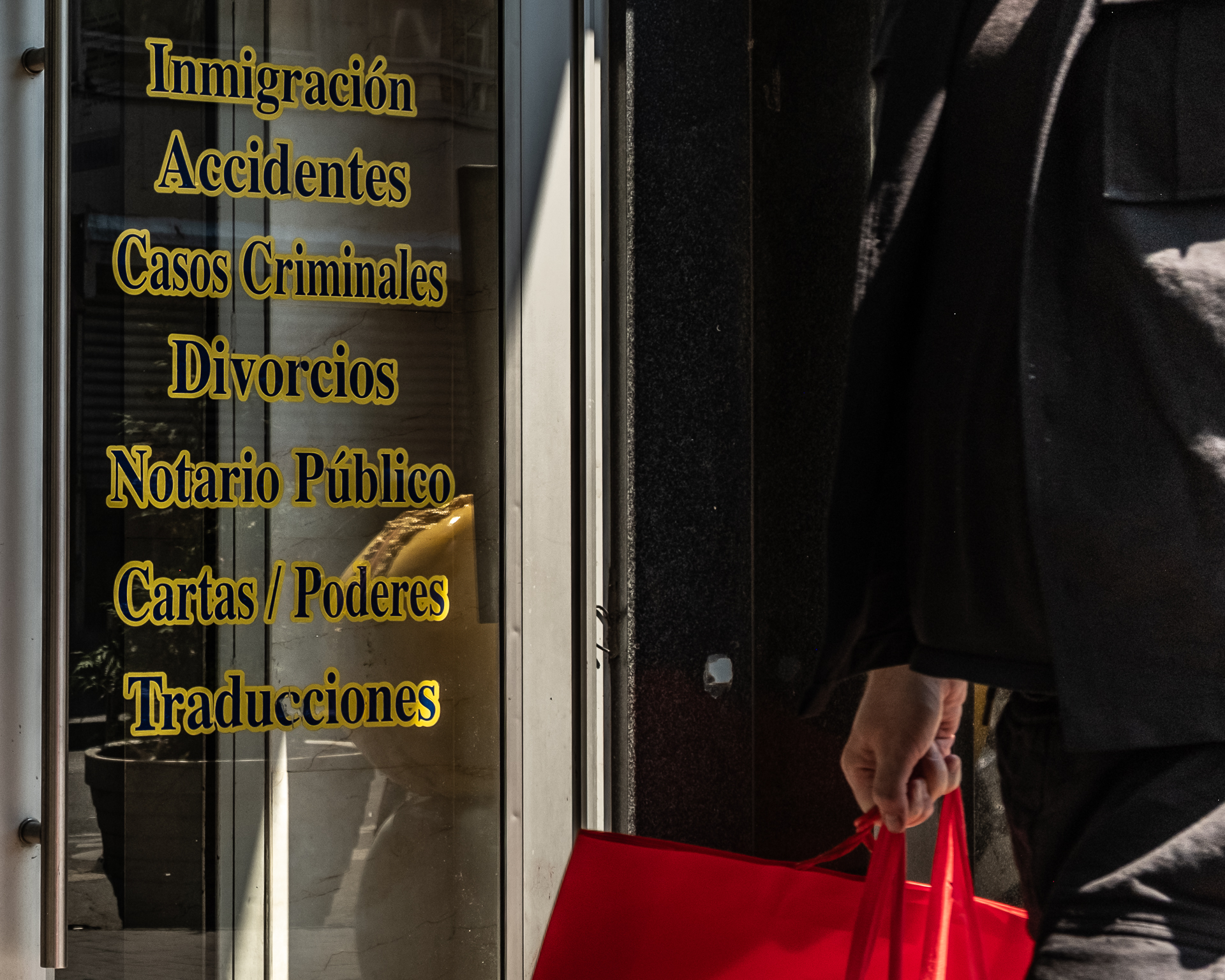
When Spanish-speaking Latinos hear or see the word “notary” in storefronts on the street—and don’t look up its meaning in the United States—they might assume they’ve found a trained and licensed attorney who can give legal advice, as the word “notario” indicates in many of their home countries.
But city officials say some New York City service providers are illegally capitalizing off that misconception: passing themselves off as attorneys to people who are desperate for help with their immigration court cases.
Since the start of Donald Trump’s second term and his plan to carry out mass deportations, more immigrant New Yorkers are seeking out that kind of legal advice—while more providers are breaking the rules, according to the Department of Consumer and Worker Protection (DCWP), the agency responsible for regulating and enforcing the industry.
Complaints about immigration service providers were among the most common type of consumer complaint received by the New York Attorney General’s Office last year, officials said.
“These immigrant service providers can’t pretend they’re lawyers when they’re not,” DCWP Commissioner Sam Levine told City Limits.
Though they’re not attorneys, immigration service providers in New York do charge fees for certain services, like translating and notarizing documents, or typing up forms. However, these providers are not allowed to advise people on how to answer questions on their immigration forms, provide legal advice about which documents to submit, or claim to have special influence with immigration authorities.
These are among the most common violations seen in the city, according to the DCWP, constituting systemic issues throughout the industry. In the first four months of 2026 alone, DCWP issued 175 violations to immigrant service providers, versus 220 for the entire year in 2025.
In addition to using misleading titles such as “lawyer” or “attorney” when they’re not licensed as such, other common violations include not posting required “Not an Attorney” or “Free Legal Referral” signs in their establishments. Some providers got violations for failing to issue written contracts or receipts, while others made false promises, guaranteeing clients access to things like employment authorization documents that they couldn’t actually deliver.
“This is a major source of fraud. It’s a tax on immigrant New Yorkers,” Levine said during a press conference last week. “Some of the most common tactics these companies use to rip people off are illegal in New York City, but we want to make sure people know those rights and the companies that abuse them face consequences.”
The city issued the most violations in neighborhoods with large immigrant and Latino populations, with Queens and Brooklyn at the epicenter. They include Sunset Park and Jackson Heights, as well as East New York, Cypress Hills, Midwood, and Flatbush.

“At a time when immigrant New Yorkers are dealing with traumatic violence and intimidation, fraudulent actors are choosing to prey on the most vulnerable members of our community,” said Councilwoman Alexa Avilés, who represents Sunset Park, the ZIP code with the most violations in both 2025 and 2026, in a statement. “The rise in immigrant service provider related scams is utterly heartbreaking.”
Avilés’ office alone saw 10 fraud cases over the past year.
The uptick in scams comes at a time when securing an actual immigration attorney has become increasingly difficult. Even after the city included an historic investment for immigration legal services in its 2025 budget, the demand remains high, and many providers are overwhelmed, a spokesperson from Avilés office said.
A recent report from the New York Legal Services Coalition shows how strained legal service providers have been since the start of the second Trump administration, and they are urgently calling for additional funding. “The scale and intensity of current enforcement have placed unprecedented strain on this system, exposing structural funding limitations that now threaten its sustainability,” the report argues.
Fear of deportation or separation—fueled by confusion over the more than 500 immigration-related policy changes the Trump administration made during its first year back in office—leads people to fall for scams posted on Facebook or sent directly to their cell phones via WhatsApp messages.
Immigration fraudsters in the city have not only forged paperwork, but also set up a fake court hearing through Google Meet, according to those who testified at a City Council hearing last year.
In another incident, Avilés’ office described a fake Facebook ad where the scammer pretended to be Catholic Charities, a large immigration legal provider, misusing its logo and even creating a fake website.
“I want to remind every New Yorker: no one reaching out to you to do business with you on WhatsApp is a real legal service provider. Double-check any Facebook or social media ads you see,” Avilés said in a statement. “If you have questions about what is fraudulent or not, please always contact your City Council representative, who should help connect you to legitimate resources.”
Officials encourage residents to file complaints by calling 311, the statewide Office of New Americans immigration hotline at 1-800-566-7636, or the Attorney General’s Office at 1-800-771-7755. Complaints can be lodged online at nyc.gov/Consumers or ag.ny.gov/file-complaint. They can also be submitted anonymously.
“At the same time, I am continuing to fight for increased funding for immigrant legal services in this year’s budget,” Avilés added. “If safe resources were more available to my neighbors, they wouldn’t be as vulnerable to these horrible scams.”
To reach the reporter behind this story, contact [email protected]. To reach the editor, contact [email protected]
Want to republish this story? Find City Limits’ reprint policy here.