Share This Article
J. Antonio Fernández is the first non-clergy member to lead Catholic Charities of the Archdiocese of New York, a century-old network of social service agencies and an affordable housing provider. The greatest need he sees among those they serve? “Housing and food insecurity, no questions asked.”
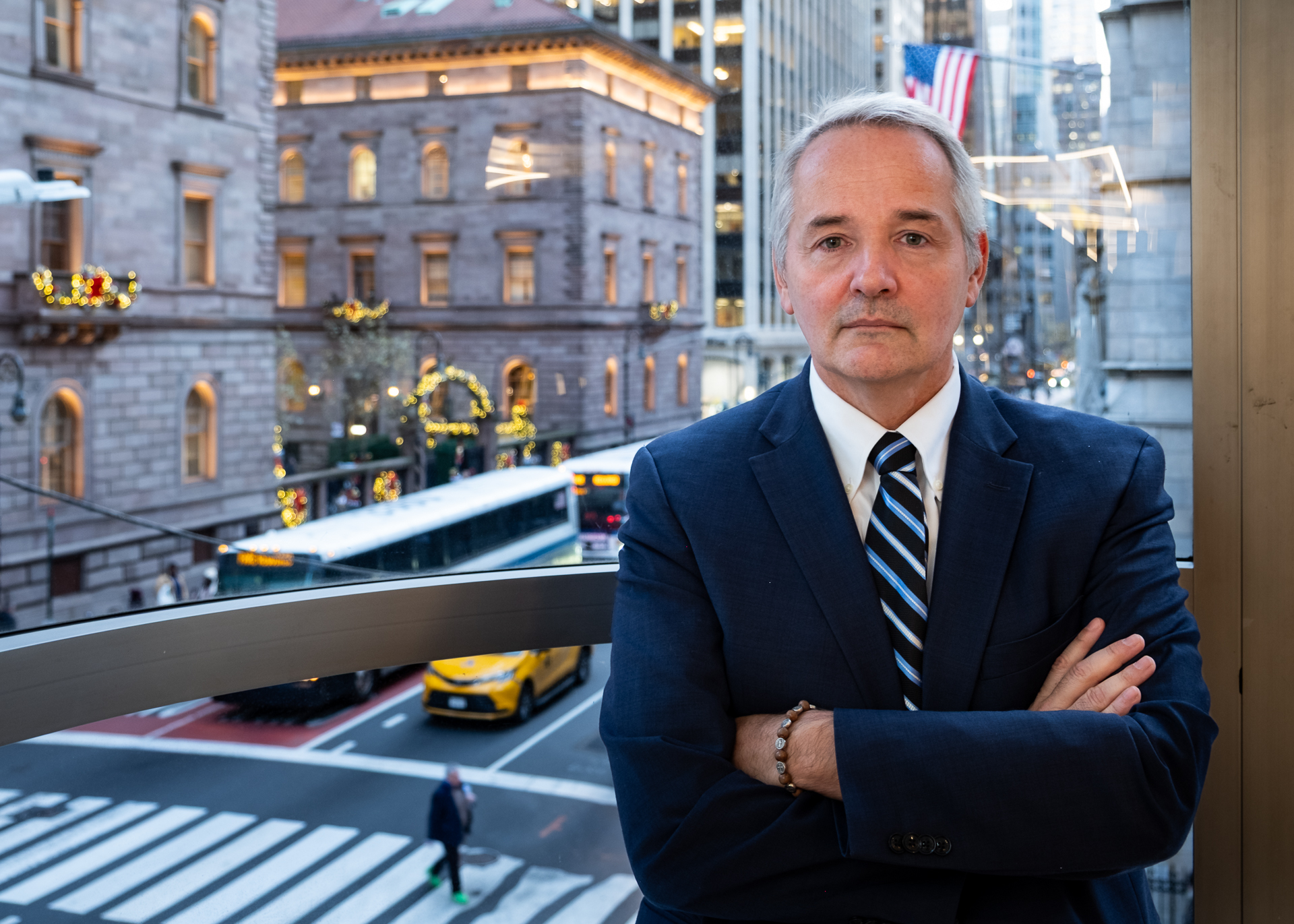
For Catholic Charities of the Archdiocese of New York (CCANY), 2025 was a year of change. The longtime social services nonprofit and affordable housing provider moved headquarters this past summer and changed executive directors for the first time in 25 years—and for the first time in its history, didn’t elect clergy to the post.
The new executive director, J. Antonio Fernández, is neither a native New Yorker nor does he wear cassocks or vestments, as his predecessor did.
In October, Fernández became the first layperson to serve as executive director of the century-old CCANY. The network of social service agencies provide a wide range of support—including food, shelter, clothing, health and immigration services, disaster relief, and workforce development, among others—to people in need across New York State.
When it comes to housing, CCANY offers programs that provide emergency shelter, prevent evictions, and pay rent for low-income families in housing court. The organization is also a housing developer itself through Catholic Homes, a CCANY agency, which owns approximately 3,000 units.
More than half of those were acquired through preservation efforts, in which CCNY took over and rehabilitated existing apartments. The organization’s goal for 2026 is to refinance and preserve around 1,120 units.
But Fernández—who immigrated from Spain and was previously the president and CEO of Catholic Charities in San Antonio, Texas—admits even their robust level of programming is a drop in the bucket when it comes to the scale of need in New York City, where more than half of tenants are rent-burdened.
City Limits caught up with Fernández to talk about his plans for the organization, the most pressing needs he sees among both longtime New Yorkers and new migrant arrivals, and the new mayoral administration.
This conversation has been edited for length and clarity.
City Limits: You immigrated to the United States to study English. For the first time, CCANY will be led by a layperson who is also an immigrant. What changes can we expect to see under your leadership?
Fernández: I don’t know if any of the changes have to do with my status, not being a clergy person or an immigrant, because my job has always been to help other people in need. I really believe that Catholic Charities will help everybody, regardless of where you are coming from: Spain, China, Poland, Ukraine, or regardless of whether you are Catholic or not.
You know the concept of “pay it forward”? I feel people were extremely nice to me in the U.S when I got here. I stayed—I love this country—so I feel responsible to be extremely nice to other people who are coming here, or people who just need something. I feel obligated to do that, not out of morality, but because I have my own standards.
So is it unique that I’m the first layperson? Yes, it is. Does it give you more responsibility? Maybe. For more than 117 years, this company has been run by clergy. But at the end of the day, we are all human beings. It doesn’t matter whether you’re clergy or not.
CL: You’ve worked in San Antonio, with immigrant communities, and in Chicago.
Fernández: In San Antonio, we served over 350,000 immigrants in the last three years. A lot of people came crossing the border. Some people came and then left within 72 hours—to New York, Boston, Chicago, and so on. And then, as time went on, people started staying longer and longer. But for us, the work was not long-term case management, like it is in New York.
In New York, the conversation is more about the long-term approach, more legal help, more case management.
CL: CCANY serves more than 400,000 people annually. What are the most pressing needs the organization sees among the low-income New Yorkers it serves?
Fernández: I’ve been here for two and a half months. I’ve seen poverty. I’ve seen hungry people, people who need help making ends meet. Inflation has gone up so quickly that people haven’t been able to make the necessary changes.
What can we do for these people every week? That has to be the goal, not just one week a year, during Thanksgiving. How can I explain to people the need for more food and other basic human needs, while also increasing the case management to help people out of poverty and become self-sufficient? When we are looking at the Catholic Charities’ strategic plan, it should include more food pantries.
CL: Have you noticed any other common requests or issues related to housing among CCNY’s clients?
Fernández: People need housing, but food insecurity is huge. To me, case management is very important, even if it’s not equally important. During the pandemic, people were getting food. But how can we make sure that we’re not just giving them food, but also giving them the means to get out of poverty?
Moving to New York was an experience. I learned how expensive it is to live there. I felt that. I think everybody, all human beings, has the right to housing, food, and clothes. So housing is the big issue, along with food insecurity.
CL: Catholic Homes New York, an agency of CCANY, develops affordable housing for families and seniors. Can you tell us more about that?
Fernández: We’ve got projects in downtown Manhattan, the Bronx, and Harlem. The problem, though, is that it’s full. No matter how many more we do, it looks like we’re going to be full. The need is huge.
We recently completed the St. Anselm project in the South Bronx in October, and commenced construction on Broome Street in the Lower East Side this June, situated on the Grand Street Guild campus. If I could make one request of the government, it would be to put more money into housing, because it takes a long time to get a new building out there.
CL: Have you met with Mayor-elect Zohran Mamdani or his team yet?
Fernández: Yes, three times: one before the election, and two after it. One during SOMOS in Puerto Rico with his team, and one at one of Catholic Charities’ agencies. Our social justice component is similar to his goals because it aims to help the poor. I think our missions are actually very similar.
CL: What does CCANY want the new Mamdani administration to focus on first?
Fernández: Housing and food insecurity, no questions asked. If we can get everyone in the city a place to live in humane conditions and provide them with food, clothes, and other basic human needs, I think that will be a huge win for everyone.
To reach the reporter behind this story, contact [email protected]. To reach the editor, contact [email protected]
Want to republish this story? Find City Limits’ reprint policy here.