


Share This Article
The new rules require housing court judges to accelerate cases when there is an immediate threat to tenant health and safety, the mayor said.
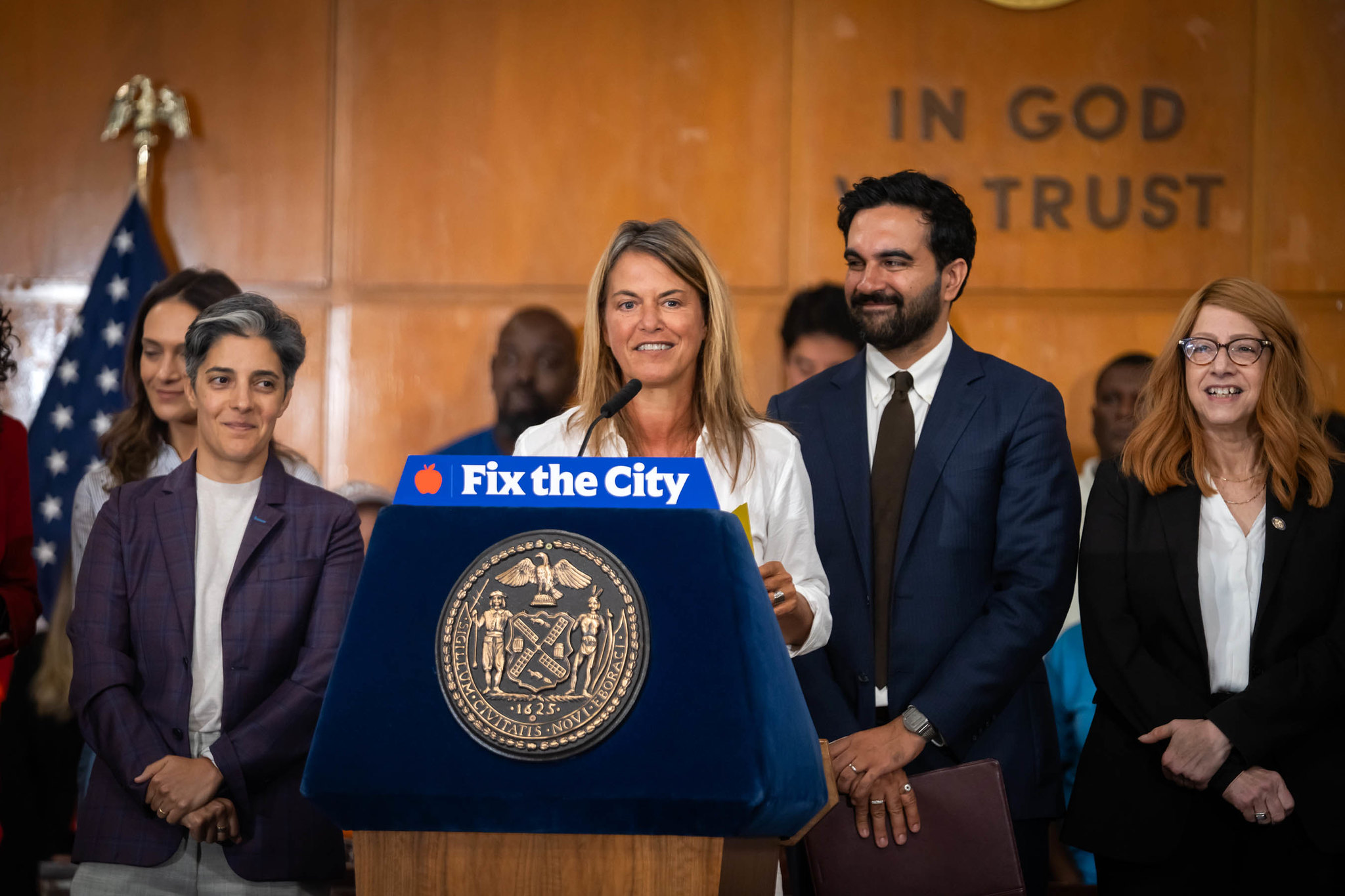
The Mamdani administration announced new rules for the civil court system Tuesday that will speed up cases where tenants sue to win repairs or kick out a negligent landlord.
The new rules force housing court judges to accelerate cases when there is an immediate threat to tenant health and safety, the mayor said.
That includes buildings where tenants are forced to relocate because of serious repair issues; where more than a third of the units have serious open code violations; where elevators are broken; or where conditions are so bad that the tenants, or the city, move to replace the landlord.
“Because of the volume of cases in New York City housing court, people living in the worst conditions regularly wait weeks, if not months, for a case to be heard, for a decision to come, for critical repairs to be completed, for their situation to improve. Today, we take a critical step towards ending that,” Mayor Zohran Mamdani said Tuesday morning at a press conference at Manhattan’s Civil Courthouse.
The order will target “willfully negligent” landlords, according to Department of Housing Preservation and Development Commissioner Dina Levy, who said “time” is the biggest barrier to holding the city’s worst owners accountable.
The administrative order, issued last month by Administrative Judge Shah Ally, will require faster responses from landlords in court. It will also prevent courts from adjourning cases—which can drag them on for years—except in extenuating circumstances.
The policy will apply to certain “HP Action” cases, in which tenants sue landlords to compel them to make critical repairs. Under the order, HP suits brought by tenants must be answered by landlords within five days. “All subsequent appearances in these emergency HP proceedings shall be held on an expedited timeline,” wrote Ally in the order.
The administration said this will give a range of tenants a “fast track” to justice, like those living in apartments damaged by fires and other disasters, those with mold and pest infestations that threaten tenant health, or those who are displaced longterm from an apartment due to other habitability concerns.
NYCHA tenants will also be able to use the fast track, Deputy Mayor for Housing and Planning Leila Bozorg said Wednesday. Public housing tenants often turn to HP Actions to seek quicker repairs from the city’s housing authority, which faces a significant backlog.
The order also addresses a component of the mayor’s “Fix the City” housing plan, where he pledged to take more buildings from “bad landlords” and have the city steward them to new, more responsive management or ownership.
Under article 7A of New York’s property law, tenants can ask the court to appoint an administrator to replace landlords who fail to remedy dangerous living conditions. But the process can take years, with tenants living in squalor while they fight for better housing. Mamdani wants the city to use the 7A program more.

Legal advocates applauded the new rules, which they say will help speed up housing court cases that sometimes take years.
“Tenants have dealt with protracted delays before having their HPs heard, and we applaud Mayor Mamdani for taking necessary steps toward restoring Housing Court as a venue to protect tenants’ rights to safe, habitable housing,” said Anna Luft, associate director of housing policy at New York Legal Assistance Group.
Some landlords say negligence has nothing to do with it, and that repair issues often stem from city and state policy like rent stabilization, which they say starves buildings of needed revenue. They criticized the plan as “two-tiered justice” where tenant-led cases are accelerated but landlords pursuing eviction cases can drag out.
“The violations at the center of these cases stem from a lack of money to make repairs,” said New York Apartment Association CEO Kenny Burgos in a statement to City Limits. “NYCHA says it. Nonprofits say it. Owners of older rent-stabilized buildings say it. This plan creates a presumption of guilt for violation cases and presumption of innocence for nonpayments.”
Administration officials say the fast track targets just the worst offenders, and will only kick in when landlords don’t fix violations or work with the city on another solution.
Tenants groups hope the change will help get them repairs faster.
“It seems that a lot of the issues with mold, elevators and rats are consistent across the city. Sometimes we feel like we’re alone, but we’re not alone,” said Otto Medina, a tenant and Met Council on Housing member in Washington Heights.
To reach the reporter behind this story, contact [email protected]. To reach the editor, contact [email protected]
Want to republish this story? Find City Limits’ reprint policy here.