


Share This Article
NYCHA’s Morris Park Senior Citizens Home is slated to get elevator upgrades, including equipment to prevent outages during heat waves. But work won’t start until next year, leaving some worried about the months ahead. “I don’t want to get stuck in the elevator again,” one tenant said.
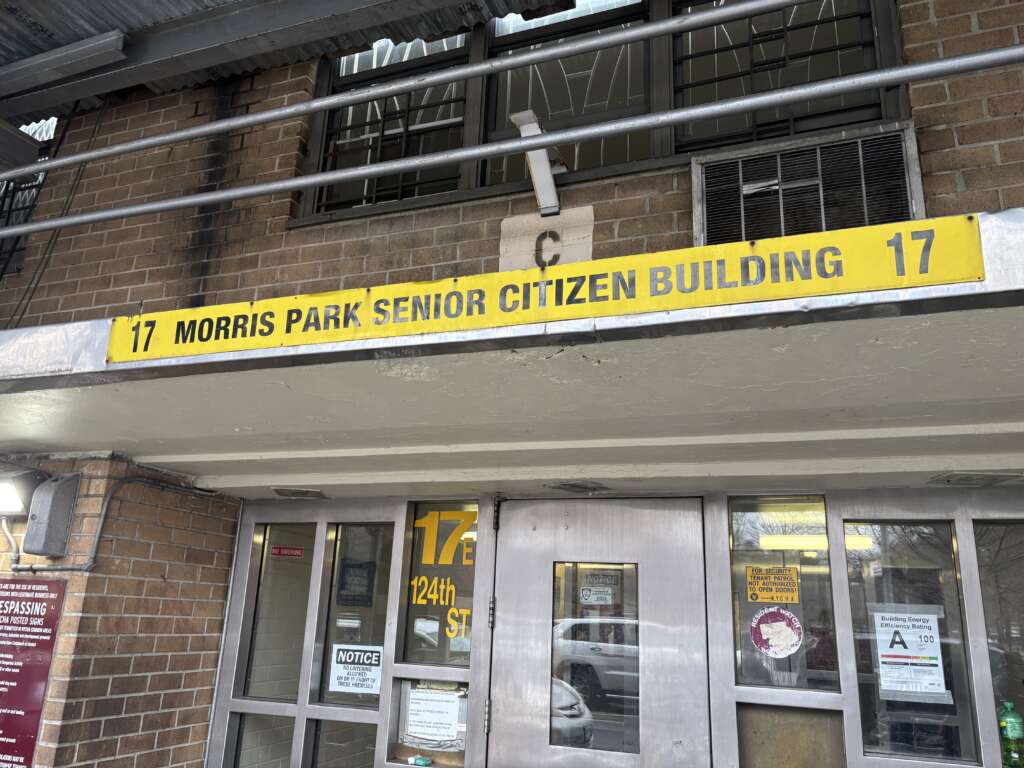
For Shirley Cunningham, 68, living on the third floor of Morris Park Senior Citizens Home is a challenge. Unable to leave her apartment without a wheelchair, she relies on consistent elevator service to get outside.
So when the building’s elevators went down last year during a heat wave, Cunningham was stuck in her apartment for hours. Despite owning an air conditioner, her apartment still gets hot in the summer. Escaping to the building lobby, a small entryway with two glass doors facing Marcus Garvey Park, is often the best way to beat the heat.
On that hot day last year, Cunningham thought the elevators had resumed service and attempted to go downstairs, but the lift stopped working again—this time mid-ride. She became trapped and had to be rescued by a neighbor’s family member. “I don’t like to be on the third floor,” said Cunningham.
Morris Park, a New York Housing Authority (NYCHA) property, is slated to receive elevator upgrades thanks to the Permanent Affordability Commitment Together (PACT) program, which transfers management of NYCHA properties to private companies and allows for increased funding for repairs.
But the work won’t start until next year. As summer looms and climate change brings hotter temperatures earlier in the season, some of the building’s older residents, like Cunningham, are worried they’ll be subject to a repeat of last year.
“I don’t want to get stuck in the elevator again,” she said.
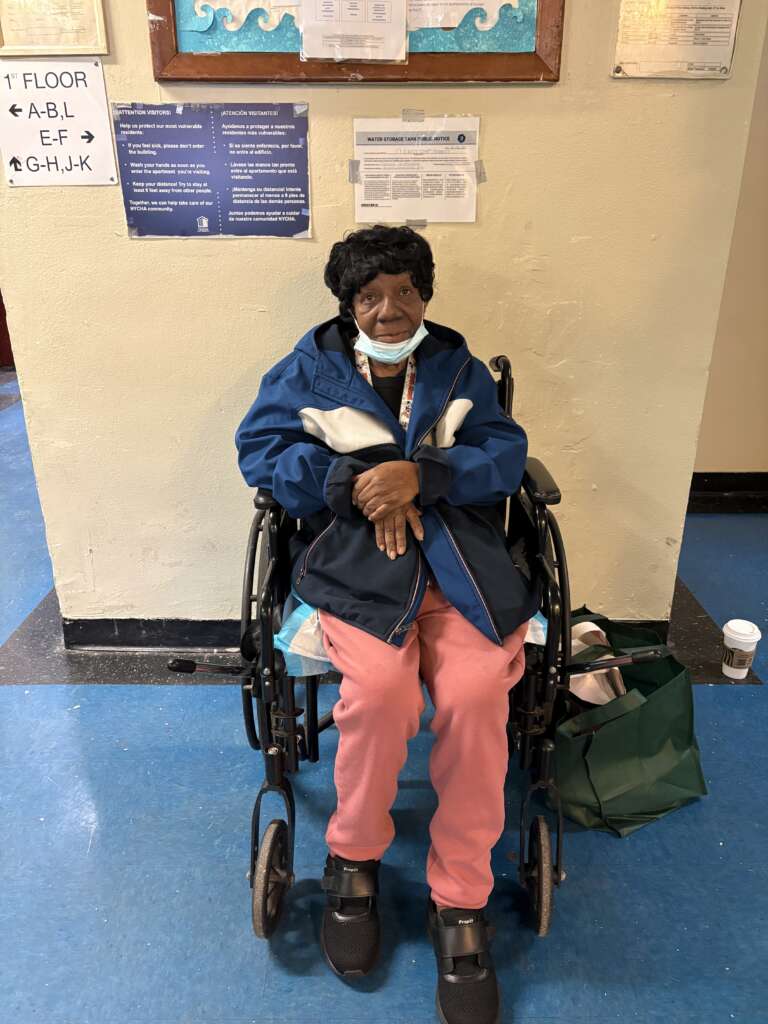
Citizens Home lobby. (Credit: Jaysa Dold)
Such service interruptions are not an anomaly; in 2025, NYCHA reported over 23,000 unplanned elevator outages across the five boroughs, according to housing authority data.
Excessive summer heat can cause sudden spikes in voltage that overload the power grid. To balance the energy needs of New York City during these moments, Con Edison may reduce the amount of voltage to certain buildings or neighborhoods. This reduction can slow or even shut down elevator service in some older buildings.
Con Ed officials were unable to confirm that the outage that left Cunningham stuck was due to voltage reduction, but Morris Park residents say they notice more elevator outages on hot days during summer months.
Through the PACT program, the building’s elevators will be equipped with automatic voltage regulators to keep them running smoothly during heat waves. These devices regulate the energy coming in and adjust the voltage coming out, which helps prevent service disruption.
The city hopes to install similar equipment at dozens of other NYCHA developments over the next five years, part of the Mamdani administration’s latest sustainability plan for public housing, which aims to upgrade its aging buildings to better withstand climate impacts. The average NYCHA building is 60 years old, and NYCHA properties will need an estimated $78 billion in repairs over the next 20 years.
PACT is a local version of a federal initiative that unlocks additional funding to improve conditions at NYCHA developments. While NYCHA still owns the properties, the private companies selected to manage them are responsible for overseeing daily operations, renovations and maintenance.
“As of December 2025 Morris Park Senior Citizens Home has entered the PACT program which is bringing investment and much needed systems and infrastructure improvement, including elevator equipment upgrades, to the development,” a representative from NYCHA said in a statement. “When complete, these upgrades will provide improved elevator service to residents.”
C+C Apartment Management took over daily operations at Morris Park last December. A spokesperson for C+C confirmed the elevator repair work is not expected to begin until 2027, but did not provide a more detailed timeline.
Even if elevator outages are relatively infrequent, they can have lasting effects on residents, including older adults who may limit trips out of their homes for fear of unreliable service.
“People become afraid to go out even when the elevators are working, because that one time they came back with three bags of groceries and their great grandkid, the elevator was out,” said Ruth Finkelstein, executive director of the Brookdale Center of Healthy Aging at Hunter College. “That turns out to be one of those events you never want to have happen again.”
For older adults, isolation and limited mobility can have severe consequences during extreme weather. “If you’re homebound and it’s really hot, people can literally cook to death in their own homes,” Finkelstein said.
Morris Park is located in East Harlem, where heat impacts are felt more intensely than in other areas of the city. By the 2030s, New York City is projected to see as many as 54 days where the temperature is at or exceeds 90-degrees Fahrenheit, compared to an average of 17 days between the years 1981 and 2010.
Low-income communities of color are at higher risk for heat-related illnesses, which kill an average of 500 New Yorkers each year. The median income in East Harlem is about half of the city average, with a population that is mostly Black and Hispanic. Older adults are also much more vulnerable to the effects of extreme heat and are more susceptible to illnesses like heat exhaustion or heat stroke.
Still, some residents didn’t find last summer’s elevator outages too much of an inconvenience.
Thomas Church, 83, lives on the fifth floor at Morris Park but says he doesn’t mind taking the stairs. Like Cunningham, he spends a lot of his time in the building lobby, socializing with neighbors and escaping the heat in his apartment.
“The fire department came and fixed the elevators,” Church said. “They fixed it quickly.”
With additional reporting by Jacob Fong-Gurzinsky and Liz Hyman.
To reach the editor, contact [email protected]
Want to republish this story? Find City Limits’ reprint policy here.