


Share This Article
“The best way for people to move out of shelter is to have a voucher,” said Christine Quinn, head of the family shelter provider WIN. “It also is economically better for New York taxpayers.” She and other advocates will rally at Thursday to urge the mayor to expand CityFHEPS, as he pledged to do on the campaign trail.
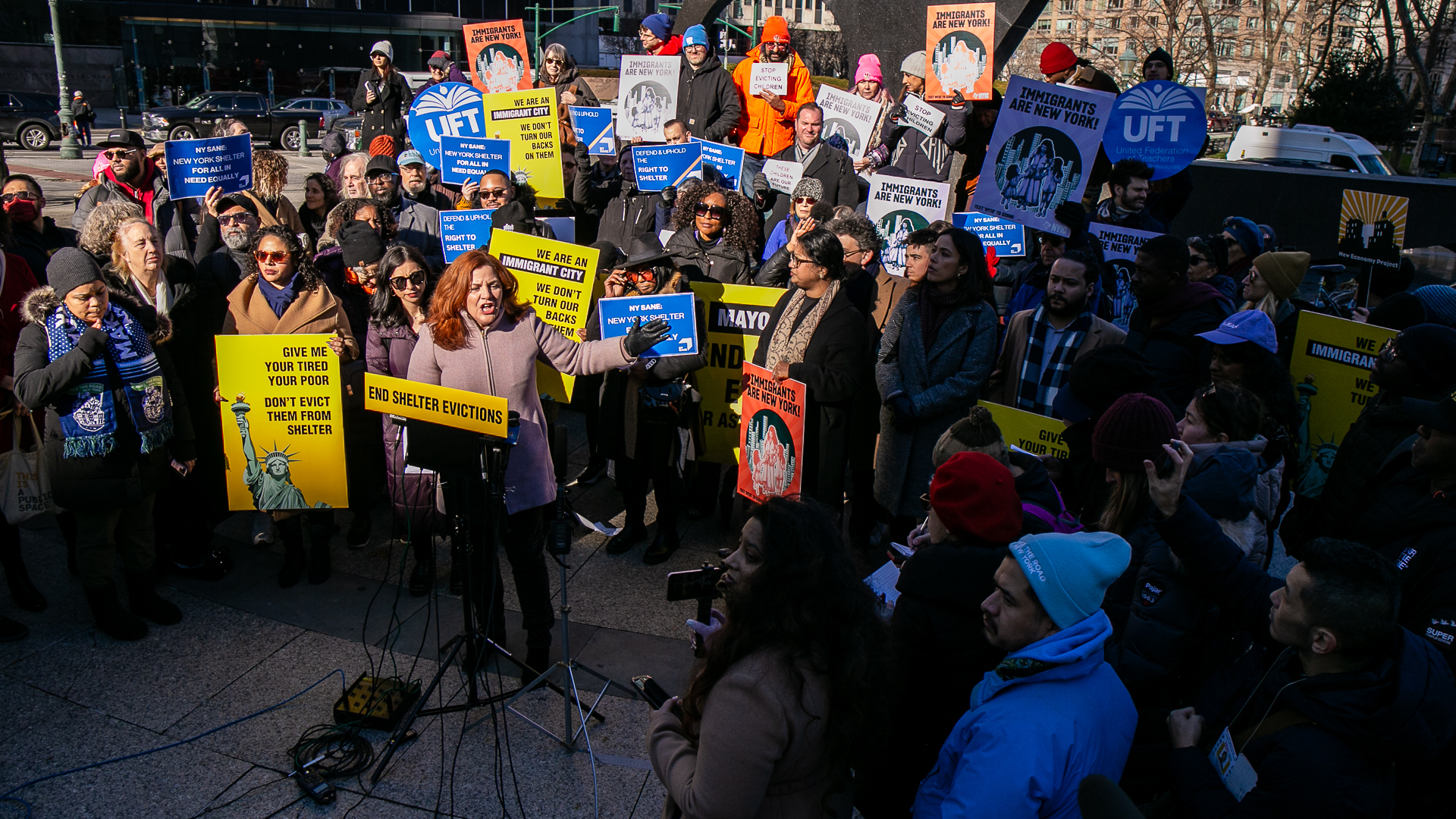
Advocates for the homeless plan to rally Thursday outside City Hall, urging Mayor Zohran Mamdani to fulfill a pledge he made on the campaign trail, something his predecessor Eric Adams long refused to do: expand the city’s rental assistance program, CityFHEPS.
Among those pressing Mamdani on the issue is Christine Quinn, the former City Council speaker who now heads up Women in Need (WIN), the city’s largest shelter provider for families with children, where she says she’s seen firsthand how important housing vouchers are for homeless New Yorkers seeking stability.
“The best way for people to move out of shelter is to have a voucher. It gives them the support that they need, and it also is economically better for New York taxpayers,” Quinn told Kadisha Davis of the “Hear Our Voices” podcast, which shares stories, resources and information about family homelessness in New York City (the podcast is produced by the Family Homelessness Coalition, whose members include Citizens’ Committee for Children, a City Limits funder).
Voucher holders typically pay a third of their income toward rent, and CityFHEPS covers the remainder, providing direct payments to landlords. Faced with rising homelessness, the City Council passed several bills back in 2023 that would expand eligibility for the program—including by raising the income threshold—though former Mayor Adams refused to implement them, citing costs. City Hall and the Council have been locked in a lawsuit over the issue ever since.
Mamdani initially supported the Council’s expansion, but changed course after taking office, as his administration looks to plug a $5.4 billion gap in this year’s budget. CityFHEPS now serves over 65,000 households—making it the second largest voucher program in the country—and cost the city $1.25 billion last fiscal year, up five-fold since 2021. Expanding eligibility would bring that price tag even higher.
“We are speaking about an expansion that would then cost over $4 billion in the next few years alone,” Mamdani said when asked about CityFHEPS at a press conference last month. “I am deeply committed to ending the homelessness crisis in the city … And also, I’m committed to doing so in a manner that is sustainable for both the medium and the long term.”
But Quinn and other homeless advocates say it’s cheaper to house New Yorkers in need with vouchers.
“It costs about $54 a night to house somebody in a permanent home with a voucher. If you stay at a WIN shelter for a night, it costs taxpayers about $300. And if you stay in a welfare hotel where you’re lucky if you have half a social worker, it costs close to $400 a night,” Quinn told Davis.
There are other benefits too, of course: the majority of people in the city’s shelter system are families with children, who suffer academically compared to their classmates with stable housing.
Quinn and Davis discussed other issues, including common misconceptions about vouchers: that they’re free rent (voucher holders pay 30 percent of their income each month) or that households can use them indefinitely (CityFHEPS has a five year limit).
“If you’re now in a financial situation where you don’t need the voucher anymore, it will be cancelled. It doesn’t go on forever unless you financially are able to prove to the city—and they are strict about the proof—that you actually still need it,” Quinn said.
Many CityFHEPs participants work, she added, but have jobs that don’t earn them enough to afford an apartment.
“During COVID, when people who were ‘essential workers’ had to go to work, we had 250 families in our shelter where one or both of the adults were essential workers. So they were leaving shelter every day to go out and be an essential part of keeping this city running during a pandemic,” Quinn said. “I mean, that says a lot about where things are at in our city.”
Listen to the full conversation in the video above, or at the Hear Our Voices podcast website.
To reach the editor, contact [email protected]
Want to republish this story? Find City Limits’ reprint policy here.