


Share This Article
“Cold weather does not disprove climate change. It reveals its sharpest edge: that as the climate grows more extreme, survival itself becomes unequal, and those without shelter are the first to pay the price.”
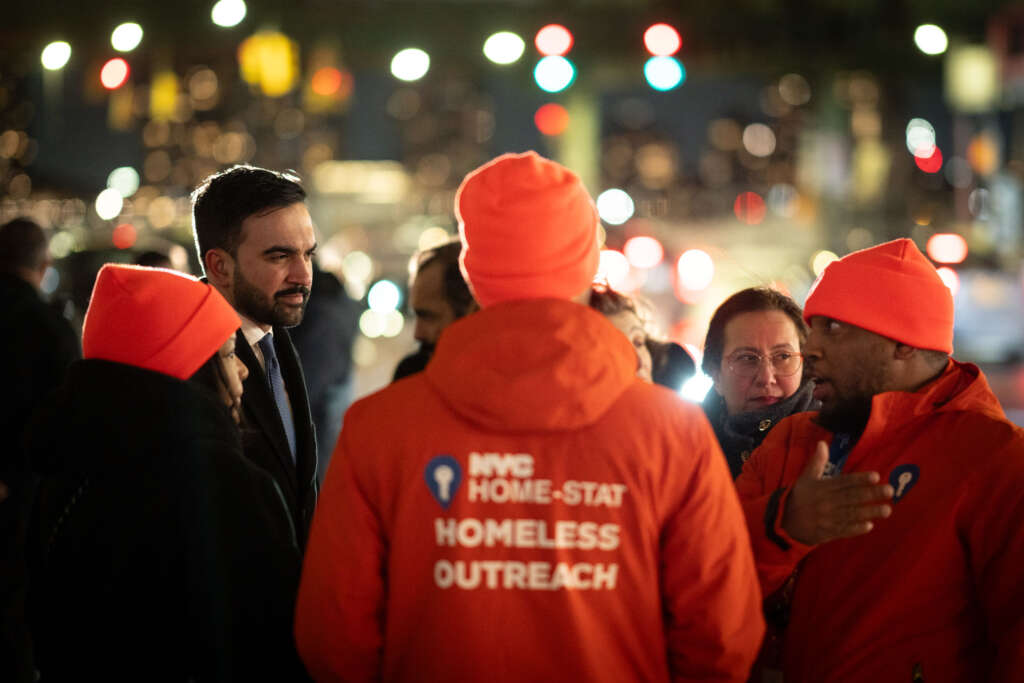

The argument that cold weather disproves climate change is not merely misguided; it is dangerous. Each blizzard, each brutal cold spell, is not a refutal of climate change, but a warning shot of its arrival, and those who suffer disproportionately are the ones already left behind: the homeless. The recent January snowstorms, as well as the cold weather lasting into mid-February, are a shocking indicator of what is to come.
The polar vortex is a ring of winds that forms above the North Pole and encloses a large pool of extremely cold air. This polar vortex can stretch down to eastern North America, mostly due to a warming Arctic pool, which causes masses of frigid air. Remember February 2021, when the deep freeze claimed 246 lives in Texas? Now, at least 29 New Yorkers, some of them homeless, have joined that tragic count.
As a New York City 911 paramedic who was on the front lines through the unrelenting January snowstorms and bone-chilling cold that stretched well into February, I have seen directly the devastating toll exacted by our warming planet. It’s easy to overlook major issues, but when you can see the impact with your own eyes, remaining silent only hinders those affected. I am not a Democrat or a Republican, not a liberal or a conservative. I am a human being, and those we lost were human beings, too. Their deaths are not footnotes. They are warnings, and from where I stood, it was clear we are indifferent.
Our city’s well-intentioned but misguided policies to redirect 311 calls about the homeless to 911 overloaded an already-strained system. There are more than 4,000 unsheltered New Yorkers, while shelters are near capacity with up to 100,000 people. There were almost 1,183 calls to 311 to assist the homeless outside, with 72 percent of those calls resulting in responders being unable to locate the homeless person.
As someone who repeatedly responded to these calls, I felt the crushing weight of helplessness. We were sent out, call after call, to people who refused help or had nowhere truly safe to go. After the eight or ninth call, it became vivid to me: the policy was a Band-Aid on someone bleeding out, throwing something at the wall, and praying it stuck.
This was not 911’s problem to solve; it shows a clear systemic issue, scapegoating the emergency response system to shield cascading issues. Due to global warming, the polar vortex is being disrupted, increasing the likelihood of more extreme weather, such as snowstorms and cold snaps, which in turn heightens the risk for the homeless population. Policies shift complex social issues to emergency services, and now we are scrambling to handle social calls as well as medical emergencies.
The effects are still being felt today, as the 911 system is slow to recover. The huge shift of calls onto the system means hours-long delays for a medical response in certain areas.
The solution is not to reroute homelessness into the 911 system, but to build systems designed to address it. Dedicated outreach teams, mobile medical units, real-time shelter coordination, and low-barrier emergency housing during extreme weather can reduce strain on emergency services and offer legitimate alternatives for these populations.
This was seen during the second storm that came through in late February. Once officials put a higher emphasis on non-emergency services, such as the 18 warming buses and the 24 warming centers across the city, the fatality number drastically decreased. These support services also allowed for emergency workers to respond more quickly to those who were still left behind.
The souls lost were not unavoidable. They are casualties of climate change, of indifferent policy, of a society unwilling to face the root causes of suffering. We cannot let their memory be lost in bureaucratic blame games or political posturing.
Cold weather does not disprove climate change. It reveals its sharpest edge: that as the climate grows more extreme, survival itself becomes unequal, and those without shelter are the first to pay the price.
Bryan Ramirez is a 911 paramedic and adjunct professor teaching emergency medical services in New York City.