


Share This Article
A plan to double the number of public restrooms in New York City is scant on commitments, advocates for the homeless say.
New Yorkers excited about the city’s goal to double the number of public restrooms by 2035 will have to hold it a bit longer.
Mayor Zohran Mamdani quietly released a City Council-mandated plan to expand the number of public restrooms in the city Friday—but flushed many of the concrete commitments.
The plan they delivered underwhelmed, according to advocates who have been fighting for more restrooms. That includes Homeless New Yorkers—either those living on the street or living in city shelters that often close their doors during the day—who could stand to benefit the most from increased access.
“This isn’t really where it needs to be, but I do feel hopeful that they’re committed to it,” said Councilmember Sandy Nurse, who sponsored last year’s legislation mandating that City Hall come up with a plan to double the number of public restrooms, to over 2,000 citywide. “We need more meat on the bone here.”
The administration already asked for more time to work on the report, which was originally due Sep. 1.
Nurse’s legislation called on the city to accelerate the pace of bathroom building, both publicly owned and through public-private partnerships.
Everyone wants more places to pee. But building more toilets is logistically complex and sometimes prohibitively expensive.
“Delivering high-quality public restrooms for New Yorkers and visitors requires a range of strategies, milestones, and resources across many City Agencies,” Jeremy Edwards, deputy press secretary at City Hall, said in a statement.
While the administration’s plan identifies possible strategies to expand public restrooms—by incentivizing businesses to include them, requiring it of developers, or mandating them in privately owned public spaces—it did not specify how many more the city hopes to yield, or by when.
Instead, it punted those commitments to a forthcoming “action plan” that the administration says will come out by the end of 2027.
“The action plan should have been the report,” said Adolfo Abreu, housing campaigns director at VOCAL-NY, a grassroots group that organizes New Yorkers impacted by homelessness, incarceration and other issues.
Advocates with the “Free to Pee” coalition, of which VOCAL is a member, were supportive of the administration’s aims, but called on City Hall to do “more than the current trickle.”
“The City must still make concrete commitments,” the coalition said in a statement Tuesday.
The fuss over the report illustrates just how challenging it is to build restrooms in New York City, a process that requires coordination between numerous agencies. The report suggested reforms to city procurement and siting processes, regulations, and building code—rules that can slow down planning and drive up costs.
The majority of the 1,100 existing bathrooms the city identified were in parks and libraries.
“Most of those operate on limited hours,” said Alison Wilkey of Coalition for the Homeless “There are very few bathrooms that are open during the evening.”
Around 100 of the 1,100 restrooms were not currently operational, the report found.
Building a single restroom in a park can cost the city $3.6 million dollars on average, according to the City Reporter, which found that dozens of park restrooms have been closed for over a decade and would cost at least $5 million each to repair.
“The need to use the bathroom is 24 hours a day, and one thing that we’ve heard, especially from unsheltered New Yorkers over the years, is that they do things that are contrary to their health because of the lack of bathroom access, like not drinking water after certain hours, so that they won’t have to use a bathroom overnight,” added Wilkey.
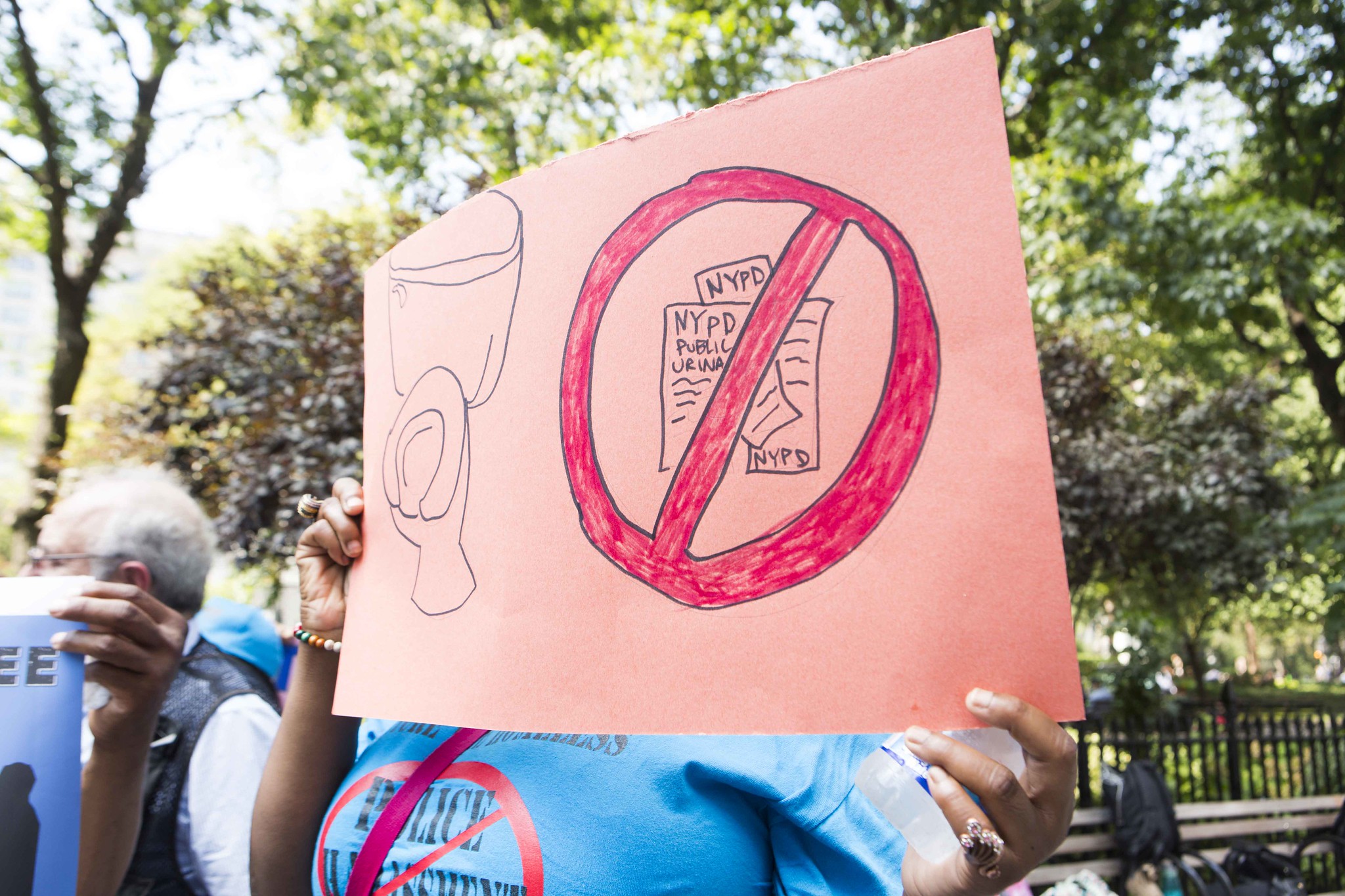
It can also put them at risk of a ticket: the New York City Police Department issued a record 10,003 summonses for public urination during the most recent fiscal year, according to VOCAL-NY.
Without any additional funding or reforms, the report says the city is on track for 46 new bathrooms by 2030, and five new restrooms each year after, bringing the total to 1,210 by 2042. “These benchmarks are a starting point, not the limit of the City’s ambition,” the report reads.

Nurse’s legislation calls for at least half of the goal of 2,120 bathrooms by 2035 to be publicly owned.
More public restrooms will require leaders to “put your money where your mouth is,” said Abreu, who said that it was helpful to see strategies the city might employ to build bathrooms, but wanted to see firmer commitments.
Getting to 2,000 will require scaling up the city’s public private partnerships, like a recent pilot with potty-tech company Throne Labs at 17 locations around the city.
But some homeless New Yorkers had concerns about accessing those facilities, which require a cell phone or tap card, to be made available at nearby businesses, for access.
“People who have privilege and don’t look homeless or of a particular race have a lot easier time walking into a business and asking to use the bathroom and getting a favorable response,” said Wilkey. “What we wouldn’t want to see happen is as the city moves forward with some of these public-private partnerships that we run into these same problems of inequitable access.”
City Hall promised more to come: “The forthcoming action plan will be developed in consultation with agencies, elected officials, and advocates and will build on the work done to-date to identify challenges, mitigate barriers, and expand the tool-kit of public restroom options for all New Yorkers,” said Edwards in a statement.
To reach the reporter behind this story, contact [email protected]. To reach the editor, contact [email protected]
Want to republish this story? Find City Limits’ reprint policy here.