


Share This Article
In the 1970s, the building on East 140th Street housed a rehab center founded by activists demanding better health services for the Mott Haven neighborhood. A local community land trust will now take over the space.
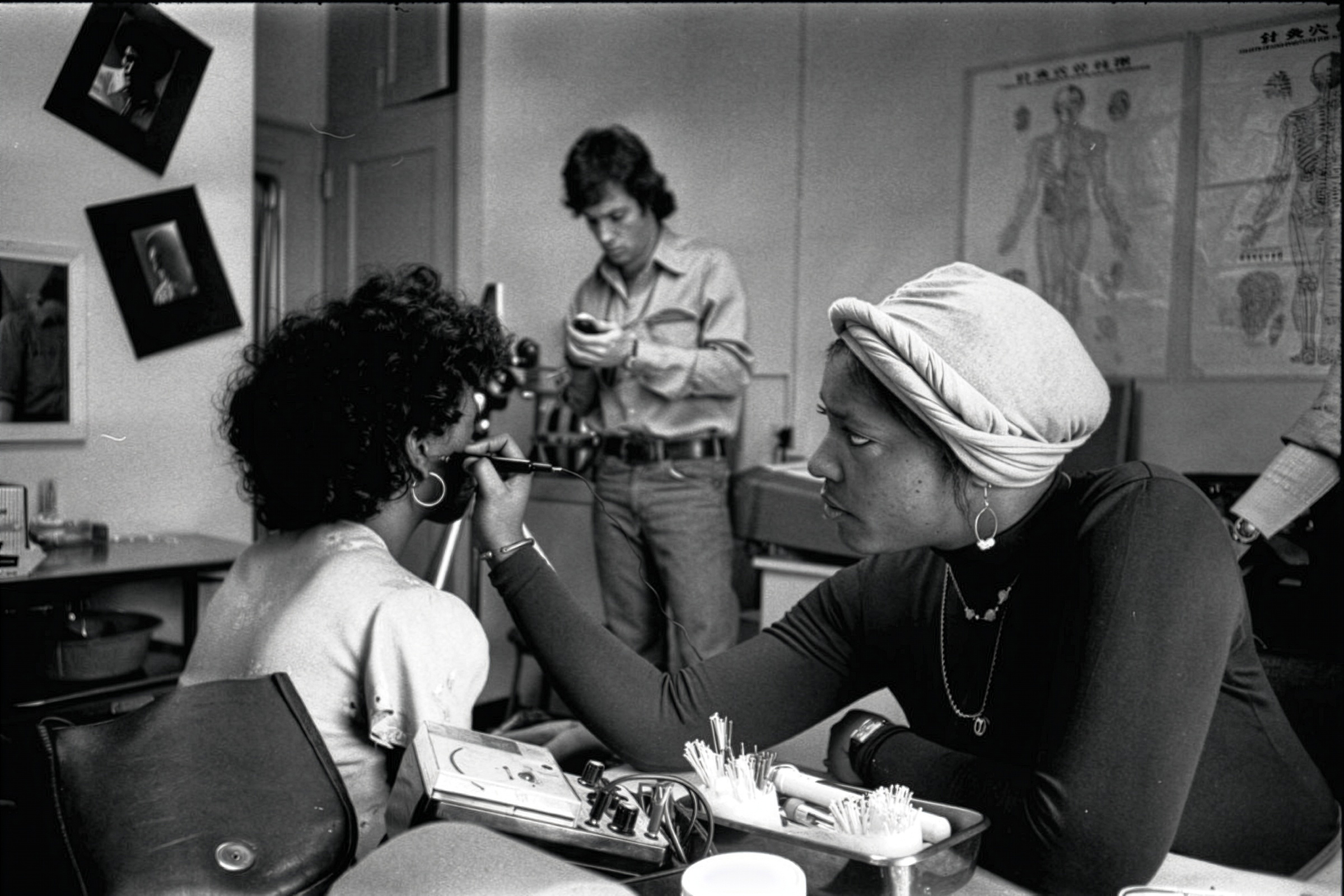
The South Bronx is iconic for being a historic birthplace of hip-hop and salsa music.
But one lesser-known tidbit about the neighborhood: it was once home to a program, founded by Puerto Rican activist group The Young Lords, that used ear acupuncture to treat addiction—which later became a nationally implemented therapy for substance-abuse recovery.
On Wednesday, South Bronx Unite began renovating the former South Bronx’s Lincoln Recovery Center, a rehab facility that, in the 1970s, housed the so-called People’s Detox Center, founded by activists demanding better health services for the Mott Haven neighborhood.
SBU, an environmental justice organization, campaigned for 15 years to preserve the site and renovate it as a community space for culture, education, and holistic medicine.
“We saw the building become vacant in 2011,” South Bronx Unite Co-Founder Mychal Johnson explained, “And we saw as neighbors an asset that could continue to bring forth healthier outcomes for the community as it had been doing before.”
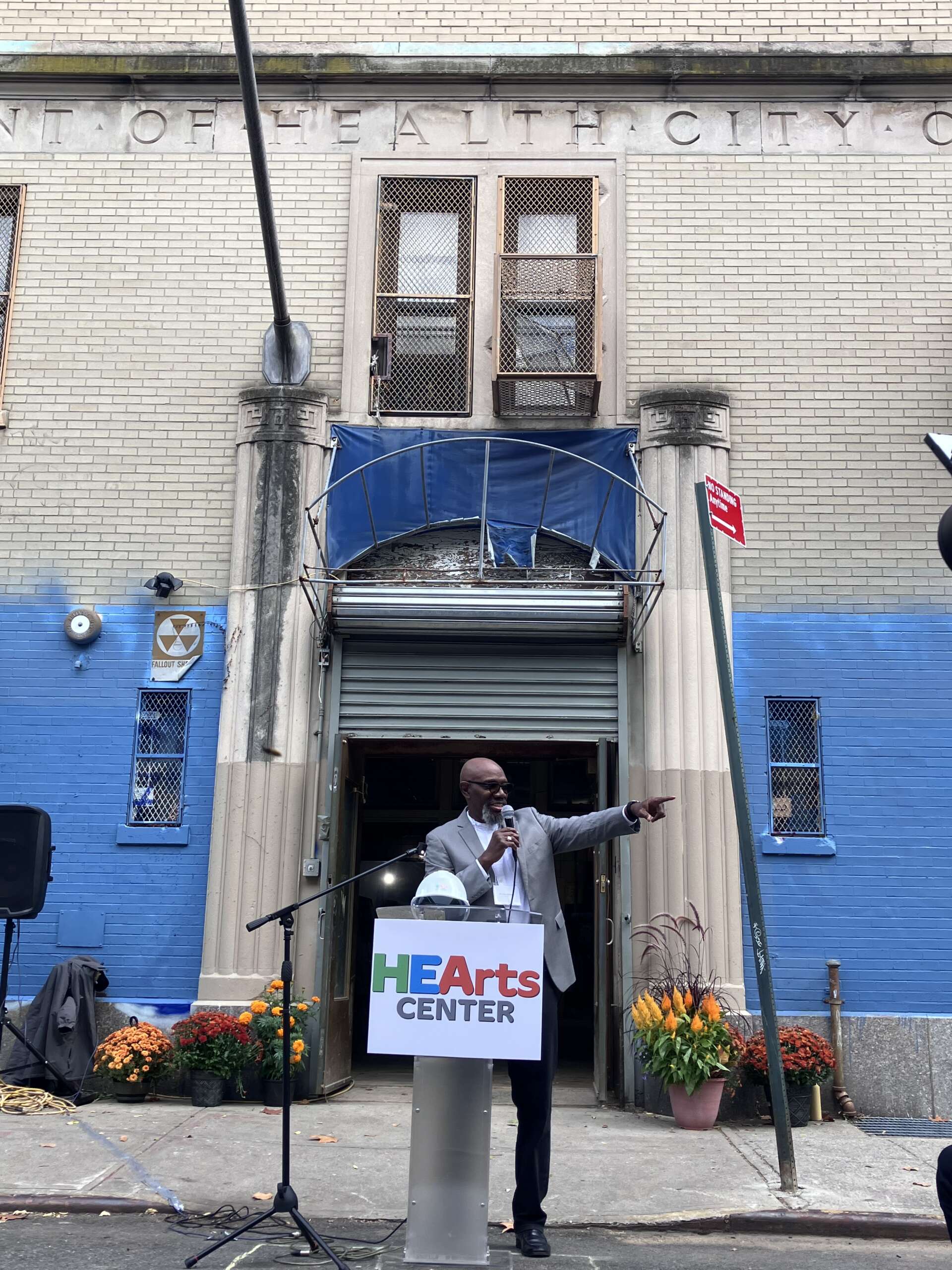
center’s groundbreaking. (Daniel Parra/City Limits)
The $44 million community hub at 349 East 140th St. will be called the HEArts (health, education, and the arts) Center. About 100 people attended the groundbreaking ceremony Wednesday, including residents and children who ran and danced to the Latin jazz performed by the guest band.
The project will renovate the existing structure, add a rear extension, and preserve the building’s historical character.
The center will have an auditorium with about 120 seats, clinical rooms, classrooms, affordable offices and health-and-wellness space. It will also have sustainable features, like a geothermal energy system to heat and cool the building, Johnson explained.
“This site was known as the People’s Detox Center,” Borough President Vanessa Gibson said during the event. “When it closed in 2011, many people said: ‘What will its future look like?’ The South Bronx answered that call and collectively worked together to organize and develop a real plan. And that is what you’re seeing today. Coalition building, folks—for us, by us, community members.”
The People’s Detox Center was born from a similar act of community activism: In 1970, members of the Black Panthers and Young Lords, two revolutionary civil rights organizations, took over nearby Lincoln Hospital, demanding the city invest more resources to improve care at the South Bronx facility, which locals at the time had dubbed “the butcher shop.”
After being ousted from Lincoln Hospital by Mayor Ed Koch, the People’s Program relocated to the former Lincoln Recovery Center at 349 East 140th St., where the site became known for using new ways to treat drug addiction, such as acupuncture as an alternative to methadone.
In the 70s, heroin devastated Black and Latino communities in Harlem and the South Bronx. Those who wanted to quit were often given methadone, an addictive opioid itself that helped ease the withdrawal symptoms.

There weren’t other treatments available at the time, and for poor people, healthcare in general was very difficult to get, recalled Walter Bosque del Rio, a member of The Young Lords, a Puerto Rican civil rights group that, along with the Black Panthers, saw a potential solution in less expensive, alternative treatments.
“Don’t forget that back in the 70s, we didn’t have all the stuff, all the services that they provide now,” said Bosque del Rio, the first licensed Puerto Rican acupuncturist. “Back then, we were just giving them what we could, which was a lot of tender loving care, political education, and history classes.”
When it came to acupuncture, some people were wary of the needles, Bosque del Rio recalls. For others, a lack of access to health care led them to distrust the practice entirely.
“A lot of people only spoke Spanish,” Bosque del Rio recalled, “so we had to explain to them that they were going to get acupuncture—but they weren’t going to get high because the needles didn’t have medication or heroin.”
After the acupuncture treatment, some people still felt deceived because their anxiety had subsided, and they didn’t understand how.
“Many times I had to break the needles as proof to them that there was nothing inside the needle because they felt so relaxed after the treatment,” said Bosque del Rio said.
He got involved with People’s Detox Center while he was a nursing student in 1971.
“The best memory was when we returned from Montreal with our diplomas as acupuncturists,” Bosque del Rio recalled. “When we came here, we realized New York State would not allow any acupuncturists unless they were MDs. so we couldn’t practice. So we opened up the acupuncture school.”
It was called Lincoln Detox Acupuncture School, and even after getting formal training and licenses, Bosque del Rio and others could only perform acupuncture under the supervision of physicians. There, he and fellow activists like Mutulu Shakur taught others what they had learned and developed the five-point acupuncture protocol, which has since been standardized as the National Acupuncture Detoxification Association protocol.
The center continued its operations until media reports emerged in 2010 announcing plans to relocate to a nearby diagnostic center.
That’s when South Bronx Unite started its campaign to keep the building for the community.
“We thought as an organization that we should put together a plan to actually bring forth health and wellness, as well as arts and culture and education,” Johnson said. “The community envisioned this project to be called HEArts [health, education, and the arts] to provide these vital services that could help offset some of the structural inequalities and needs that the community has.”
The organization—through the Mott Haven–Port Morris Community Land Stewards, which it created in 2015 for this purpose—will hold a 49-year lease on the building, with two 25-year renewal options, for a total of 99 years, while the city retains ownership of the property. This model is known as a Community Land Trust, which grants a community-governed nonprofit the power to own and manage land.
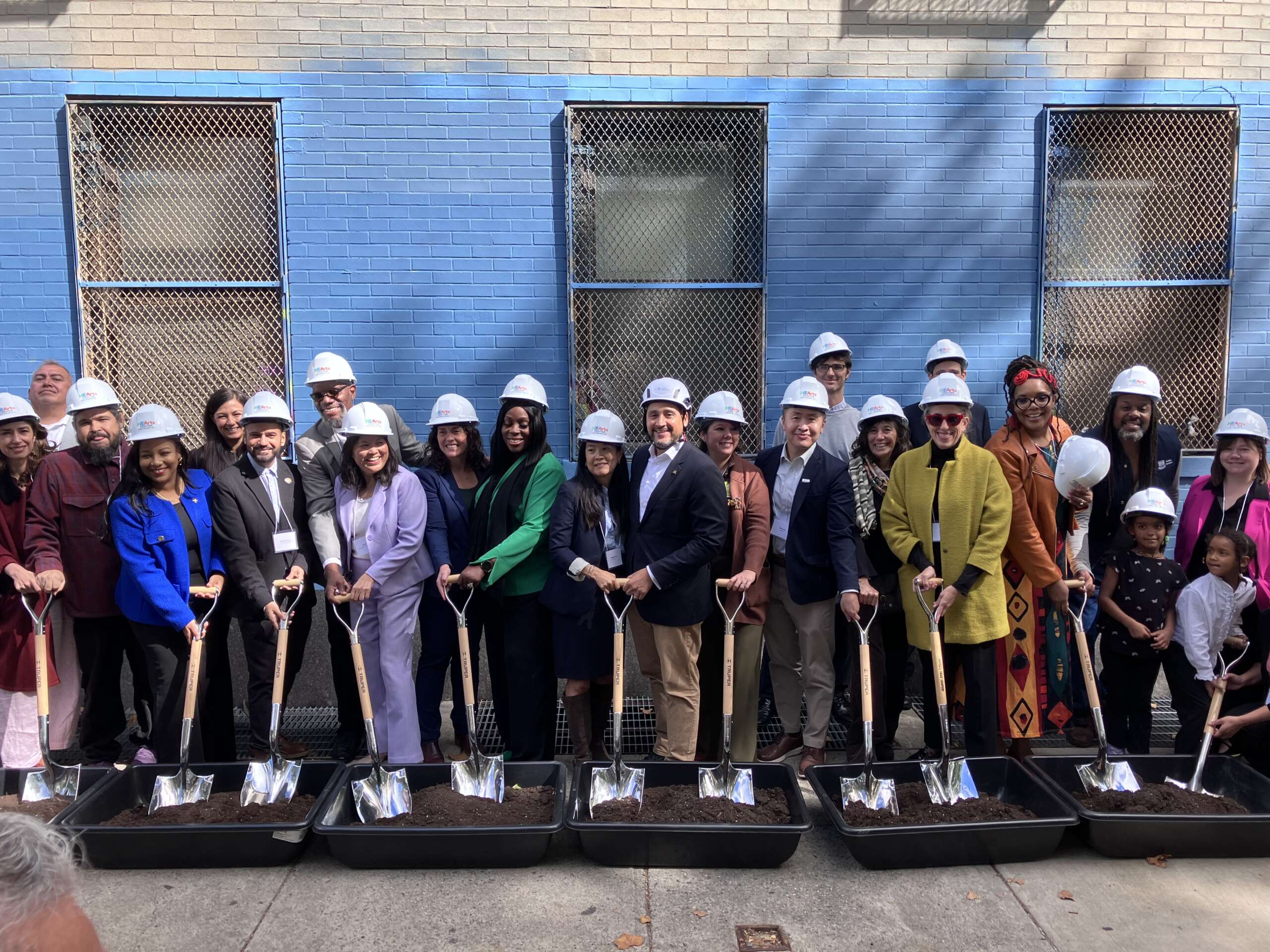
One of the hardest parts—in addition to raising the necessary funds for the project—was convincing government officials that the plan was viable, Johnson acknowledged.
“We had to convince the city that this was a vision that was created by the community and supported by the local community,” he said.
Advocacy around the project began during the de Blasio administration, which provided the initial $5,000. In 2015, South Bronx Unite helped establish the land trust, then created a proposal through a feasibility study.
“That took a couple of years—and [we] kept organizing the community around the building, doing events around it,” Johnson explained.
In 2023, NYC Health + Hospitals selected their proposal to develop the newly renovated center, the City Council approved the 49-year sublease last year.
The city has since provided $15.25 million in capital funding through various administrations, with additional support coming from the New York State Dormitory Authority, Department of Environmental Conservation, Energy Research and Development Authority, Council of the Arts, and a long list of private and non-profit orgs.
The HEArts Center is projected to open in late 2028.
To reach the reporter behind this story, contact [email protected]. To reach the editor, contact [email protected]
Want to republish this story? Find City Limits’ reprint policy here.