


Share This Article
A new report from Center for an Urban Future urges the city to do more to raise awareness about, and increase access to, its “wild” spaces—what researchers say could improve residents’ mental and physical health.
When the Natural Areas Conservancy booked a videographer to film footage of hiking trails in Manhattan’s Inwood Hill Park, the new hire told the organization’s then-Deputy Director Elizabeth Jaeger that it would be an easy gig for him: he lived right nearby.
“I said, ‘That’s great, you must love coming to this park,'” she told researchers at the Center for an Urban Future, who interviewed Jaeger and staff at other nature-focused city nonprofits to get a better sense of how New Yorkers use and relate to green spaces.
But despite his proximity, the man said he didn’t frequent the Upper Manhattan park, which houses some 153 acres of natural areas, including one of the city’s last remaining old-growth forests. “He told me he had never been there,” Jaeger said, telling researchers that this wasn’t uncommon. “In almost every workshop we do, we hear the same thing.”
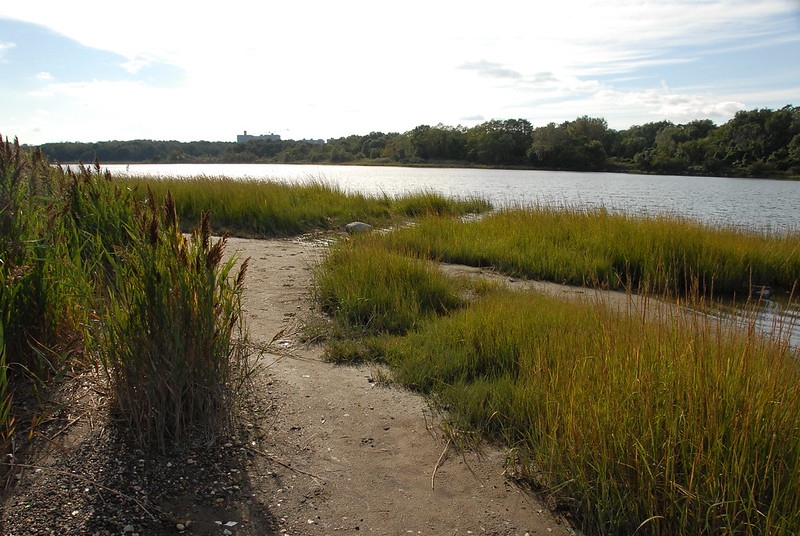
In addition to its sprawling network of traditional parks, playgrounds and ball fields, New York City manages 12,000 acres of “wild” spaces—forested hiking trails in places like Inwood Hill Park and Staten Island’s Greenbelt, wetlands and salt marshes in Jamaica and Pelham Bay, and hundreds of miles of shorelines.
“But millions of New Yorkers don’t know they exist, have never been, and aren’t benefiting from that time in nature,” according to Eli Dvorkin, editorial and policy director at the Center for an Urban Future.

The group published a report Thursday that explores this disconnect, and urges the city to do more to raise awareness about—and increase access to—these areas, citing the mental health benefits of time spent in nature. It includes a number of policy suggestions, like more school field trips to expose youth early to the great outdoors, and creating “Nature and Culture Hubs” at public library branches to get the word out about the city’s overlooked wilderness.
“At a time when New Yorkers are more stressed and screen bound and isolated from one another…our research suggests that one of the most effective antidotes is hiding in plain sight—spending more time in these wild places that that we’re lucky to to have right here in New York City,” Dvorkin told City Limits.
The problem, the report says, comes down to awareness and proximity. Few New Yorkers—just 4.5 percent of residents—took advantage of the city’s nature-based programming in 2024, researchers found. “We heard so many times, some variation of, ‘I didn’t even know that existed,'” Dvorkin said.
And while some 84 percent of the city’s population lives within walking distance of a park, fewer than half of residents are within a 10-minute walk of a natural area, according to the report. It recommends the city pilot monthly “Nature Days”—designated weekends that offer a bevy of public outdoor programs, like guided hikes, bird watching or kayak tours—partnering with the MTA to provide shuttle buses and expanded transit service to get people there.
“That would introduce thousands of people to places that, hopefully, they’ll return to for years to come,” Dvorkin said.
But the disconnect runs deeper than transit accessibility, the report notes. It can be especially pronounced for residents in lower-income communities and communities of color, for whom “spending time in nature can feel like a largely inaccessible luxury,” due to work, caregiving and other responsibilities. Some Black and brown New Yorkers, in particular, feel unsafe or unwelcome in outdoor spaces, advocates told researchers.
“For decades, [outdoor recreation] has been a predominantly white field,” Jasmine Guadalupe, founder of The Hood Hikers, which leads guided nature tours for New Yorkers of color, told CUF. “Inner-city people might say, ‘You are going hiking? That’s for white people.'”
To tackle this, the report recommends the city beef up the role of its Urban Park Rangers in natural areas, “to spend more time building public confidence, guiding visitors, leading programs, and supporting safe use of wild places.”
It also calls for more opportunities that expose city dwellers to the outdoors as children and young adults: requiring schools to provide every student with at least one “nature-based experience” per year through field trips and other initiatives, and connecting teens who take part in the city’s Summer Youth Employment Program with jobs maintaining forest trails or taking care of trees.
“Those attitudes form early,” Dvorkin said. “That ends up being a major deciding factor in terms of who grows up in New York City feeling comfortable in those places.”
Of course, those kind of investments take resources, and New York City’s parks are known for getting a smaller slice of the budget pie compared to other major U.S. cities. Natural areas get an even smaller portion: just 2 percent of the Department of Parks and Recreation’s operating budget goes to these areas, despite that they account for roughly a third of the city’s parkland, the report found.
“For years, the capital and expense dollars committed to the city’s natural areas have not kept up with maintenance needs or rising demand, even as these spaces face mounting pressures from climate change and increased usage,” the CUF report reads.
It suggests the city explore more “public-private partnerships, philanthropic support, and state tourism and environmental funding streams” to help fill the gaps.
Dvorkin said he’s been “encouraged” by the Mamdani administration’s embrace of outdoor recreation in its affordability agenda. This summer, as part of City Hall’s World Cup promotions, the city hosted overnight pickup soccer games and turned streets near dozens of city schools into student play areas.
And while Mayor Zohran Mamdani’s first budget failed to allocate 1 percent of overall city spending to parks—something advocates have called for for years—the final deal did include “some important investments in the city’s natural areas; baselining some key staff roles, making some investments in in forestry,” Dvorkin said.
“In recent years, we’ve been going arguably the wrong direction when it comes to investment in our park system and in natural areas as well,” he said. “I’m seeing some important signs right now that that the city is starting to turn that around.”
You can read the full report here.
To reach the editor, contact [email protected]
Want to republish this story? Find City Limits’ reprint policy here.
1 Comment
Joey
Maybe it’s for the better that throngs of people aren’t inundating and destroying these forests, wetlands and other natural areas. Just look hat how deteriorated the city parks becopme with overuse. It is better to have thes natural areas used by those that care.