


Share This Article
See the 100 city-owned lots where the mayor plans to develop 50,000 units of affordable housing, taking advantage of reforms that the administration hopes will make it easier to build.
The Claremont House project, 66 affordable homeownership units planned for a Department of Education-owned lot on Anthony Avenue in the Bronx, has sputtered along for eight years.
Now Mayor Zohran Mamdani is hoping it will finally get built.
The site is one of over 100 city-owned sites identified by the administration to build new affordable housing across the five boroughs. Some are vacant; some are parking lots; some are underutilized city buildings; some are existing public facilities that will be rebuilt.
The administration estimates that it can build 50,000 units of new housing on the 100 sites, which would account for about a quarter of the 200,000 affordable homes Mamdani promised to build in his housing plan.
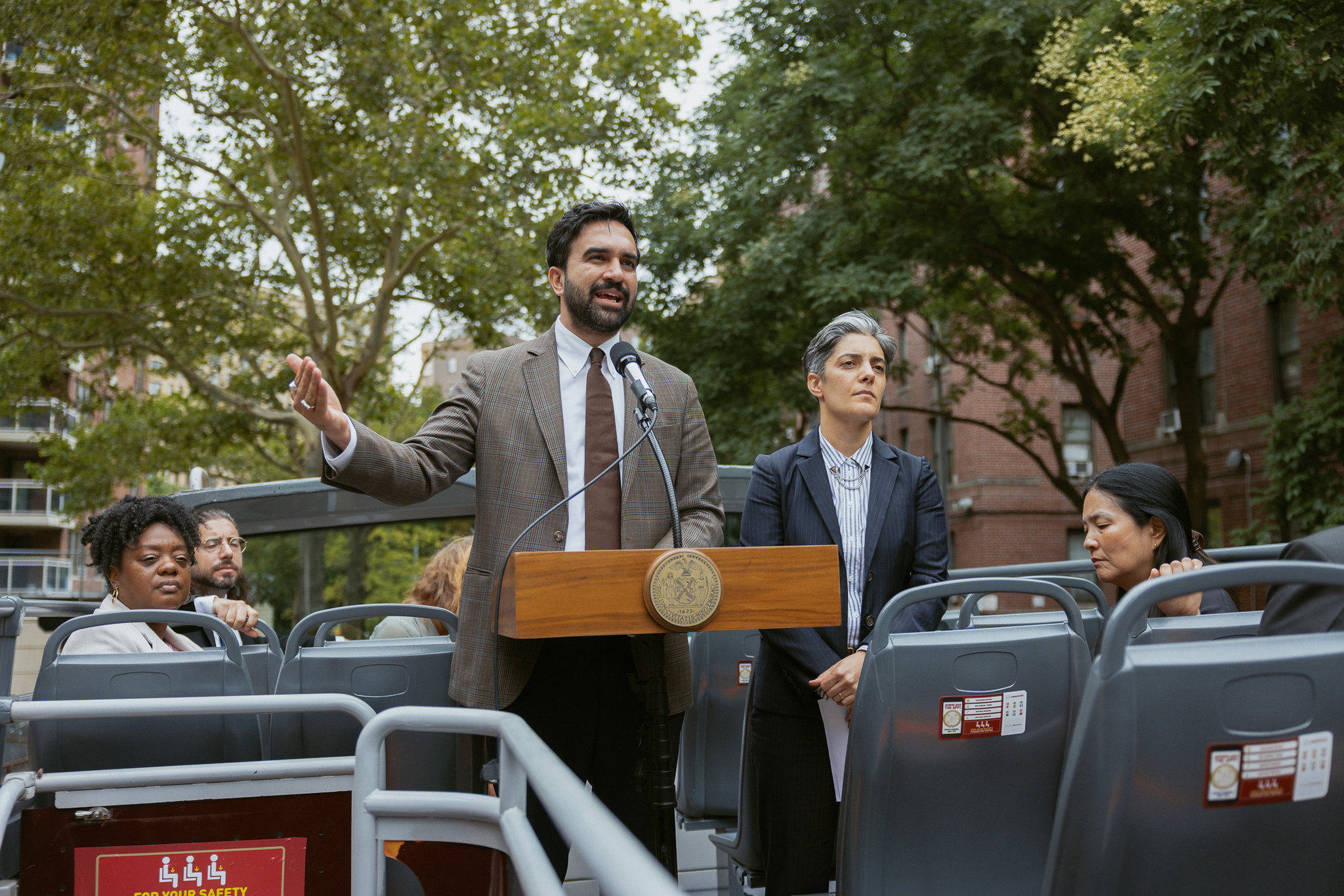
Atop a double-decker sightseeing bus in the Bronx Thursday morning, the mayor and Leila Bozorg, his deputy mayor for housing, highlighted several projects on city land they want to speed up.
“For far too long, new housing has only lived in a press release and not actually been able to be delivered on a timeline where those who live in the neighborhood would also be able to enjoy that same housing,” said Mamdani.
On his first day in office, the mayor created a task force to identify city-owned land that could be used for housing. The 100 sites now in the pipeline include some started under previous administrations.
Since January, City Hall says it has announced six new projects on public land, and that officials will solicit proposals to build on at least five sites every year going forward.
Each project comes with its own complications. Even those the mayor highlighted Thursday have faced multiple delays and setbacks.
Claremont House, for example, was part of a 2018 rezoning along Jerome Avenue in the Bronx. The pandemic disrupted its financing, it went through an approval process that took years, and it still won’t be completed until December 2028, according to the developer’s website.
The mayor’s team says they have a few new tools that will make future sites easier to develop. Thanks to ballot measures passed last year, when the city wants to dispose of public land for affordable housing they can use an “expedited” land use process that cuts review time half.
The mayor’s housing plan also doubled funding for the program that backs the new homeownership units at Claremont House, called Open Doors. The development will be owned by the Interboro Community Land Trust, a type of resident-governed group that the administration sees playing a bigger role in stewarding distressed housing and keeping it permanently affordable.
“Anytime a family goes to sell, they’ll be able to earn a little bit of equity, but the next generation of buyers will also get the benefit of that really deeply affordable homeownership,” said Department of Housing Preservation and Development Commissioner Dina Levy.
Thursday morning, the mayor called for an “all above approach” that includes improving the ability of the city to act as a public developer as well as enabling the private sector to build more housing amid a citywide shortage.
Officials highlighted two other sites they say demonstrate the city’s creative approach to new affordable housing.
At NYCHA’s Morris Houses on Park Avenue in the Bronx, the city will turn a vacant lot into 80 additional NYCHA units for seniors, 69 units for formerly homeless people, and 79 affordable housing lottery units for low- and moderate-income households.
Just off Grand Concourse, the mayor pointed to a public library that will be rebuilt with housing on top, part of a citywide push to build housing and new libraries.

Officials did not share how future sites would be selected for development, but mentioned constraints such as flood risk, lot size and shape, and location as possible factors. They released a website Thursday morning that shows the current status of the projects.
Amid a deep housing shortage, where less than 1 percent of rentals affordable to the lowest income New Yorkers are on the market, officials have called for more housing production to meet the need.
Others have remained skeptical of some of the tools that fast-track housing construction, like many City Council members who opposed ballot measures last year that they say limit community input.
Deputy Mayor Bozorg said that the projects would include public feedback—both working with agencies to see what other uses they might need for the land and kicking off a community engagement process with local communities.
“The time it takes to develop housing has made that community engagement process really challenging,” said Bozorg, referring to the many delays housing projects can face and some new tools to speed things up. “You want to engage a community before a [request for proposals] is released, but sometimes it’s taking two, three, up to five years, even more sometimes, to actually finance that building.”
To reach the reporter behind this story, contact [email protected]. To reach the editor, contact [email protected]
Want to republish this story? Find City Limits’ reprint policy here.