


Share This Article
“We live in an ocean city: New York is built on islands, and has over 500 miles of coastline,” the author writes. “In this, as in many things, we’re a major global hub—a world leader. We must act like it, and take our marine responsibilities seriously.”
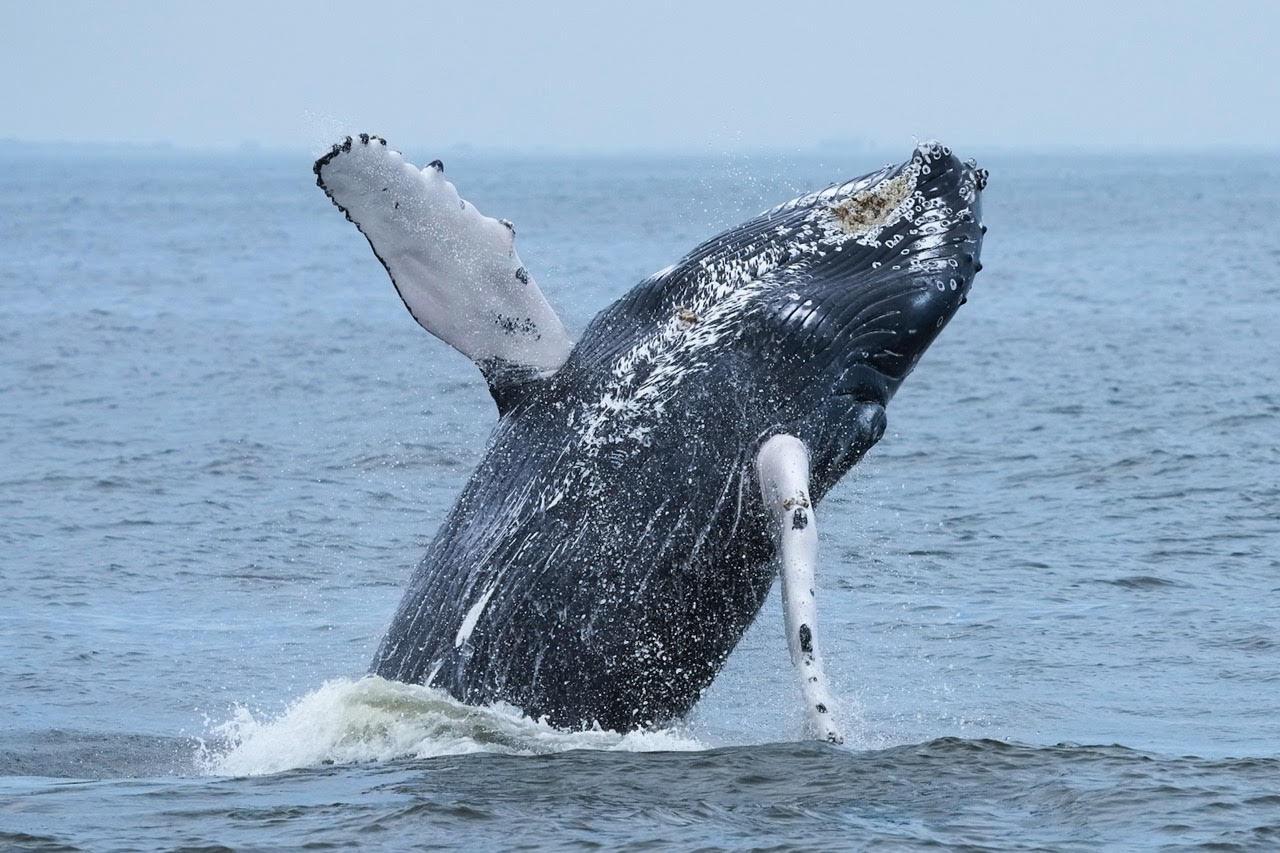

On the morning of March 26, a sei whale washed up in Queens. Found on Rockaway Beach, he was 45 feet long, rare, and had been in good health. But by the time he washed ashore, he was dead.
According to the Atlantic Marine Conservation Society (AMSEAS), the whale had abrasions and extensive bruising on his right side. He probably collided with a ship, and that’s probably what killed him. This is not a one-off tragedy—it’s common, predictable, and avoidable. And soon, it might happen even more.
As whale populations recover worldwide, and marine traffic intensifies, collisions are increasingly common across the U.S.—and they’re one of the greatest threats whales face. In New York, the nonprofit Gotham Whale regularly sees whales scarred by ship propellers. Strikes are bad for humans, too: they can damage vessels and put their crews at risk.
The solution? Speed limits for ships. Since 2008, the National Oceanic and Atmospheric Administration’s seasonal vessel speed rule has required ships over 65 feet to slow to ten knots in certain regions, including New York’s waters. Just as speed limits reliably save lives on our roads, they save lives at sea. But now, that critical safeguard might be scrapped.
NOAA is proposing “modifying and modernizing” the rule—replacing the speed limit with “technology-based strike-avoidance measures.” This tech would help vessels track whales in real time, and is intended to reduce regulatory and economic burdens on them. But as both advocates and mariners state, the 2008 rule keeps whales and mariners safe without compromising economic activity. Scrapping it would mean abandoning the only proven, effective safeguard for an untested one.
The stakes are too high to use our waters as a testing ground. Endangered species, like sei and fin whales, are especially at risk, and for North Atlantic right whales, the threat is existential: there are less than 380 left on the planet.
New Yorkers must speak up. We live in an ocean city: New York is built on islands, and has over 500 miles of coastline. New York’s natural harbor is among the world’s busiest maritime corridors; the Port of New York and New Jersey is regularly ranked as America’s busiest. In this, as in many things, we’re a major global hub—a world leader. We must act like it, and take our marine responsibilities seriously.
We’re starting to. New York’s waterways are cleaner now than at any point in the last century, thanks to $45 billion invested by the city since the 1980s. Last month, there were dolphins in the East River; seahorses now swim in the Hudson. Since 2011, Gotham Whale has documented nearly 500 humpback whales off our coast. Whale watching is a growing tourist attraction. These are glimpses of a future New York: resilient, clean and biodiverse, with thriving blue and green spaces. At this exciting moment for our city, we must embrace our maritime identity, and keep up this momentum—not toss it overboard.
Last month’s beached whale was New York’s first since May 2025, when a 42-foot humpback whale washed up, probably killed by a ship strike. But this season is just beginning. Already, on April 1, a 35-foot humpback was found across the water, in Sandy Hook—again, likely killed by a ship.
In D.C., a federal committee voted earlier this month to defang the Endangered Species Act, in favor of oil, in the Gulf of Mexico—possibly illegally. That might mean extinction for the Rice’s whale, the world’s most endangered whale. As our political and ecological systems are attacked, we cannot be cast adrift; we must raise our voices, and fight back. NOAA has a self-proclaimed duty to “conserve and manage coastal and marine ecosystems.” We must remind them of this, and we have a chance to do so: until June 2, NOAA is seeking public comments on the speed vessel rule.
The “Save the Whales” campaign in the 1970s was one of the greatest conservation success stories in history. Whales capture carbon, cycle nutrients, and nourish phytoplankton, which are the basis of ocean ecosystems. Whales have rich social and cultural lives, and have inspired wonder and awe for millennia. For decades, they’ve been a symbol of environmental exploitation, and how we can turn it around. We can’t afford to lose those symbols now.
Sei whales are among the world’s most elusive whales, but washed up in Queens is not the way to see them up close. We must keep whales in the water, and NOAA’s proven, science-based safeguard in place. The stakes have never been higher: we cannot let ourselves, our city, and our finned neighbors down.
Submit a comment to NOAA here. To report stranded marine mammals and sea turtles in New York, call the New York State Stranding Hotline at (631) 369-9829.
Georgia Good is a volunteer at Gotham Whale, a fellow at the New York League of Conservation Voters, and a researcher at New York University’s All Animals Initiative.