


Share This Article
“There’s a stark inequity in how the city prioritizes infrastructure projects across different Manhattan neighborhoods,” said said Maria Kessler, executive director for Friends of the East River Esplanade. “Why is this neighborhood the last and unserved?”
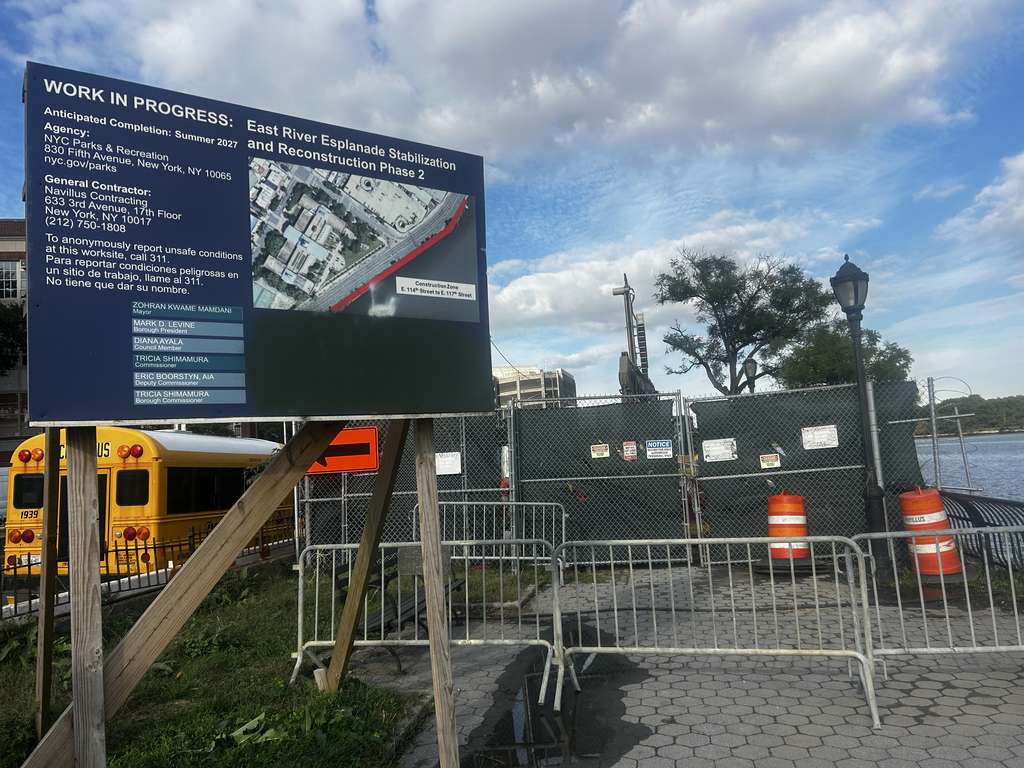
After nearly six years of planning—and after the city poured more than $1.4 billion into coastal resiliency projects for other neighborhoods across East Manhattan—funding to rebuild a portion of the East River Esplanade in Harlem has fallen short.
Since 2021, the New York City Parks Department and the Economic Development Corporation have promised residents a full reconstruction of the long-neglected esplanade, a public waterfront stretching over nine miles, which has suffered from erosion for decades.
But in July, EDC officials announced that repairs for two multi-block spans of the waterfront are on hold because the original projected budget of $294 million will no longer cover the full scope. In September, officials said they’ll need at least an estimated $700 million to complete the two now-unfunded sections.
The East River Esplanade is an essential green space for East Harlem residents, providing a riverside walking and biking trail with access into lower Manhattan. But after years of neglect and water damage, whole chunks of it have fallen into the waterway, and sinkholes have destroyed areas of the sidewalk. Because of the perilous conditions, large blocks of the river walk have been closed off for years.
“We still have chain link fences abutting the actual esplanade railing because the concrete’s falling into the river,” said Maria Kessler, executive director for Friends of the East River Esplanade, a waterfront conservancy focused on bringing funding and awareness to the esplanade’s dire conditions.
In early 2021, the EDC announced that planning was underway for a $294 million renovation of the esplanade’s East Harlem segment, called the Bobby Wagner Walk, which runs from East 90th Street to East 125th Street. The project was expected to include a full reconstruction and elevation of the waterfront and the East 107th Street Pier, featuring flood resiliency features and ample green space for visitors.
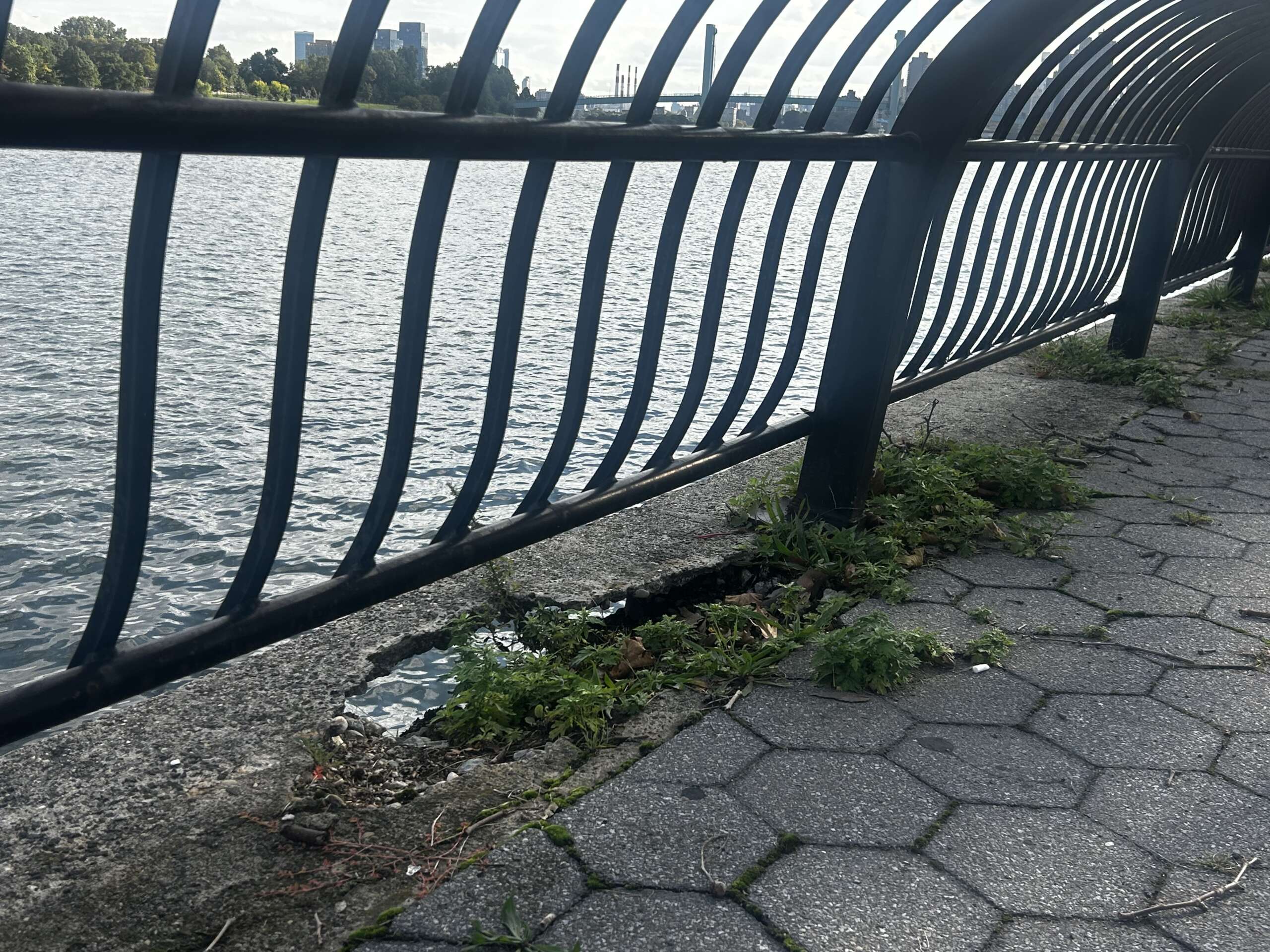
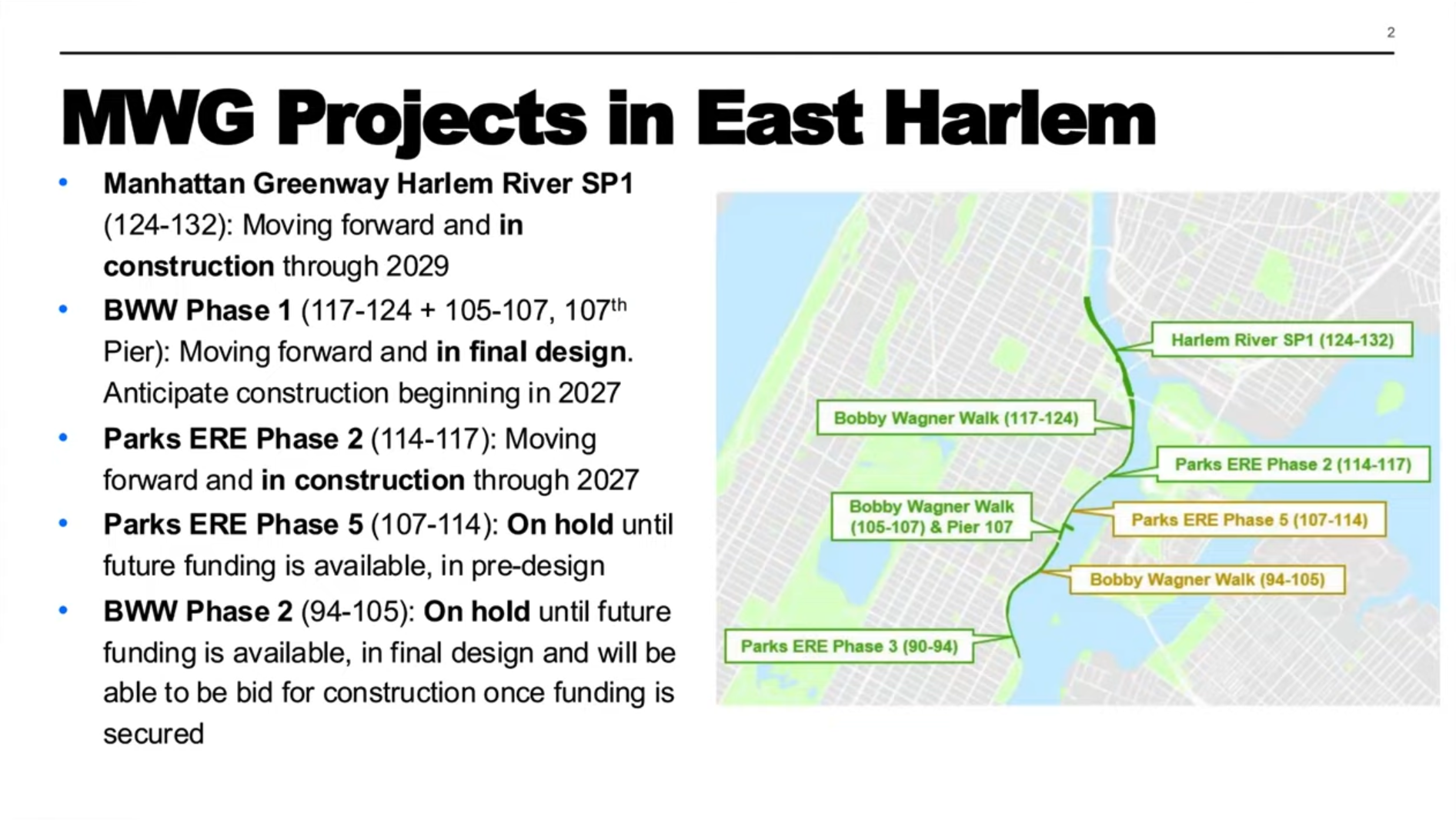
While officials say they can start work on the first three phases of the project, the EDC has not addressed how it will fund repairs at two crucial areas along the East River Esplanade: East 94th to 105th streets, and East 107th to 114th streets. Several NYCHA housing facilities sit alongside the riverfront in these areas, including the Jefferson and East River Houses.
In a statement, the Parks Department, which oversees operations of the Esplanade, ascribed the funding gap to “increasing marine construction costs and construction challenges related to the area’s unique site conditions.”
Kessler recalls how she and other community members were “blindsided”by the sudden budget change. “Everything was moving along until about almost two years ago,” Kessler said. “They showed us one of the final designs, and then it went quiet.”
Advocates say they received no updates until July 16, at a Manhattan Community Board 11 meeting. There, EDC staff broke the news that the project could not be finished as originally planned, citing a major budget change due to unexpected construction costs.
“There was such vitriol in that room,” Kessler recalled.
While East Harlem residents are still waiting, other neighborhoods have seen major overhauls. Further south, the East River Greenway project, also managed by the EDC, received $197.6 million to construct an elevated greenway from East 53rd to 61st streets. That project took little over six years from planning to completion and features a flood-resilient design with advanced stormwater filtration systems. Further south, Lower Manhattan’s East Side Coastal Resiliency project received a budget of $1.45 billion, the majority of which was funded by the city.
“There’s a stark inequity in how the city prioritizes infrastructure projects across different Manhattan neighborhoods,” Kessler stated. “Why is this neighborhood the last and unserved?”
The EDC did not respond to City Limits’ requests for comment before press time.
At the Community Board 11 meeting in September, EDC and Parks representatives told advocates, including Kessler, that an estimated $500 million is needed for the first unfunded section of the Esplanade repairs, from East 94th to 105th streets, and a rough estimate of $250 million for the span from East 107th to 114th streets.
Restoration work on these sections is on hold until further funding is available, announced Sarah Nielson, who works on policy and long-range planning at the Parks Department. EDC did not provide an estimate as to when the money will arrive or when construction will begin on those sections, but said that they are “shouting from the rooftops that we want to get funding for these projects.”
“Ideally those funds will come in while we’re working on the first phase,” Neilson stated during the meeting.
Phase one of the restoration will be funded with the project’s initial $294 million and includes portions of the esplanade from East 105 to 107th Street, the 107th Street Pier, and from East 117th to 124th Street. Phases two and three of the project, which will run from East 114th to 117th street and East 90th to 94th Street respectively, are also underway, receiving another $130 million in funding from the city.
The spokesperson for the Parks Department also stated that they are “working with our partners to begin construction as quickly as possible” and “explor[ing] options to bridge the funding gap.”
Both unfunded regions sit in East Harlem’s highest flood-risk area, making development of the esplanade a crucial protective measure for communities. According to FirstStreet flood risk data, nearly half of all East Harlem properties have a risk of flooding in the next 30 years (vs. 37.5 percent of properties today), a far greater increase in risk compared to other flood-prone areas like Long Island’s Freeport and Copiague communities.
The restoration, which would involve raising the waterfront to account for sea-level rise, is made more urgent due to factors from global warming, which is contributing to stronger and more frequent storms.
“It’s unfair… that any area doesn’t get the resources that it deserves, or that it needs to be safe,” said Joanna Delson, the executive vice president of Civitas, a not-for-profit organization dedicated to neighborhood improvement in the Upper East Side and East Harlem. “The rest of the waterfront has been rebuilt all over the city… and East Harlem has languished.”
Delson, who lives in East Harlem, recalls severe flooding in the area after Hurricane Sandy devastated Manhattan in 2012. “The water came all the way up to between First and Second Avenue,” she said.
During the July Community Board 11 meeting, Delson questioned whether leaving some portions of the reconstruction project unfinished would impact their flood risk. “If you raise those two parts, and do no work in between, that is going to cause a valley where water could accumulate, and that will cause more possible flooding for that area,” she said.
At a September press conference alongside advocates from both Civitas and Friends of the East River Esplanade, City Council Speaker Julie Menin addressed the budget delays, calling the setbacks “unfair” and “inequitable.”
“All of the electeds are absolutely pushing for this esplanade to be done the right way and to pay justice to East Harlem,” Delson said. “We are all encouraged by that.”
To reach the editor, contact [email protected]
Want to republish this story? Find City Limits’ reprint policy here.