


Share This Article
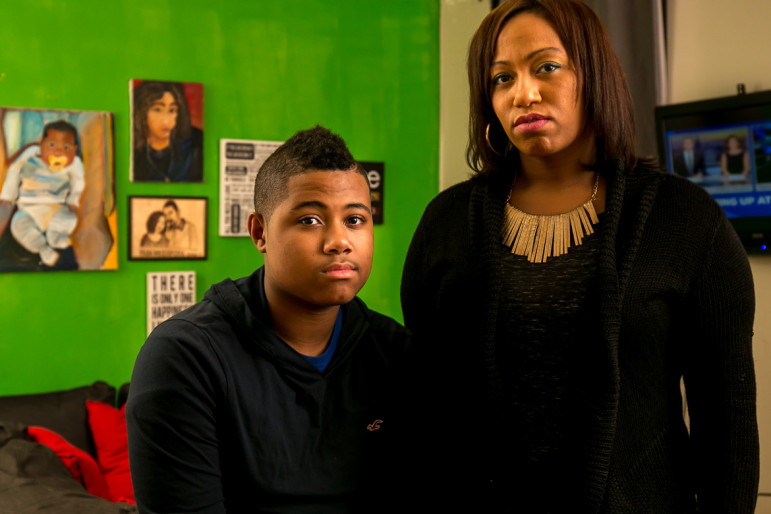
Sometimes it takes a mother to make the point most clearly. At a City Council hearing last October on a bill to toughen oversight of special education, Johanna Duran, the mother of a ninth grader now at a private prep school, gave an emotional account of the public school system’s failure to educate her son.
Testifying before the council’s Committee on Education, Duran recited a litany of obstacles to success: when her son was in pre-Kindergarten, he was denied an IEP, or individualized education plan, a legally mandated plan that maps out support services for children who need help. By third grade he had been held back once, and by fifth grade not only could her son not read, “He didn’t understand that letters make sounds.” After years of educational neglect, her son was begging her not to send him to school. When she sought help from the principal, Duran said, “she said she did not know how to help him.”
Despite years of efforts to reform special education, what children need to succeed in the classroom and what they are given to reach that success often sit on opposite sides of an enormous divide. Acknowledging that point a few weeks before the October hearing, Schools Chancellor Carmen Farina hosted a conference for the parents of special education children at Tweed Courthouse and laid her cards on the table: “If you have a gift, an idea, an insight, we want to hear from you.”
Too many children, too few services
According to federal law first passed in 1973 and updated in 2004, any child with a physical or mental disability is guaranteed a “free appropriate public education.” In New York City, this translates into three main settings for educating children with IEPs: in a regular class with extra services such as a paraprofessional and/or assistive technology; in an integrated co-teaching classroom with two teachers; or in a separate special-education classroom or program.
IEPs run a wide-spectrum, from the mild, such as twice weekly occupational therapy for Kindergarteners in the city’s Gifted and Talented classes so they can learn to hold a pencil correctly to counseling and medical services for children with more demanding emotional and physical needs.
Today, while a concrete figure is difficult to determine, it is estimated that within an overall operations budget of $20.6 billion, the NYC DOE has earmarked roughly $5 billion for educating children with special needs. On its website, the DOE maintains that it has set aside over $1.5 billion to pay for special education children in charter, yeshiva, parochial and private schools and another $1 billion to support pre-school age children with special needs in non-public school settings. According to a 2013 Independent Budget Office report—which relied on data supplied by the NYC DOE—the DOE spent $3.3 billion on children with IEPs in the public schools in the 2012-2013 school year.
One of the biggest and longest-lasting fights between parents and DOE administrators is the cost of those non-public school services: Private-school tuition for children with special needs, depending on the diagnosis, can run anywhere from $40,000 to $90,000 a year, not including the cost of transportation and any additional services, such as occupational or speech therapy.
And as the student roster has increased over the years, so has the price tag for special education services.
According to an audit by the New York State comptroller, 15 years ago, there were approximately 1 million children in New York City public schools, 168,000 of them in special education classes. Today, with a roster of approximately 1.1 million students in public school, there are 186,000 children with IEPs in district schools, another 12,700 students with IEPs in charter schools 7,500 children in state-approved private schools, according to the DOE. According to the Mayor’s Management Report, the DOE, under law, also pays for and provides services for 26,500 pre-school age children.
As more and more children have been assigned IEPs and designated for special education, more and more problems have sprung up around it: classes that are too large, children being grouped with dissimilar needs and diagnoses, buses failing to show up, paraprofessionals going missing. and IEPs left unenforced. As the problems have multiplied, so have the lawsuits, mostly from middle-class and more affluent families suing the DOE for legally mandated services they say have not been provided.
A litany of lapses
Since 2003, when the NYC DOE initiated the first of a series of reforms to fix the delivery of special education services, the city has tried, and often failed, to help special-education children.
Further efforts to fix special education were made in 2007 and between 2010 and 2012, but these mostly administrative changes did not address the two biggest challenges facing the special education program: the delay in evaluating children for additional services, such as speech or physical therapy, and the delay matching children with the appropriate services.
Adding fuel to the fire for advocates is the fact that the problems appear to be compounded for low-income and minority children.
Last year, according to an analysis by Chalkbeat, 19 percent of parents’ requests for additional services for their special-ed children went unmet in Jamaica, Queens. By comparison, in the DOE’s wealthiest school district, District 2 in Manhattan, only 1.5 percent of service requests went unmet.
Pushing back at the criticism at the October hearing, Corinne Rello-Anselmi, deputy chancellor for the division of specialized instruction and student support, defended the DOE’s overall response to parents’ requests for support services, maintaining that 90 percent of IEP-mandated services had been fully provided by the end of the 2013-2014 school year. In parts of the Bronx and Brooklyn, service levels rose nearly 20 percent. “Although there is much more work to do,” the DOE had stepped up its hiring of bilingual speech teachers, upped the number of integrated classes for autism students and was moving more children out of specialized District 75 schools and into their local schools, Rello-Anselmi told the Education Committee.
At the same time, she acknowledged, “too many kids are getting IEPs and special-ed tags,” noting that 16 percent of school children in Queens and 25 percent of school children in Staten Island have IEPs.
But as the ranks of children with IEPs have swelled, so have the numbers of low-income and non-white children. Today, of the 186,000 children with an IEP in district schools, four out of five are either Hispanic or black, two out of three are boys and one out of six is an English Language Learner.
While black and Hispanic children make up the majority of children in New York City public schools, they are disproportionately represented in special education programs and classes, says Maggie Moroff, a lawyer with Advocates for Children.
Moreover, says Moroff, black and Hispanic children are more likely to be placed in the most restrictive setting, in a District 75 school, schools that only have children with disabilities.
While declining to discuss why there are so many minority children with IEPs during the City Hall hearing this past October, DOE officials said the department had been making a concerted effort to reform its IEP process and more accurately assess children’s educational process. DOE official Janet McDonald said the DOE was trying to roll back the “over identification” of students with “special ed tags” and at this point, had reduced the number of children with IEPs from one out of five in the school system to one out of six.
Still, progress was slow, said McDonald, who observed that trying to change the DOE culture and practices was like “trying to shift the Queen Mary.”
In a statement released this week, schools spokesman Harry Hartfield said: “We are proud of the significant progress we’ve made in just the past year. We’ve offered more training for special education and general education teachers, hired more Related Service providers, and established a new team to work specifically on issues surrounding preschoolers with disabilities. We have more work to do, and we are committed to doing whatever it takes to ensure that every student – general education or special education – has the supports he or she needs to thrive in the classroom.”
The fallout
While many advocates and watchdogs want more accurate tracking, some statistics already available about special-ed, and they tell a grim story: Children with special education services continue to perform far below their general education peers.
According to the DOE’s own statistics, in 2014, 11.4 percent of special education children between elementary and middle school scored at or above level on the state math exams compared with 40.3 percent of their non-disabled peers; 6.7 percent scored at or above proficient on the English Language Arts exam compared with 34.2 percent of their non-disabled peers. Those low scores came despite the fact that children with the most severe disabilities—for example, those who are profoundly disabled or retarded—are not tested at all.
Graduation rates for children with disabilities are equally dismaying: In 2013, the latest year for which data is available, only 37 percent of students with disabilities graduated within four years of entering high school compared with 70 percent of their non-disabled peers. While the DOE has not publicly set a bar for graduation rates for children with IEPs, the current graduation rate was low, DOE officials acknowledged.
While the DOE declined to answer a reporter’s question about what should be the expected graduation rate for children with IEPs, Moroff was blunt: The rates should be the same as their non-disabled peers.
For Moroff and other advocates for children with special needs, the whole point of the IEP process and special education services is to ensure that children with disabilities progress, with support, alongside their nondisabled peers. “The goal is to help students with disabilities achieve at the same rate.”
Is this the fix?
The DOE is working to improve the quality and timeliness of its IEP evaluations as well as its special educational services overall. Along with increasing the number of bilingual speech teachers and cutting down on outside consultants to handle the evaluations in an effort to improve the quality of IEPs, the DOE has also created a separate department just to deal with the issues of special-education children who are English Language Learners.
In actively promoting the concept that special education was “a service not a place,” the DOE is working to move more children out of segregated, disabled-children-only programs—known as District 75 schools – and into their neighborhood schools.
At the same time, the DOE is expanding its respected autism education model – known as ASD Nest – to serve 900 students with autism, who will be taught alongside their non-disabled peers in small, mixed classes run by two teachers, as well as partnering with two local universities to train its teacher in the Orton-Gillingham method of multi-sensory reading development, a proven literacy learning method for children with multiple diagnoses, including dyslexia and autism.
The DOE also says it is starting out earlier to engage parents in their children’s literacy development – holding meetings with parents of all children with IEPs before the children turn 5 and attend Kindergarten – as well as responding more quickly and intensively to problems in children’s learning as they appear.
This past summer, in an effort to ease some of the tension between families and the DOE, as well as save the city time and trouble, Mayor Bill de Blasio announced the city would no longer fight parents who had successfully sued the DOE to pay for private-school tuition for their children.
And this past December, responding to a lawsuit by parents, the DOE announced it would end the practice of sending emotionally disturbed children to emergency rooms. The lawsuit, filed in federal court, alleged that school personnel resort to calling EMS in response to tantrums and other behavior problems because the school staff lacks the training to assist and calm the children. In the 2011-2012 school year, the suit alleged that 3,600 children, most of them with disabilities, were sent to the ER, against their wishes and the wishes of their parents. Many were between the ages of five and seven.
A troubled horizon
Both inside and outside the DOE, however, teachers, parents and advocates remain skeptical that the changes will be far reaching enough. “Any system that requires parents to hire attorneys is going to be inherently unfair,” says Council Member Mark Levine.
A large part of the problem, the Council Education Committee’s chairman Daniel Dromm has said, is the poor communication between schools and families, specifically, parents’ lack of access to information about what services their children were supposed to receive and whether they were actually receiving those services. The system used by the DOE to track special-education services, known as SESIS, Special Education Student Information System, is plagued with problems, say DOE employees. Data that is entered often doesn’t appear; service requests, such as for busing or paraprofessionals, are not fulfilled and there is no way to know if the information that does appear is correct. When pressed on parental access to SESIS, as problematic as the system was, Rello-Anselmi said it was a DOE goal to get parents onto the system.
There are all kinds of ways the DOE could improve its handling of special education, observes Andrea Lella, a Staten Island mother of three children with disabilities and the founder of the autism support group Families Helping Families. Some of the fixes are common sense, she says, such as creating flexible schedules to ensure children received their additional support services in school, rather than after school and on the weekends. That would save money for the DOE, and travel time for the children.
And, instead of fighting with parents over the cost of private-school tuition for children with autism, the DOE could hire autism-education experts and have them train teachers in all the schools. Instead of paying for reading consultants for each child with dyslexia the DOE, again, could hire its own specialists, who could in turn train teachers to work with children with dyslexia. Then, rather than paying for one child’s mandated IEP services, “you are meeting the needs of every child in the school with dyslexia,” says Lella.
But better scheduling, more open communication with parents, more reliable computer tracking and more efficient staffing will only solve part of the special-education problem, say some advocates. Holding bad teachers and inefficient administrators accountable is also critical, says Andrew Cuddy, an attorney who represents families suing the DOE for more services. When children don’t learn, when IEPs aren’t updated, when a child gets handed off one year to the next, “no one is taken to task and expected to be responsible for it, punished or held accountable,” says Cuddy. And the families most affected are families of limited means. “They are the ones the ball is being dropped for.”
7 Comments
davoyager
There is a point at which a school begins the transition into hospital and perhaps that’s appropriate. If schools are expected to provide for the needs of serious special needs usually requiring highly trained professionals in a carefully designed environment than the size and support given to the nurse’s and guidance counselor’s offices have to be completely re-evaluated. It would be nice to see a seamless transition from lesser to greater support for special educational needs but everyone needs to realize: that is going to be very expensive, and Albany is finally going to have to start writing the checks long overdue the city; and then some.
Thank you for some very nice reporting.
Andy Cap
I agree with you in that those who need the most in special care are getting the least and are being very much abused in this system without even being noticed. Parents are being tossed aside and pressured by those who’s only interest is to get paid and go home. It’s gotten to the point where teachers are being overpaid and facilities (meaning taking care to apply appropriate treatment to the common aspects of autistic children, Hearing sensitivity and so on) are being ignored with complacent contempt. Some of these children then become angry after which the blame is then placed squarely on the child and parents respectively. We need take the politics out from this and hire people with PhDs in psychology to run these programs properly and not hire graduate students with absolutely no life experience what so ever. A ticking time bomb…….
Gandhi Lady
As a special ed teacher part of the battle is dealing with stereotypical ideas of these students. From teachers all the way to superintendents. Teachers are so over booked in our day there is not adequate time to work with our students. Now with our value as a teacher connected to a test many teachers don’t want IEP students in their classes because it will bring down their rating. Heck, the DOE won’t even publish the 37% graduation rate. It’s not fair on either side. This article questions only the very tip of the iceberg. And the DOE’s response is sad, it shows me that they really don’t know what is going on inside the school each day.
Guest
I was in special ed from kinder until, in 10th grade they finally put me in gen ed. Diagnosis was only learning disability. I had a para from 6th grade to graduation. I hated coming to school just to be reminded I’m “different”. There were a few days in high school when my para was absent and I was FINE. I didn’t need someone beside me all day. In 11th grade I stopped going to my related services, which was only counseling. The counselor tried to convince me to come back, but I had never gone since. In 12th grade English, we were in computer class twice a week and one day the principal came to observe. My para wasn’t sitting next to me, the principal asked my para why she wasn’t with me, so next day my para sat next to me. I was annoyed. Having a para is one of the reasons my HS experience is messed up. My mom asked the school to terminate my IEP (thanks to my begging) but they refused. This was a NYC public high school. I first realized what special ed was in 6th -7th grade, that it was a place for the “different” kids (you know what I mean by “different”) to go. I wanted to get out of special ed and be with “regular” kids. I was upset when I found out I still would have a para in HS. I see many kids write online asking how they can get out of special ed.
People who make laws and policies regarding special education do not consult former special ed students. After all, *WE* are the ones affected by the laws, and parents and educators do not experience what we experience, thus should not have primary say in laws like IDEA (except regarding people with severe intellectual disabilities who won’t understand). Read an article about special ed policies, it’s always “parents and educators”, never special ed students themselves. I’m not autistic, so I don’t get a say in policies pertaining to autistic people. We are a diverse bunch, labeled under the umbrella “special needs”, even though kids with ADHD are not like kids with down syndrome, and I was not like autistic kids. It’s patronizing to labeled with kids with severe disabilities. Most of us want to end disability labeling, or any labels with “special” (i.e. special needs, special education) but people don’t listen to us. Not all of us consider ourselves “disabled” or want that label. We want to end being made to come to school to be reminded were “different”. So listen to us about our experiences of being in special ed / having an IEP, when special ed regulations are being created or discussed, please consult us, and criticize others when they do not. Listen to diverse perspectives / experiences, because an autistic person might have different experiences in special ed than a person with LD, and make sure that is taken account into policy decision.
Andy Cap
You bet autistic children has a different experience than you both in and out of school. Their lives couldn’t be any harder so be grateful you are able to write so competently because some of these children struggle to write even one word.
Jayden Bentley
The government should give poor people more rights
Darrell David
This article examines the efforts to reform special education in New York City and raises important questions about the effectiveness of these reforms. It highlights the need for ongoing evaluation and improvement to ensure that students with special needs receive the support they deserve. Kudos to the author for discussing this critical issue and encouraging dialogue on special education reform.